
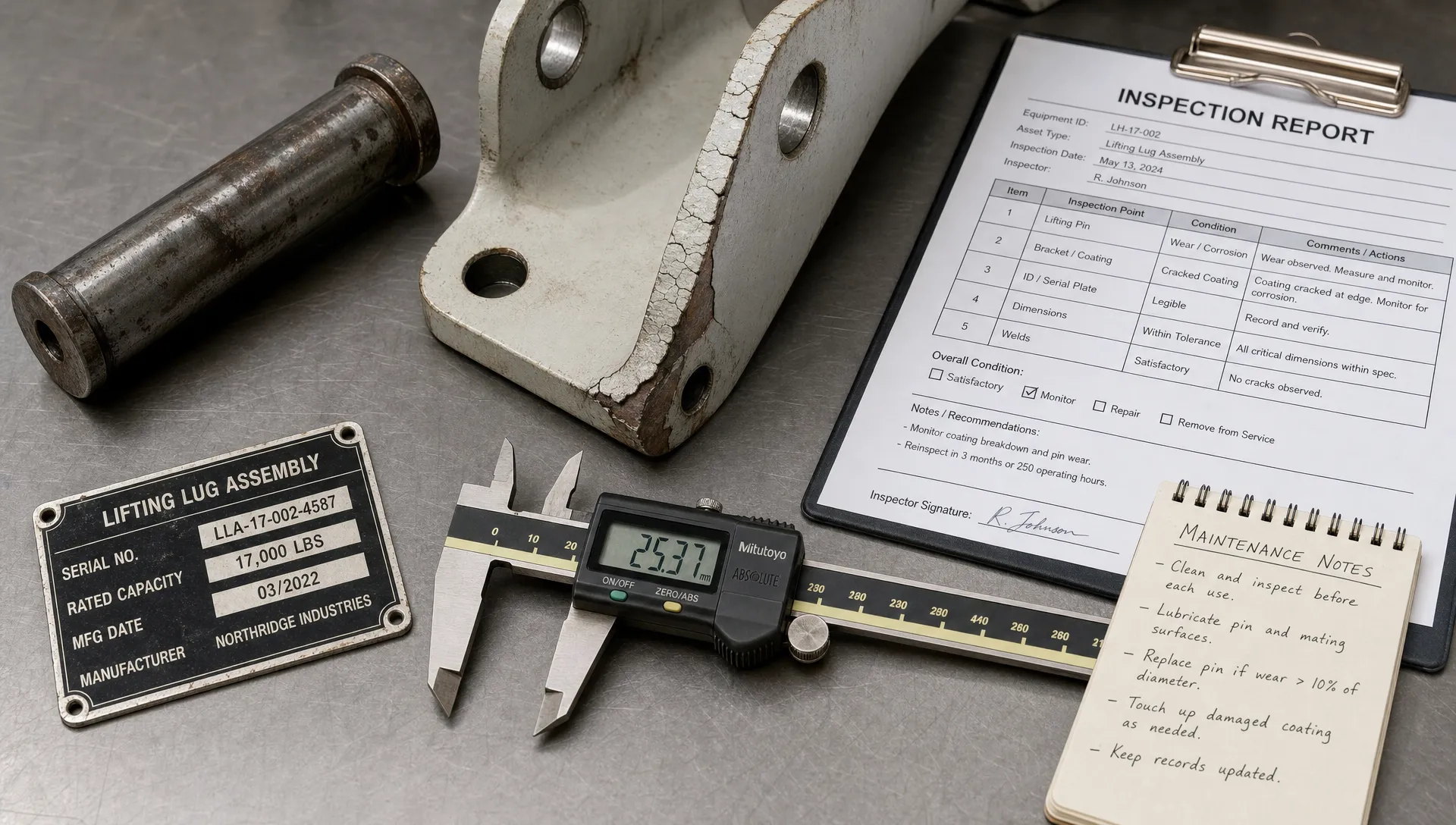
Most industrial failures do not start with a dramatic breakdown. They often begin with small signals: a lifting point that no longer aligns exactly, a worn pin, an operator workaround, a missing marking, a crack that is only visible under the right conditions, or documentation that no longer matches the equipment in use.
Safety inspections are valuable because they make those signals visible before they become larger risks. For OEMs, machine builders, high-tech manufacturers and companies working with hoisting and lifting tools, inspections are not just a compliance activity. They are a technical feedback loop that connects design intent, real factory use, maintenance history and safe operation.
The goal is not to create a false promise that every incident can be prevented. The goal is to reduce uncertainty. A good inspection helps teams decide whether equipment can remain in use, needs repair, requires load testing, should be modified, or must be taken out of service until an engineering review is completed.
Why failures often start long before equipment stops working
A lifting tool, handling module or machine can appear functional while its safety margin is already changing. In practice, this is one of the most important reasons to inspect equipment periodically. A tool may still lift, clamp, rotate or position a load, but that does not automatically mean it still behaves as originally engineered.
Loads may have changed. Operators may use the tool differently than expected. Environmental conditions may introduce corrosion, contamination or thermal effects. Fasteners may loosen due to vibration. Wear can increase play in moving parts. Small deformations can alter the load path. Over time, these changes can reduce reliability or make operation less predictable.
This is why safety should be considered across the entire lifecycle, not only during initial design or final acceptance. BKL has written more about this wider lifecycle perspective in its article on how safety engineering reduces risk across the lifecycle, which is directly connected to the value of periodic inspections.
For decision-makers, the practical question is simple: what do inspections show while there is still time to act? The answer is often more than expected.
What safety inspections can reveal early
A thorough inspection looks beyond whether equipment is still operating. It checks whether the equipment is still safe to use for its intended task, in its current environment, by the people who operate and maintain it.
Common findings include mechanical wear, deformation, missing markings, damaged interfaces, overdue maintenance, incomplete documentation and unclear operating instructions. Each finding may seem manageable in isolation. The risk increases when several minor issues combine.
| Inspection finding | Early signal | Why it matters | Typical follow-up |
|---|---|---|---|
| Deformation | Bent plates, misaligned lifting points, elongated holes | The original load path may no longer be valid | Remove from use, measure, assess and repair or redesign if needed |
| Cracks or crack indications | Visible cracks, paint lines opening, unusual noise under load | Fatigue or overload may be developing | Stop use and perform a technical assessment before further operation |
| Wear and excessive play | Worn pins, bushings, hinges, guides or contact surfaces | Movement can become less controlled and loads can shift | Replace components, adjust tolerances or review the operating conditions |
| Corrosion or contamination | Rust, chemical residue, dirt in moving parts | Material properties and movement reliability can be affected | Clean, protect, repair or reassess suitability for the environment |
| Fastener issues | Loose bolts, missing locking devices, incorrect replacements | Critical connections may no longer perform as designed | Correct the connection and verify the assembly method |
| Damaged identification | Missing load rating, unreadable serial number, lost labels | Operators may not know the limits or status of the tool | Restore markings and documentation before continued use |
| Unauthorized modifications | Added holes, welded changes, replaced parts, improvised attachments | The equipment may no longer match its original design assumptions | Engineering review, updated documentation and possible revalidation |
| Poor usability signals | Operator workarounds, difficult access, unsafe posture | Human factors can increase operational risk | Improve instructions, ergonomics, tooling or the process itself |
This table also shows why inspections should not be treated as isolated snapshots. Findings must be interpreted in context. A worn component in a low-risk auxiliary fixture does not carry the same consequence as wear in a custom lifting tool that handles high-value equipment in a tight installation space.
Load path changes are often the most important warning sign
In lifting and hoisting equipment, the load path is central to safe use. The load path describes how forces move from the load into the tool, through the structure, into hoisting points and finally into the lifting equipment above it.
Small changes can have a significant effect. A slightly bent lifting lug may introduce eccentric loading. A worn pin may allow the load to shift. An incorrectly replaced component may have different material properties. A fixture designed for one product variant may be used for another, heavier or differently balanced configuration.
These issues are not always obvious during daily operation. Operators may compensate without realizing it, for example by guiding a load by hand, adjusting slings, changing the lifting sequence or using additional supports. During an inspection, those workarounds are important evidence. They reveal where the tool may no longer fit the real task.
For OEM environments, where lifting tools often handle valuable modules, sensitive assemblies or limited production slots, this matters directly to continuity. BKL covers related engineering choices in its article about improving lifting and hoisting safety in OEM operations.
Wear, fatigue and damage rarely stay isolated
Mechanical wear does not only affect the part that is visibly worn. It can change how the whole tool behaves. Excessive play in a hinge can increase shock loading. A damaged guide can make positioning less repeatable. A worn locking mechanism can make operators lose confidence and create their own workaround.
Fatigue is especially important in tools that experience repeated load cycles. A component may be loaded well below its maximum rating, but repeated use, vibration, impact or misalignment can still contribute to fatigue over time. This is why inspection history is valuable. A single observation says something about today. A trend across multiple inspections says something about how the equipment is aging.
The same applies to corrosion and contamination. Rust on a non-critical surface may be manageable. Corrosion near a weld, lifting point or load-bearing connection requires much closer attention. In high-tech, semicon and optical environments, contamination can also affect precision, cleanliness and motion reliability, even before it becomes a visible safety issue.
Documentation gaps are technical findings, not paperwork problems
Inspection findings are not limited to the physical condition of equipment. Documentation can reveal risks as well.
A tool without a readable load rating creates uncertainty for operators. A missing serial number makes traceability difficult. A manual that no longer reflects the actual configuration can lead to incorrect use. A modification that was never assessed may mean that calculations, drawings, risk assessment and instructions are no longer aligned.
In CE-related contexts, documentation supports the ability to understand how a machine or tool was designed, assessed, produced, inspected and maintained. Periodic inspections do not replace a conformity assessment for new or substantially modified equipment. However, they can help reveal when equipment in use has drifted away from its intended condition, documentation or operating limits.
For engineering managers and safety managers, this is a practical point. If the technical file, inspection report, user instructions and actual equipment do not tell the same story, the organization has an information risk as well as a mechanical risk.
From visual inspection to load testing
Not every inspection requires the same depth. The correct approach depends on the equipment type, application, load, frequency of use, environment, inspection history and applicable requirements. A standard visual check may be sufficient for some tools. Other situations require dimensional checks, functional testing, overload testing or a more detailed engineering assessment.
| Inspection activity | What it can reveal | When it is especially useful |
|---|---|---|
| Sichtprüfung | Damage, deformation, corrosion, missing markings, obvious misuse | Routine condition checks and first assessment of equipment in use |
| Dimensional checks | Deviation from drawings, elongation, misalignment, wear patterns | Tools with tight tolerances, known wear points or critical interfaces |
| Functional check | Problems with movement, locking, clamping, adjustment or repeatability | Tools with moving parts, operator interfaces or safety functions |
| Overload testing | Performance under a defined test load | Lifting equipment where load testing is required or justified by risk, use or history |
| Documentation review | Missing reports, unclear load rating, outdated instructions, traceability gaps | Older tools, modified tools or equipment with incomplete records |
| Usage advice | Misuse, unclear operating steps, unsafe handling habits | Situations where the tool is technically sound but the process creates risk |
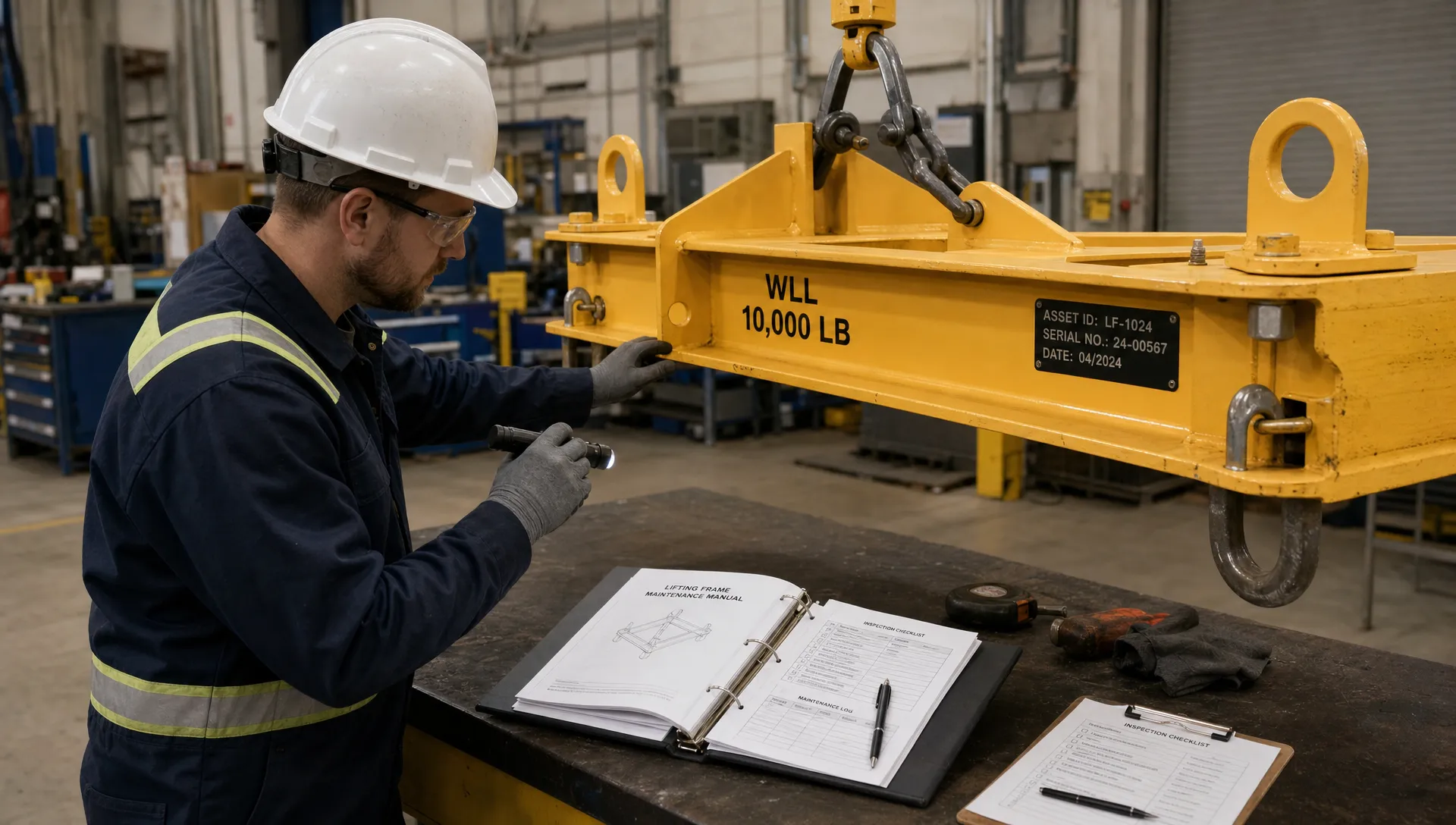
BKL performs inspections including visual inspections, overload testing, examinations, reports and practical usage advice. The value lies not only in carrying out a check, but in connecting the findings to safe use, maintenance planning and engineering decisions.
What happens when findings are ignored
Inspection findings often escalate when they are treated as minor maintenance details instead of signals about system behavior. A loose fastener may be tightened without asking why it became loose. A worn pin may be replaced without checking whether loads are aligned correctly. A crack may be repaired without reviewing whether the original design is suitable for the actual duty cycle.
This approach can create repeated defects. The equipment returns to service, but the underlying cause remains. Over time, small interventions can also introduce variation: different replacement parts, undocumented repairs, altered adjustment settings or inconsistent operator practices.
A better approach is to classify findings by consequence and cause. Some issues require immediate removal from service. Others can be scheduled for repair. Some justify a design review. Others indicate that instructions, training or maintenance intervals need improvement.
Useful follow-up categories include:
- Immediate safety action: take the equipment out of use, quarantine it, or restrict operation until a competent assessment is completed.
- Planned corrective action: repair, replace worn parts, restore markings, update documentation or schedule a load test.
- Engineering review: assess recurring defects, unauthorized modifications, new product variants, changed load cases or unclear load paths.
- Process improvement: revise operating instructions, improve access, reduce manual handling, adjust maintenance intervals or clarify inspection points.
- Lifecycle decision: decide whether continued repair is sensible or whether replacement, redesign or partial improvement is more reliable.
The last category is often overlooked. In some cases, repair is the right answer. In other cases, repeated inspection findings show that the tool no longer fits the process. That does not always mean a completely custom solution is required, but it does mean the decision should be based on technical risk, usability and lifecycle cost, not only on the lowest immediate expense.
Inspection reports should be understandable and actionable
A report that only lists defects is incomplete from an operational point of view. Engineering, maintenance, safety and production teams need to understand what the finding means, what action is required, and how urgent it is.
Clear inspection reporting should help answer questions such as:
- Can the equipment remain in use under its current conditions?
- Is repair possible, and under what technical conditions?
- Is a load test or further examination needed?
- Are markings, manuals or inspection intervals still correct?
- Is the issue caused by wear, misuse, environment, overload or design mismatch?
- Does the finding affect similar tools or only this specific item?
The communication side matters. If operators do not understand the restriction or maintenance teams do not understand the cause, the same risk can return. Some companies support technical safety communication with sessions on attention, self-leadership and team engagement, for example through motivational storytelling and workshops that make workplace themes more memorable. That can help reinforce behavior, but it does not replace clear instructions, competent inspections and engineered safeguards.
How inspection findings feed back into better engineering
One of the strongest benefits of safety inspections is that they show how equipment performs in real use. This information is valuable for future design, modification and production decisions.
For example, if operators repeatedly damage a guide surface, the tool may need better protection or a more intuitive positioning feature. If lifting points show uneven wear, the load path or sling arrangement may need to be reviewed. If markings become unreadable quickly, the marking method may not suit the environment. If inspection access is difficult, future designs can include better access points.
This is where a partner with engineering, production, inspection and service capabilities can reduce coordination complexity. The inspection team sees the condition of the equipment. The engineering team can assess root causes. Production capability makes it possible to manufacture replacement parts, improved components or new small-series tooling when needed. Service support helps keep equipment available during its lifecycle.
For safety-critical tools, this closed loop is more effective than treating inspections, repairs and design changes as separate activities managed by unrelated suppliers.
When to involve a specialist inspection partner
Internal maintenance teams are essential, but some situations benefit from specialist inspection knowledge, especially when tools are custom-made, safety-critical or used for valuable equipment.
Specialist support is particularly relevant when:
- The equipment is used for lifting, hoisting, rotating, positioning or transporting high-value loads.
- The tool was modified, repaired or repurposed without complete technical documentation.
- Inspection history shows recurring wear, deformation or operator complaints.
- Load ratings, serial numbers, manuals or test reports are incomplete or unclear.
- The application involves tight spaces, sensitive surroundings or demanding high-tech production conditions.
- The organization needs clear reporting, usage advice and support for maintenance or lifecycle planning.
BKL is a technical service provider in mechanics and mechatronics with experience in hoisting and lifting tools, industrial modules and machines. The company supports clients with engineering, manufacturing, inspections and related services, including partial support or complete solutions. BKL is also accredited according to ISO 17020:2012 for inspections, which is relevant for organizations that need consistent inspection processes and clear reporting.
Turning inspections into safer uptime
The most useful safety inspections do not only identify defects. They help organizations make better decisions before defects escalate. That can mean repairing a tool, changing a maintenance interval, updating instructions, performing an overload test, improving documentation, redesigning a component or replacing equipment that no longer fits the process.
For C-level decision-makers and managers, the business value is not limited to compliance. Better inspection practice supports uptime, employee safety, asset reliability, production continuity and better control over lifecycle costs. It also gives engineering and operations teams evidence instead of assumptions.
In safety-critical industrial environments, that evidence is valuable. It helps teams act before a technical issue becomes a production interruption, a damaged load, an unsafe situation or an urgent repair under time pressure.
FAQ's about safety inspections before failures escalate:
How often should lifting tools and industrial equipment be inspected? Inspection frequency depends on the type of equipment, load, frequency of use, working environment, manufacturer instructions, applicable requirements and inspection history. Equipment used intensively, exposed to harsh conditions or involved in safety-critical lifting often needs closer monitoring than equipment used occasionally under controlled conditions.
Is a visual inspection enough to prove that equipment is safe? Not always. Visual inspection is important, but some risks require dimensional checks, functional testing, overload testing or engineering assessment. The right inspection depth depends on the application, condition and risk profile of the equipment.
What should we do if an inspection reveals a small crack? A crack in a load-bearing or safety-critical component should be treated seriously. The equipment should not simply remain in use because the crack is small. A competent technical assessment is needed to determine the cause, consequence and correct follow-up action.
Do safety inspections replace CE conformity assessment? No. Periodic inspections help assess the condition and continued safe use of equipment, but they do not replace the conformity assessment process for new machinery or relevant modifications. However, inspections can reveal when equipment, documentation or use no longer matches the original assumptions.
Can inspection findings help reduce downtime? Yes, when they are used proactively. Inspections can reveal wear, documentation gaps and developing defects early enough to plan repairs, replacement parts, load testing or engineering reviews. This supports better maintenance planning, although it cannot guarantee that downtime will never occur.
Keep inspection findings from becoming operational surprises
If your organization uses custom lifting tools, handling equipment, industrial modules or machines, inspection quality directly affects safety, availability and confidence in daily operation. BKL can support inspections, overload testing, reporting, usage advice, engineering improvements, production and lifecycle service.
To discuss equipment condition, inspection planning or a safety-critical tooling challenge, contact BKL and involve a technical partner that understands the full context of design, use, inspection and maintenance.