
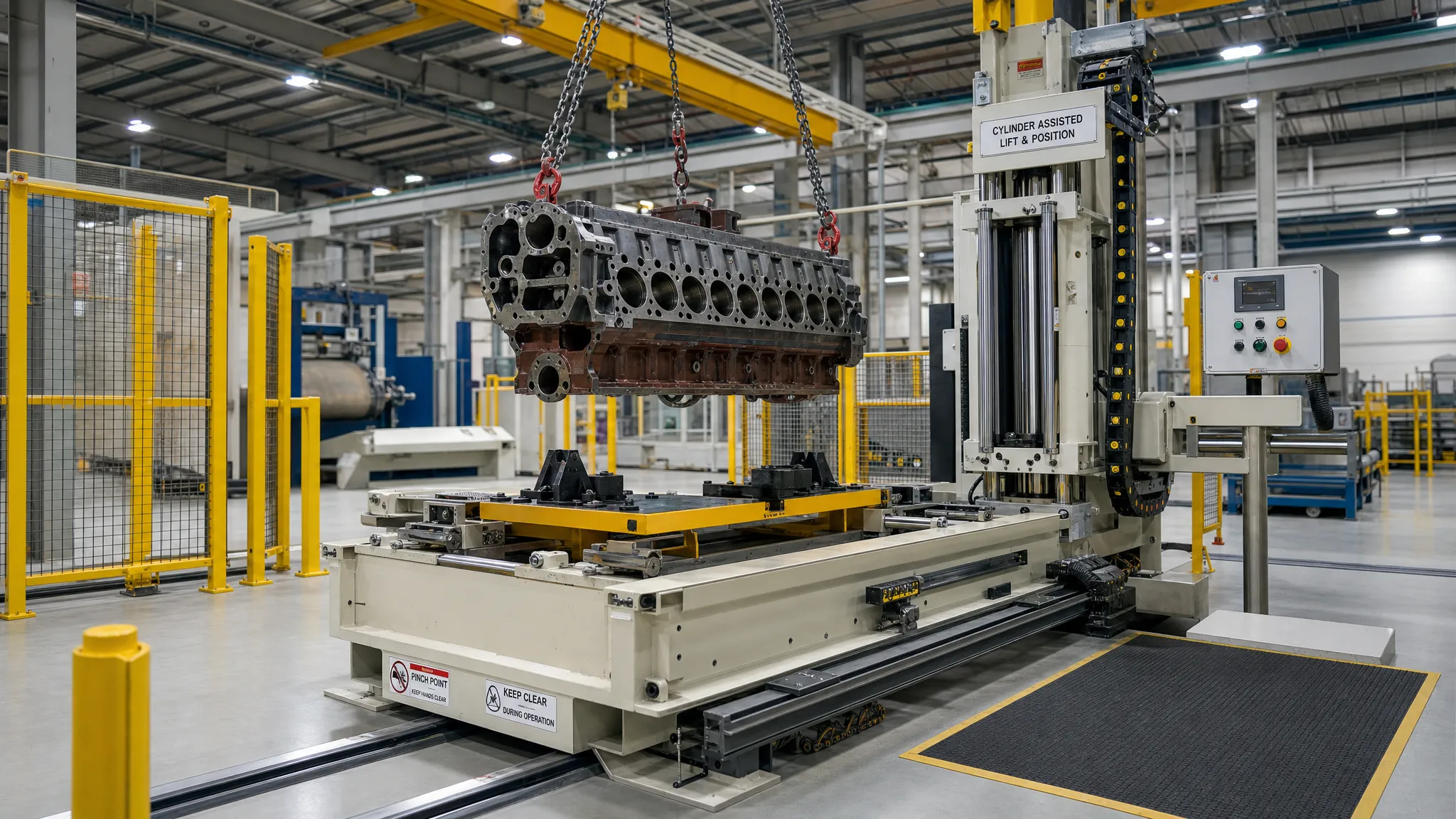
In many factories, safer machine handling depends on small design decisions that operators may never notice. A cylinder that lifts, clamps, tilts, pushes, or positions a component is often treated as a standard actuator, but its design has a direct effect on how predictable, stable, and maintainable a machine becomes.
A well-designed cylinder does more than generate force. It helps control movement, reduce manual handling, prevent uncontrolled drops, limit pinch and crush risks, and make inspections easier. For industrial teams working with heavy tooling, hoisting aids, production modules, or custom machinery, cylinder design can be one of the most practical ways to improve safety without compromising efficiency.
Why cylinder design matters for safer machine handling
Machine handling is rarely dangerous because of one single component. Incidents often happen when motion, load behavior, human interaction, and maintenance conditions are not considered together. Cylinders sit at the center of that interaction because they convert pressure or electrical input into linear movement.
If that movement is poorly controlled, the result can be sudden acceleration, side loading, drift, unexpected lowering, unstable positioning, or difficult maintenance access. If the movement is designed well, the cylinder becomes part of an inherently safer machine concept.
This aligns with the principle behind ISO 12100, the international standard for machinery risk assessment and risk reduction. The standard emphasizes that hazards should first be reduced through inherently safe design measures before relying on safeguarding or user instructions. In practical terms, that means the cylinder, its mounting, its controls, and its fail-safe behavior should be considered early in the engineering process.
For companies preparing for current and upcoming European machinery requirements, this design-first approach is becoming even more important. The EU Machinery Regulation 2023/1230 will apply from January 2027 and continues to place strong emphasis on safety, risk reduction, and technical documentation.
The safety risks a cylinder can help reduce
A cylinder is often used because it removes a physical burden from the operator. Instead of pushing, lifting, aligning, or holding a heavy part manually, the machine performs the movement with controlled force. That can reduce ergonomic strain and lower the risk of human error.
However, a cylinder can also introduce risks if it is not integrated correctly. The main hazards include uncontrolled movement, load drop, trapping zones, excessive speed, poor visibility of the moving area, and stored energy during maintenance. In hydraulic and pneumatic systems, pressure loss, hose failure, valve malfunction, or contamination can also affect behavior. In electric cylinder systems, control faults, braking behavior, and software limits must be considered.
The goal is not simply to select a stronger cylinder. The goal is to design a handling movement that behaves safely during normal operation, abnormal operation, cleaning, inspection, and service.
Core cylinder design choices that influence safety
The safest cylinder design is usually the one that is correctly matched to the task. Bore size, stroke length, rod diameter, mounting type, speed control, position feedback, and load-holding strategy all affect how the machine behaves.
| Cylinder design choice | Key safety question | Safer handling effect |
|---|---|---|
| Bore size and operating pressure | Is the force sufficient without being excessive? | Prevents stalling, jerky movement, and unnecessary force at contact points |
| Rod diameter and cylinder length | Is the rod protected against buckling? | Reduces bending, misalignment, and sudden mechanical failure |
| Stroke length | Does the cylinder travel only as far as needed? | Limits dangerous movement zones and overtravel risks |
| Mounting method | Can the cylinder move without side loading? | Improves stability and reduces wear on rods, bearings, and pins |
| Speed control and cushioning | Does the motion start and stop predictably? | Reduces shock loads, part movement, and operator surprise |
| Load-holding design | What happens if power or pressure is lost? | Helps prevent drifting, falling, or unintended lowering |
| Position feedback | Can the control system verify cylinder position? | Supports interlocks, sequencing, and safer automation |
| Maintenance access | Can wear and leakage be detected early? | Improves inspection quality and reduces unsafe interventions |
These choices should not be made in isolation. A cylinder that looks suitable on a datasheet may behave differently once it is mounted in a frame, connected to a heavy tool, exposed to side forces, or used by operators over thousands of cycles.
Force selection: more power is not always safer
It is tempting to oversize a cylinder to create a generous force margin. In reality, excessive force can make machine handling less safe. A cylinder with too much available force can damage tooling, deform components, create higher pinch forces, and make unexpected contact more severe.
An undersized cylinder creates a different risk. If it stalls, operators may try to assist the movement manually, bypass a procedure, or reposition the load in an unsafe way. Stalling can also disrupt automated sequences, especially when one motion depends on another.
Safer design starts with a realistic force calculation. Engineers must consider the maximum load, friction, load angle, center of gravity, pressure variations, dynamic effects, contamination, and wear over time. In lifting or tilting applications, the force needed may change throughout the stroke because the geometry changes. A cylinder may have enough force at the beginning of movement but become marginal near the end, or the other way around.
The safest outcome is controlled force, not maximum force. This is why cylinder selection should be combined with mechanical design, control strategy, and a clear risk assessment.
Stroke, speed, and end-position control
Stroke length has a direct impact on the size of the hazardous movement area. A cylinder should generally move only as far as the process requires. Unnecessary travel can create additional pinch points, increase cycle time, and make guarding more complex.
Speed is equally important. Fast movement may improve productivity, but it can also reduce reaction time and increase impact forces. For machine handling, a safer approach is often to combine efficient travel with controlled acceleration, deceleration, and end-position damping.
Cushioning, flow control, proportional valves, servo control, or controlled electric actuation can help prevent harsh stops. This is especially valuable when the cylinder moves a suspended tool, a fixture with a changing center of gravity, or a component that must remain precisely aligned.
End-position control also matters. Hard mechanical stops may be necessary, but they should not be the only method of controlling motion. Sensors, limit switches, pressure monitoring, and software limits can add valuable feedback, provided they are designed according to the machine risk level.
Load holding and fail-safe behavior
One of the most important cylinder safety questions is simple: what happens when energy is lost?
If a hydraulic hose fails, air pressure drops, electrical power is interrupted, or a valve does not shift correctly, the load should not move in a way that endangers people or damages equipment. Depending on the application, safer design may include load-holding valves, counterbalance valves, pilot-operated check valves, rod locks, brakes, mechanical supports, or redundant holding methods.
For elevated or suspended loads, many risk assessments require more than a valve alone. A mechanical lock, secondary support, or positive restraint may be necessary, especially if someone could enter the danger zone during setup, adjustment, inspection, or maintenance.
Stored energy is another concern. Cylinders and associated systems can retain pressure or force even after the machine appears to be stopped. Guidance such as OSHA's control of hazardous energy highlights why lockout, isolation, and energy release must be part of safe maintenance planning. In machinery design, this means service positions, pressure release points, and clear inspection access should be considered from the beginning.
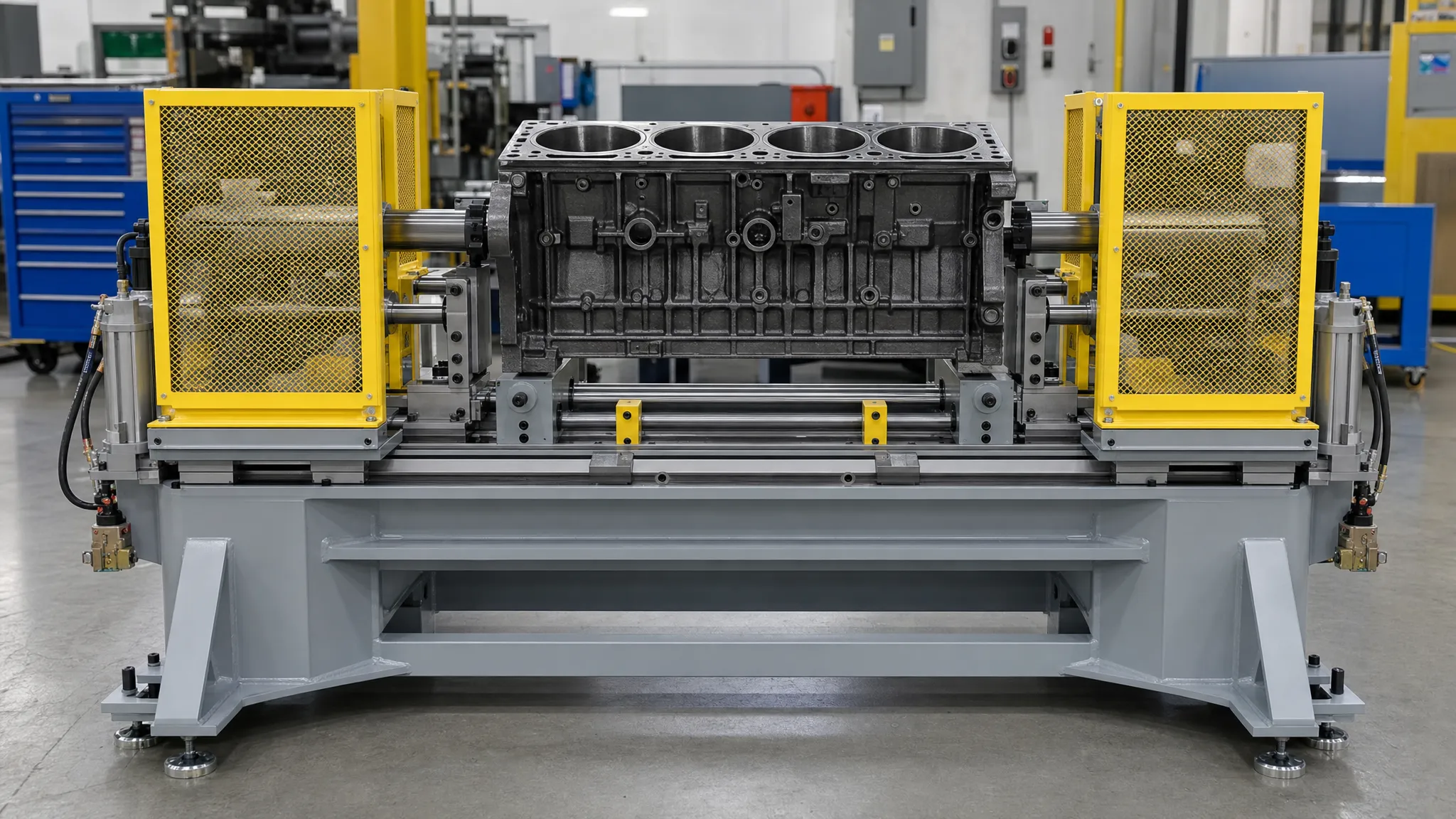
Mounting and guidance: do not let the cylinder act as a guide
A common design mistake is expecting the cylinder to guide the load. Most cylinders are designed to push and pull along their axis, not to absorb significant side loads. When side loads are introduced, rods can bend, seals can wear, bushings can fail, and movement can become unpredictable.
Safer machine handling separates actuation from guidance. Linear rails, bearings, guide columns, pivots, or mechanical linkages should manage the load path, while the cylinder provides controlled force. This reduces stress on the cylinder and improves repeatability.
Mounting style also matters. Clevis, trunnion, flange, foot, and spherical bearing mounts all behave differently under load. The correct choice depends on whether the cylinder must accommodate angular movement, resist bending moments, or remain fixed in a precise alignment. Poor mounting can turn a safe theoretical design into a high-wear, high-risk installation.
Choosing between hydraulic, pneumatic, and electric cylinders
Different cylinder technologies create different safety considerations. The right choice depends on load, required precision, environment, speed, cleanliness, maintenance capability, and risk level.
| Cylinder type | Typical strength | Safety design focus | Common machine handling fit |
|---|---|---|---|
| Hydraulic cylinder | High force in compact dimensions | Pressure control, leakage prevention, load holding, hose protection | Heavy lifting, tilting, pressing, and tooling movement |
| Pneumatic cylinder | Simple, fast, and cost-effective motion | Speed control, cushioning, pressure variation, stored air energy | Light to medium positioning, clamping, and repetitive transfer tasks |
| Electric cylinder | Precise programmable motion | Control reliability, braking, overload detection, safe stops | Accurate positioning, adjustable process movements, clean environments |
There is no universally safest cylinder type. A hydraulic cylinder can be ideal for heavy loads, but only if load holding, hose routing, and maintenance access are engineered correctly. A pneumatic cylinder can be efficient for simple motion, but compressibility can make movement less rigid. An electric cylinder can offer precise control, but the braking and control architecture must match the safety requirements.
The key is to choose the technology that supports predictable handling throughout the machine's full lifecycle.
Cylinder design and operator interaction
Safer machine handling is not only about mechanics. It is also about how the operator interacts with the machine.
A well-designed cylinder system can reduce the need for manual lifting, pushing, or balancing. It can position a component at an ergonomic working height, hold a tool steady during assembly, or move a heavy part through a repeatable path. This helps reduce fatigue, which is an important safety factor in production environments.
At the same time, operators must be protected from the moving parts the cylinder creates. Controls should be placed where the operator can see the movement without standing in a danger zone. Hold-to-run controls, two-hand controls, interlocks, guards, light curtains, or enabling devices may be appropriate depending on the risk assessment.
Feedback also improves confidence. Position indicators, status lights, controlled sequencing, and clear operating logic help operators understand what the machine is doing. When machines behave predictably, people are less likely to improvise.
Inspection and maintenance should be designed in
Even the best cylinder design becomes unsafe if wear, leakage, corrosion, contamination, or mounting damage goes unnoticed. Inspection access is therefore part of safe design, not an afterthought.
Maintenance teams should be able to check critical points without placing themselves under unsupported loads or reaching into hazardous zones. Rod surfaces, seals, pins, hoses, fittings, sensors, mounting bolts, and mechanical stops should be visible and accessible where possible. If a cylinder is hidden inside a machine frame, the design should still allow safe inspection and replacement.
Documentation also matters. Clear technical files, inspection procedures, spare part information, and service intervals support consistent maintenance. For hoisting and lifting tools, industrial modules, and custom machines, this can make the difference between reactive repair and reliable availability.
BKL's work in engineering, inspections, manufacturing, and service is especially relevant here. A safer handling solution is not only designed once. It must continue to perform safely after commissioning, during inspection, and throughout its working life. For related guidance, BKL has also written about decreasing work-related accidents en increasing tooling availability.
From component selection to complete handling solution
Cylinder design should be part of a complete machine handling concept. That concept includes the load, operator, control system, frame, tooling, guarding, inspection plan, and production environment.
For example, a lifting aid may require a hydraulic cylinder with load-holding capability, guided movement, mechanical locking in service position, ergonomic controls, and a clear inspection routine. A tilting fixture may need controlled speed, stable pivot geometry, position feedback, and protection against unexpected center-of-gravity changes. A clamping module may require limited force, repeatable positioning, and safe release behavior.
In each case, the question is not simply, "Which cylinder fits?" The better question is, "How should this movement be designed so the machine is safer, easier to use, and reliable over time?"
That is where mechanical and mechatronic engineering create value. By combining product design, risk awareness, manufacturing knowledge, and service experience, industrial teams can turn a cylinder-driven movement into a safer and more efficient handling process.
Frequently Asked Questions
What is a cylinder in machine design? A cylinder is an actuator that creates linear motion. It can be hydraulic, pneumatic, or electric, and is commonly used to lift, push, pull, clamp, tilt, or position machine parts and tooling.
How does cylinder design improve machine safety? Cylinder design improves safety by controlling force, speed, stroke, alignment, load holding, and fail-safe behavior. It can also reduce manual handling and make machine movement more predictable for operators.
Can an oversized cylinder create safety risks? Yes. An oversized cylinder can apply excessive force, increase pinch hazards, damage parts, or create aggressive movement if speed and pressure are not controlled properly. Correct sizing is safer than simply choosing more power.
Why is load holding important for lifting applications? Load holding helps prevent a lifted or tilted load from drifting, lowering, or falling if pressure, power, or control signals are lost. Depending on the risk assessment, mechanical locking or secondary support may also be required.
How often should cylinders be inspected? Inspection frequency depends on the machine, duty cycle, environment, risk level, and applicable regulations or internal procedures. Critical handling and lifting applications should have a documented inspection and maintenance plan.
Need safer cylinder-driven machine handling?
If your machine, tooling, or handling process depends on controlled lifting, tilting, clamping, or positioning, cylinder design should be part of the safety conversation from the start.
BKL develops mechanical and mechatronic solutions for industrial applications, including hoisting and lifting tools, modules, machines, inspections, manufacturing, and service support. Whether you need a partial solution or a complete handling system, the right engineering approach can help make your process safer, smarter, and easier to operate.