
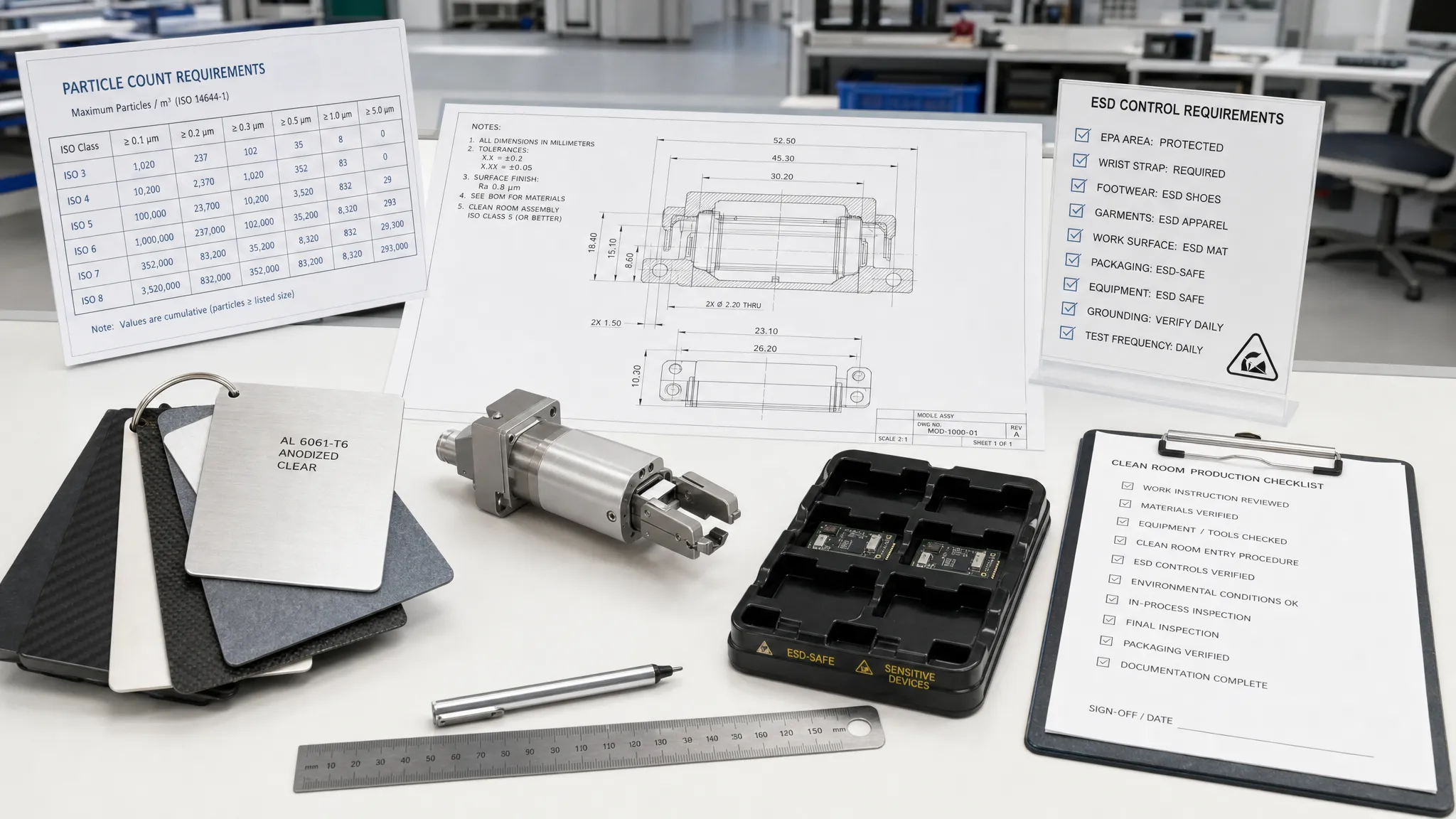
In electronics production, contamination is often too small to see but large enough to damage yield, reliability and safety. A particle, fiber, electrostatic discharge event, outgassing material or poorly controlled handling step can affect assemblies long before a defect becomes visible. That is why electronics clean room standards are not administrative overhead. They are a practical framework for controlling risk in production.
For OEMs, high-tech manufacturers, semiconductor equipment suppliers and machine builders, clean room standards help answer critical questions: how clean must the environment be, which tools and materials are suitable, how should operators handle components, and how can the process remain repeatable over time?
The real value is not in having a clean room label on the door. The value is in translating cleanliness requirements into engineering decisions, operator workflows, inspections, documentation and lifecycle support.
What electronics clean room standards actually control
A clean room standard defines measurable conditions and the controls needed to maintain them. In electronics production, this usually starts with airborne particulate cleanliness, but it rarely ends there.
Clean room production may also require control over:
- Airborne particles and air change strategy
- Electrostatic discharge, often referred to as ESD
- Temperature and relative humidity
- Tooling materials, surface finishes and cleanability
- Gowning procedures and operator behavior
- Packaging, transport and storage methods
- Cleaning methods and inspection routines
- Documentation, traceability and release criteria
The most widely referenced clean room framework is the ISO 14644 series, which classifies air cleanliness by particle concentration. ISO 14644-1 defines cleanroom cleanliness classes based on particle counts at specified particle sizes. For electronics, this classification is an important starting point, but production quality depends on how the class is implemented in daily work.
A clean room can meet an airborne particle target and still introduce risk through unsuitable handling tools, uncontrolled movement, poor maintenance access or materials that shed particles. This is where engineering becomes just as important as the environmental specification.
Why clean room standards matter for production performance
In high-tech production, small deviations can have large consequences. A contaminated optical surface, a scratched precision component or an ESD-damaged electronic assembly can lead to rework, delayed shipments, field failures or difficult root-cause investigations.
Clean room standards matter because they make invisible risks measurable and manageable. They provide a common language between engineering, production, quality, maintenance, safety and suppliers. Instead of relying on assumptions such as “this area is clean enough,” teams can define the required cleanliness level, verify conditions and design the process around those requirements.
For production managers, this supports consistent output. For quality teams, it improves traceability and root-cause analysis. For operators, it creates clearer working methods. For management, it reduces uncertainty in processes that involve high-value components and safety-critical equipment.
Clean room standards also protect investments in expensive machinery, modules and tooling. If an assembly or handling process is not designed for the required environment, the cost may show up later as lower yield, recurring cleaning work, tool wear, inconsistent measurements or production interruptions.
The standards are only effective when they are engineered into the process
A common mistake is to treat clean room standards as a facility issue only. Air filtration and room classification are important, but they cannot compensate for a poorly designed production process.
For electronics production, the process must be engineered around the cleanliness objective. That includes how parts enter the area, how they are unpacked, how they are lifted, how they are positioned, how operators access them, and how tools are cleaned, inspected and stored.
This is especially relevant for larger assemblies, delicate modules and components that cannot simply be placed on a workbench. Handling, lifting and transport equipment must support cleanliness requirements while also protecting employees and the product. A tool that is difficult to clean, awkward to operate or poorly matched to the working environment can create both contamination risk and safety risk.
BKL often sees this connection between clean production and practical engineering. A clean working environment is most effective when tooling, machine interfaces and operator actions are designed together. For example, a lifting tool for a high-value module should not only carry the required load. It should also allow controlled movement, safe access, suitable positioning and predictable use by trained operators.
For a deeper look at sensitive high-tech assembly, BKL has also explained how a clean room semiconductor setup supports safe assembly by combining contamination control with safe handling and process discipline.
Key control areas in electronics clean room production
Electronics clean room standards influence many practical production decisions. The table below shows how different control areas connect to typical production risks.
| Control area | What it manages | Why it matters in production |
|---|---|---|
| Airborne particle control | Particle concentration in the room or local environment | Reduces contamination risk on sensitive surfaces, assemblies and components |
| ESD control | Static charge generation and discharge paths | Helps protect electronic components from latent or immediate ESD damage |
| Temperature and humidity | Environmental stability | Supports process repeatability, dimensional stability and ESD control strategies |
| Material selection | Particle shedding, outgassing, corrosion and cleanability | Prevents tooling, fixtures or packaging from becoming contamination sources |
| Operator procedures | Gowning, movement, cleaning and handling behavior | Reduces human-related variation in clean production processes |
| Tooling and lifting design | Safe movement, load control and contact surfaces | Protects products and employees during handling, installation and maintenance |
| Inspection and documentation | Verification, reporting and traceability | Supports quality control, audits and lifecycle decisions |
ESD deserves special attention in electronics production. A component can be damaged by an electrostatic discharge without obvious visual evidence. That damage may appear later as intermittent behavior or reduced reliability. Clean room planning should therefore consider ESD-safe materials, grounding, humidity ranges, operator procedures and maintenance practices. The ESD Association provides standards and guidance that are widely used for electrostatic control programs.
Cleanliness and ESD control can also create trade-offs. Some materials that perform well mechanically may not be suitable for clean room or ESD-sensitive use. Some cleaning methods may affect surface properties or lubrication. A good engineering process identifies these trade-offs early, before equipment reaches the production floor.
Clean room standards and handling equipment must work together
In many electronics and semiconductor-related environments, the most difficult process step is not the clean assembly itself. It is the safe movement, alignment or maintenance of valuable equipment in a controlled environment.
A clean room handling tool has to meet multiple requirements at the same time. It must support the load safely, maintain control during movement, avoid unnecessary contact with sensitive surfaces, fit within the available space and be practical for operators wearing clean room garments. It may also need surfaces that are easy to clean and materials that are suitable for the production environment.
This is where safety-driven mechanical and mechatronic engineering becomes important. The design should consider the full load path, stability, operator position, access for maintenance, cleaning requirements and inspection needs. Safety should not be added after the tool is built. It should be part of the concept, design review, calculations, manufacturing, testing and documentation.
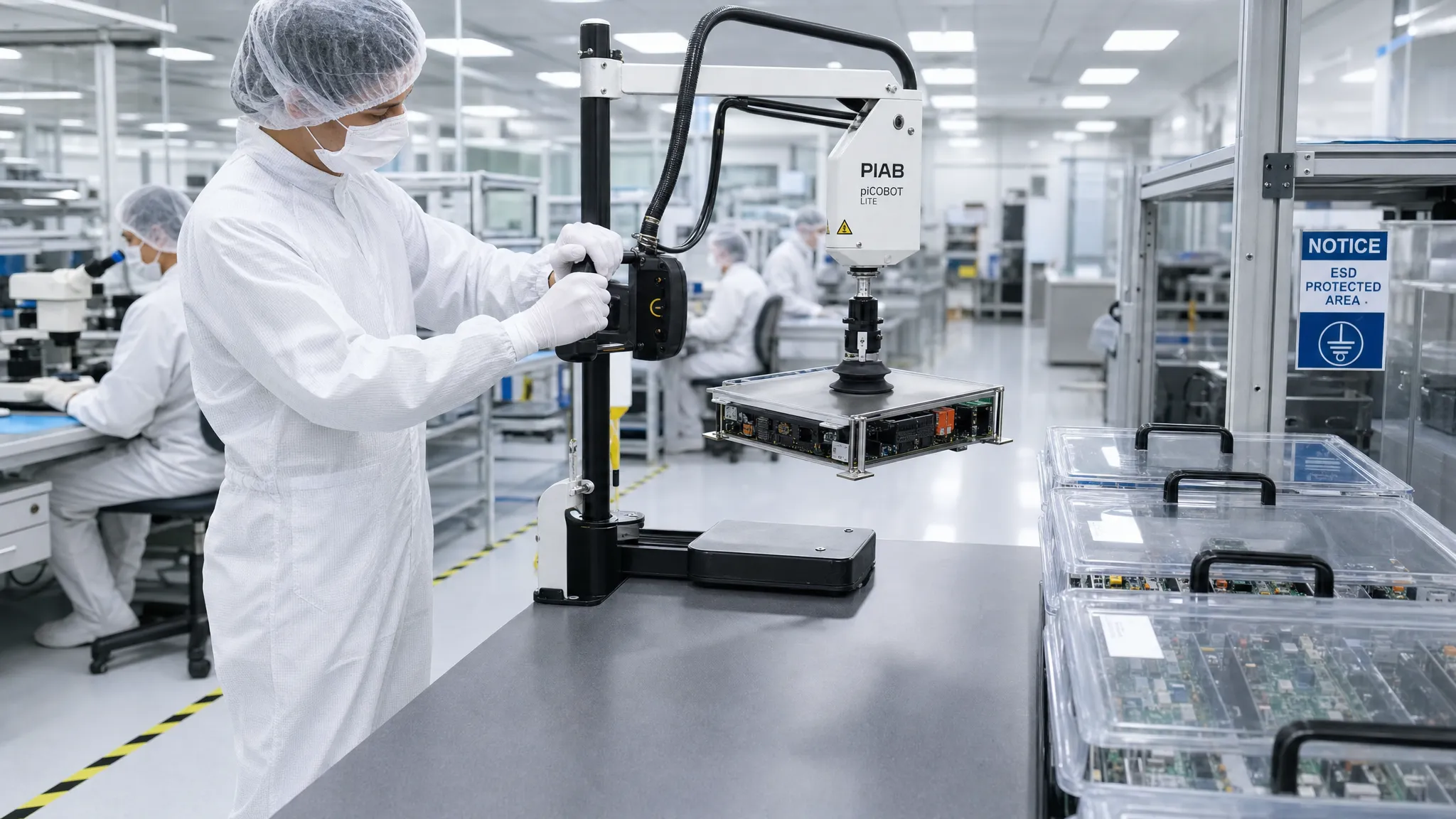
When equipment is heavy, fragile or difficult to access, the lifting and handling method can directly influence both product quality and workplace safety. BKL has addressed these practical constraints in the context of safe lifting for high-value equipment and tight spaces, where engineering choices must reflect the real working environment.
Standards support repeatability, not just cleanliness
The strongest production systems are built on repeatability. Clean room standards help by defining measurable criteria, but repeatability also depends on people, tools and routines.
A repeatable clean room process needs clear answers to practical questions. Which parts are allowed in the clean room? How are they cleaned before entry? Which tools are approved for use? How is a lifting aid inspected before operation? What happens if a fixture is dropped, overloaded or exposed to contamination? Who releases the equipment after maintenance?
If these questions are not answered, production teams may improvise. Improvisation can be useful during early development, but it becomes risky in serial production or safety-critical handling. Clear standards, work instructions and inspection routines reduce variation between shifts, operators and suppliers.
This does not mean every solution must be custom-made. In some cases, a standard component, a modified tool, a new inspection routine or a better cleaning and storage method may be sufficient. The key is to match the level of engineering effort to the actual production risk.
Supplier selection becomes a technical decision
Clean room production changes how companies should evaluate suppliers. Price and delivery time remain important, but they are not enough. A supplier must understand the cleanliness objective, the handling task, the documentation requirements and the risks that appear during operation and maintenance.
For OEMs and high-tech manufacturers, this is especially relevant when outsourcing part of the engineering, manufacturing, assembly or inspection process. A supplier that only focuses on making a tool may miss how that tool will be cleaned, stored, inspected, lifted, maintained and used by operators in a controlled area.
This supplier-discipline mindset applies across manufacturing sectors, even when the technical requirements differ. For example, full-service production partners such as Arcus Apparel Group show how material sourcing, sampling and production coordination can shape quality outcomes in apparel manufacturing. In electronics clean room production, the same broader lesson applies: supplier capability must match the process context, not just the product drawing.
When evaluating a clean room production partner, it is useful to discuss practical evidence such as previous comparable work, inspection methods, test reports, material choices, documentation format, maintenance approach and how deviations are handled. BKL has outlined additional evaluation points in its article on what to consider before outsourcing work to a cleanroom.
Documentation turns standards into operational control
Clean room standards are easier to maintain when documentation is clear and usable. Documentation should not be created only for audits. It should help operators, maintenance teams, safety managers and quality engineers make correct decisions.
Useful documentation may include technical drawings, calculations, risk assessments, inspection reports, load test results, cleaning instructions, user manuals, maintenance instructions and technical files where applicable. For lifting and handling equipment, documentation also helps determine whether a tool remains suitable after years of use, repair or process changes.
This is important because equipment can drift away from its original condition. Wear, small impacts, replacement parts, contamination, cleaning chemicals and changed production layouts can affect safety and usability. Periodic inspection and clear reporting help companies understand whether a tool can continue to be used, requires repair or should be reassessed.
BKL is accredited according to ISO 17020:2012 for inspections and provides services such as visual inspections, overload testing, examinations, reports and practical usage advice. In clean room-related production, this inspection knowledge is valuable because safety and cleanliness requirements must often be considered together.
Lifecycle thinking protects availability and reduces risk
Electronics clean room production should not be designed only for the first successful build. Tools, modules and machines need to remain available, safe and usable throughout their lifecycle.
Lifecycle thinking includes:
- Designing tools so they can be inspected and maintained without unnecessary production disruption
- Choosing materials and finishes that remain suitable after repeated cleaning and use
- Defining inspection intervals based on use, risk and operating conditions
- Keeping documentation up to date after repairs, modifications or process changes
- Supporting operators with equipment that reflects the actual working environment
This approach helps reduce the chance that production teams discover a tooling issue only when a critical build is already planned. It also supports better decision-making around repairs, spare parts, replacement and future process improvements.
For decision-makers, lifecycle cost is often more important than the initial purchase price. A cheaper tool that is difficult to clean, inspect, repair or operate may create hidden costs through downtime, rework, operator frustration and quality issues. A well-engineered solution should consider production efficiency, workplace safety and long-term availability together.
Practical questions before defining your clean room production standard
Before selecting a clean room class, designing tooling or outsourcing a process step, teams should align on the actual production objective. The following questions help connect standards to practical engineering choices:
- What contamination risks are critical for this product or process?
- Which surfaces, components or assemblies are most sensitive?
- Is ESD control required, and how will it be verified?
- How will parts, tools and packaging enter and leave the clean room?
- What lifting, positioning or handling steps create product or operator risk?
- Which materials, lubricants and surface finishes are acceptable?
- How will equipment be cleaned, stored, inspected and maintained?
- What documentation is needed for quality, safety and lifecycle support?
These questions should involve more than one department. Engineering may define the technical requirements, but operators understand practical use. Maintenance sees failure patterns. Quality manages traceability. Safety teams assess workplace risk. Procurement evaluates suppliers. Management balances investment, continuity and lifecycle cost.
When these perspectives are combined early, clean room standards become a production advantage instead of a constraint.
How BKL supports safer clean room-related production
BKL is a technical service provider in mechanics and mechatronics, with experience in hoisting and lifting tools, industrial modules and machines. For high-tech, semiconductor, optical and industrial manufacturing environments, BKL can support individual process steps or complete solutions, from engineering and production to inspection and lifecycle service.
For electronics clean room production, that broader capability matters. A handling tool, module or machine should not be designed only for mechanical function. It should be safe to use, suitable for the environment, practical for operators and supported by clear documentation, testing and inspection where relevant.
BKL’s value is in combining engineering knowledge with production capability and safety-focused service support. That combination helps companies develop tools and equipment that fit the real production context, including clean room constraints, operator use, compliance considerations and long-term availability.
FAQ's about electronics clean room standards:
What are electronics clean room standards? Electronics clean room standards are requirements and practices used to control contamination, environmental conditions, ESD risk, materials, handling and documentation in electronics production. ISO 14644 is commonly used to classify airborne particle cleanliness, but production standards often include additional process controls.
Why are clean room standards important in electronics manufacturing? They help reduce contamination-related defects, support repeatable production, protect sensitive components and improve traceability. They also create a shared framework for engineering, quality, operations, maintenance and supplier management.
Is ISO 14644 enough for electronics production? ISO 14644 is an important starting point for air cleanliness, but it is not always enough on its own. Electronics production may also require ESD control, humidity control, cleanable tooling, suitable materials, operator procedures, inspection routines and process-specific documentation.
Do all electronics processes need the same clean room class? No. The required cleanliness level depends on the product, sensitivity of components, process risk, defect consequences and customer requirements. Over-specifying can add unnecessary cost, while under-specifying can increase quality and reliability risk.
How do lifting and handling tools affect clean room production? Lifting and handling tools can affect both cleanliness and safety. Poor material choices, difficult-to-clean surfaces, uncontrolled movement or awkward operator access can create contamination risk, product damage risk and workplace safety concerns.
When should a company involve an engineering partner? It is useful to involve an engineering partner when the production task includes high-value components, complex handling, strict cleanliness requirements, safety-critical lifting, unclear documentation needs or insufficient internal capacity. Early involvement helps align the tool or machine design with the real production environment.
Discuss your electronics clean room production challenge
Clean room standards are most valuable when they are translated into safe, practical and maintainable production solutions. If your team needs support with clean room-related handling tools, industrial modules, inspections or lifecycle service, BKL can help assess the technical challenge and define an appropriate engineering approach.
Visit BKL to explore how mechanical and mechatronic engineering, production, inspection and service support can contribute to safer and more reliable high-tech production.