
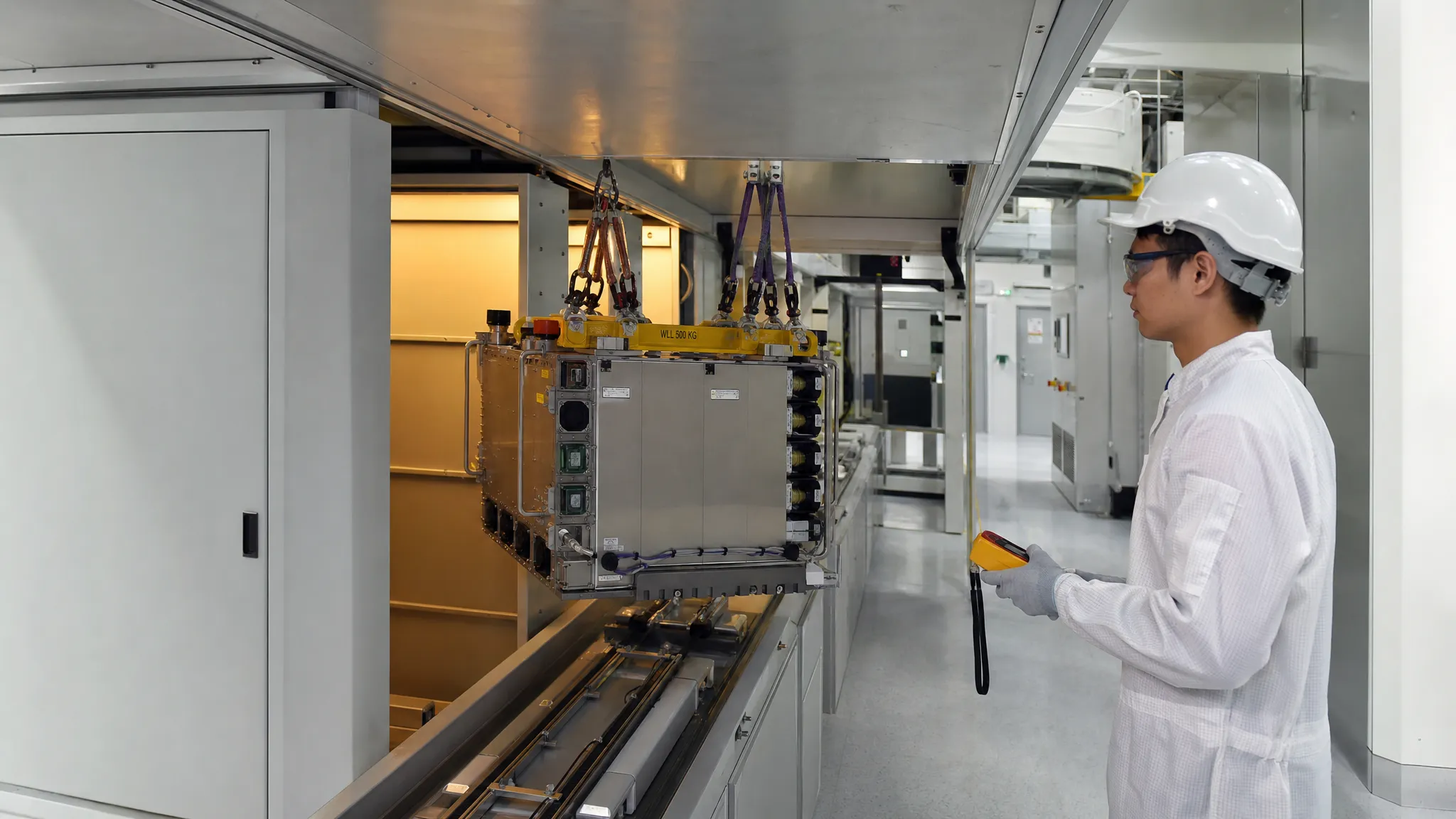
Moving a calibrated optical module, semiconductor subassembly, aerospace component or precision machine part is never just a matter of lifting capacity. When the equipment is valuable, fragile, difficult to replace or critical to production continuity, the lifting method must protect both people and assets.
Tight spaces make that challenge more complex. There may be limited headroom, restricted access for operators, poor visibility of lifting points, nearby machine frames, cleanroom constraints or little room to correct the load once it starts moving. In these environments, safe lifting depends on engineering decisions made long before the hoist is connected.
For OEMs, machine builders, high-tech manufacturers and maintenance teams, the objective is practical: move, install or service critical equipment without introducing unnecessary risk, downtime or operator strain. That requires the right combination of mechanical design, mechatronics, task analysis, inspection, documentation and lifecycle support.
Why tight spaces raise the lifting risk
In an open area, operators usually have enough room to align the hoist, control the load and step away from possible pinch zones. In a constrained production cell or machine interior, these advantages disappear. The load may need to travel close to expensive components, through a narrow opening or under a structure with minimal clearance.
The main risk is not always overload. A lift can be within the rated capacity of the hoist and still be unsafe if the load path is poorly controlled. Side loading, offset centers of gravity, swinging, rotation, limited visibility and manual correction can all increase risk during the task.
High-value equipment also changes the business impact of a lifting error. Damage can cause recalibration work, delayed acceptance testing, replacement lead times, contamination issues or production interruptions. In some high-tech environments, a small mechanical impact may be enough to compromise accuracy or reliability.
| Constraint | Why it matters | Engineering response |
|---|---|---|
| Limited headroom | Standard lifting beams or slings may not fit | Compact lifting frames, low-profile interfaces or dedicated handling tools |
| Offset center of gravity | The load can tilt or rotate unexpectedly | Calculated pick-up points, balancing features and controlled orientation |
| Restricted operator access | Manual guidance may create pinch or crush hazards | Remote positioning, guide features, defined hand positions or mechanical stops |
| Nearby sensitive equipment | A small collision can cause major damage | Controlled load path, protective clearances and task-specific procedures |
| Repeated maintenance lifts | Wear, incorrect use or missing checks can accumulate risk | Periodic inspections, load testing where applicable and clear usage advice |
This is why a safe lifting plan should not start with the question: which hoist do we have available? It should start with the load, the environment and the task.
Start with the real lifting task, not the tool
The safest lifting solution is usually the one that matches the actual working situation. That means engineers need to understand more than the weight of the load. They need to know how the equipment is approached, where it must be picked up, how it must be rotated or translated, who operates the tool, and what can go wrong during installation, transport or maintenance.
A good task definition includes load data, lifting points, center of gravity, available clearances, operator positions, environmental restrictions, frequency of use and required documentation. It should also consider abnormal but foreseeable situations, such as a misaligned part, a blocked travel path, a damaged interface or an operator attempting to correct movement by hand.
This approach is closely linked to broader hoisting safety. For complex environments, BKL has also discussed how better task definition and load-path design help improve hoisting safety in complex industrial environments. In tight spaces, that same logic becomes even more important because there is less margin for improvisation.
The outcome is not always a completely new custom lifting device. Sometimes a standard lifting system can be used safely with a well-engineered adapter, a revised procedure, an inspection, or a modification to improve stability and usability. The key is to base that decision on the real risks of the application, not on assumptions.
Engineering controls that make safe lifting practical
Safe lifting for high-value equipment depends on controls that are built into the design of the tool and the process. Procedures and training remain important, but they should not compensate for poor geometry, unstable load behavior or unclear interfaces.
Effective engineering controls often include:
- Defined pick-up interfaces that prevent incorrect attachment or reduce the chance of misalignment.
- Calculated lifting points that keep the load stable during the expected movement.
- Mechanical stops, guides or locating features that prevent unintended travel or rotation.
- Compact structures that fit within available headroom and maintain adequate safety factors.
- Clear markings for load rating, orientation, inspection status and intended use.
- Ergonomic operating positions that keep hands and bodies away from pinch zones.
In mechatronic tools, additional controls may be relevant. Depending on the application, these can include controlled motion, sensors, interlocks or feedback that helps operators confirm position or status. These features should be applied with care. Extra complexity only improves safety when it is reliable, understandable and suitable for the working environment.
The design should also consider what happens when the tool is not new anymore. Lifting points, pins, welds, locking mechanisms and contact surfaces can wear. A good design makes inspection possible and supports clear acceptance criteria during service life.
Usability is not separate from safety
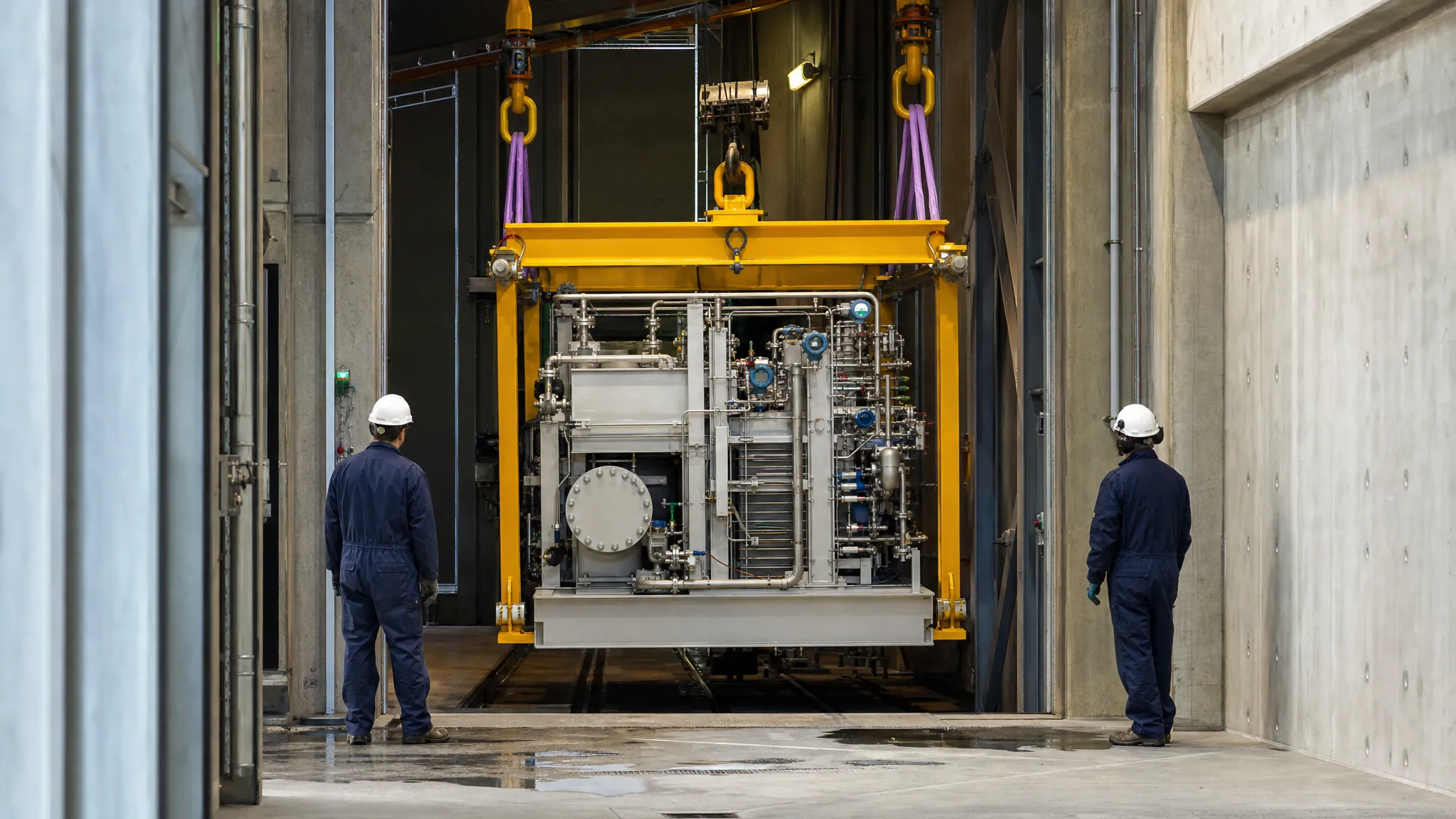
A lifting tool can be technically strong but still create risk if it is difficult to use. In tight spaces, operator behavior is strongly influenced by visibility, access, weight, reach distance and time pressure. If a tool is awkward to position, unclear to lock or hard to verify, people may develop shortcuts.
User-friendly machine design reduces that pressure. Handles should be placed where operators can use them without entering hazardous zones. Locking mechanisms should provide clear feedback. Alignment should be intuitive. The operator should be able to see whether the tool is seated correctly, or the design should provide another reliable verification method.
This is especially important for repeated production or maintenance tasks. A tool used every week or every shift must be robust, consistent and easy to check. A design that saves a few minutes per lift while improving control can support both safety and efficiency, provided the time saving is achieved through better engineering rather than reduced safeguards.
At BKL, safety is considered from the first steps of the design process. That includes mechanical strength, movement control, operator interaction and practical use in the real working environment. The goal is not only to design a tool that can lift the load, but to design a tool that can be used safely and consistently by the people who depend on it.
Compliance, CE documentation and evidence of safe use
For lifting tools, industrial modules and machines used in Europe, compliance responsibilities need to be addressed early. Depending on the product and intended use, CE marking, risk assessment, conformity assessment and technical documentation may be required. In 2026, many manufacturers are also preparing for Regulation (EU) 2023/1230 while still managing requirements under Machinery Directive 2006/42/EC where applicable.
Standards such as EN ISO 12100 for risk assessment and EN 13155 for non-fixed load lifting attachments are often relevant references, depending on the application. The exact framework must be determined for each project. A technical partner should help clarify the route, support the documentation and avoid treating compliance as an administrative step at the end.
Useful documentation can include calculations, drawings, risk assessments, material information, weld or production records where relevant, overload test reports, inspection reports, manuals and clear usage instructions. This documentation supports safe use during operation, maintenance, modifications and audits.
The principle is not unique to industrial equipment. In many safety-critical trades, competent inspection and practical advice help manage risk before visible damage becomes failure. A specialist such as a roofing company on Funen applies that logic to buildings, while industrial teams apply it to lifting equipment: understand the condition, document the findings and act on the evidence.
For machine and tooling projects, BKL can support manufacturers with product safety, risk assessment, CE-related documentation and the broader conformity assessment process. The practical value is that safety, usability and documentation remain connected throughout engineering, production and use. This is also why occupational safety should be integrated early in machine and tooling design, not added as a final checklist.
Inspection and lifecycle support keep lifting tools reliable
A lifting tool is not finished at delivery. Its condition changes through use, storage, transport, cleaning, maintenance and possible misuse. For high-value equipment, this lifecycle perspective is essential because a tool that appears to function normally can still have worn parts, deformation, missing markings or unclear documentation.
Periodic inspections help determine whether the tool is still suitable for use. Depending on the equipment and risk profile, inspections may include visual checks, dimensional checks, functional checks, overload testing where applicable, examination of critical components, reporting and practical usage advice.
BKL is accredited according to ISO 17020:2012 for inspections. That matters for companies that need consistent inspection quality, clear reports and traceable advice for custom lifting and handling tools. It also reduces the coordination burden when the same technical partner understands the design intent, production method and real use of the equipment.
Lifecycle support also protects availability. If a tool is essential for maintenance or production, unclear repair routes and delayed inspections can become operational risks. Planning inspections, keeping documentation up to date and addressing wear before the next critical lift all support continuity. For teams focused on uptime, BKL has also shared practical guidance on increasing tooling availability.
When a custom solution is needed, and when it is not
Not every lifting challenge requires a fully custom tool. If the load is straightforward, the environment is open and the risks are well controlled, a standard lifting accessory with proper documentation and inspection may be sufficient. In other cases, a partial engineering improvement is enough, such as a new adapter, clearer locking feature, revised lifting interface or updated inspection regime.
A custom solution becomes more relevant when the load is delicate, access is limited, orientation must be controlled, manual handling would create risk, or standard equipment cannot provide a safe and repeatable load path. It may also be necessary when documentation, CE requirements or customer-specific acceptance criteria demand a higher level of engineering evidence.
The decision should compare more than purchase price. Total lifecycle cost includes risk of damage, downtime, operator effort, inspection needs, maintenance, documentation gaps and production continuity. For high-value equipment, a better engineered lifting method can often justify itself by reducing uncertainty during critical operations.
How BKL supports safer lifting in demanding environments
BKL combines mechanics, mechatronics, engineering, manufacturing, inspection and service for hoisting and lifting tools, industrial modules and machines. That combination is valuable when safe lifting depends on both technical design and practical use.
Support can be provided for individual process steps or as a complete solution. For example, a customer may need engineering capacity for a lifting concept, production of a small complex series, an inspection of existing tools, overload testing, documentation support or lifecycle maintenance. In other projects, the same customer may benefit from one partner managing concept development, detailed engineering, manufacturing, testing, documentation and service.
For OEMs, high-tech manufacturers, semiconductor equipment manufacturers and industrial companies, the advantage is not only specialist knowledge. It is the ability to connect safety, efficiency, usability and availability in one engineering approach. In tight spaces and around high-value equipment, that connection is what turns lifting from a risky operation into a controlled process.
FAQ's about safe lifting for high-value equipment and tight spaces:
What makes lifting high-value equipment different from normal lifting? High-value equipment often has strict requirements for accuracy, cleanliness, alignment, calibration or lead time. The lifting plan must protect operators and prevent damage to the load, surrounding equipment and production schedule.
Does safe lifting always require a custom lifting tool? No. A standard solution may be sufficient when the load, environment and risks are straightforward. Custom engineering becomes more relevant when space is limited, the load is sensitive, orientation must be controlled or documentation requirements are more demanding.
What information is needed before designing a lifting solution? Engineers need load weight, center of gravity, lifting points, available clearances, movement sequence, operator positions, frequency of use, environmental conditions and any applicable compliance or documentation requirements.
How often should lifting tools be inspected? Inspection intervals depend on the tool, intensity of use, risk profile, environment and applicable requirements. High-use or safety-critical tools often need planned periodic inspections, clear records and practical follow-up advice.
Can BKL support only part of a lifting project? Yes. BKL can support individual steps such as engineering, manufacturing, inspection, overload testing, documentation or service. BKL can also provide complete end-to-end support when the project requires one technical partner from concept to lifecycle maintenance.
Need a safer way to lift critical equipment in limited space?
If your team is handling high-value modules, restricted access, uncertain lifting points or aging tooling, BKL can help assess the practical risks and define a suitable next step. That may be an inspection, a tool improvement, a custom lifting solution, documentation support or a complete engineering and lifecycle approach.
Bring the load data, operating environment and current challenges. BKL can help translate them into a safe, usable and technically sound lifting method that supports both workplace safety and operational continuity.