
Factory safety is often discussed in terms of rules, certificates and guarding. Those matter, but the practical question on the factory floor is more direct: can employees use the tool safely, repeatedly and efficiently during the exact task it was meant to support?
For OEMs, high-tech manufacturers, machine builders and maintenance teams, safety tools may include lifting beams, handling fixtures, installation aids, support frames, transport tools, service tools, access equipment and mechatronic modules. Some are standard products. Others need modification or full engineering because the load, access route, operator position or production environment is too specific.
The right choice is rarely based on rated capacity alone. A tool can be strong enough on paper and still be unsafe or inefficient in practice if it is difficult to position, unclear to lock, hard to inspect or incompatible with the real working area. Choosing safety tools that fit real factory use means looking at the task, the operator, the asset, the environment and the full lifecycle together.
Why fit for real factory use matters
A safety tool is not only a physical component. It is part of a work process. It connects people, machines, valuable assets, maintenance procedures and production planning. If that process is not understood, the tool may introduce new risks instead of reducing existing ones.
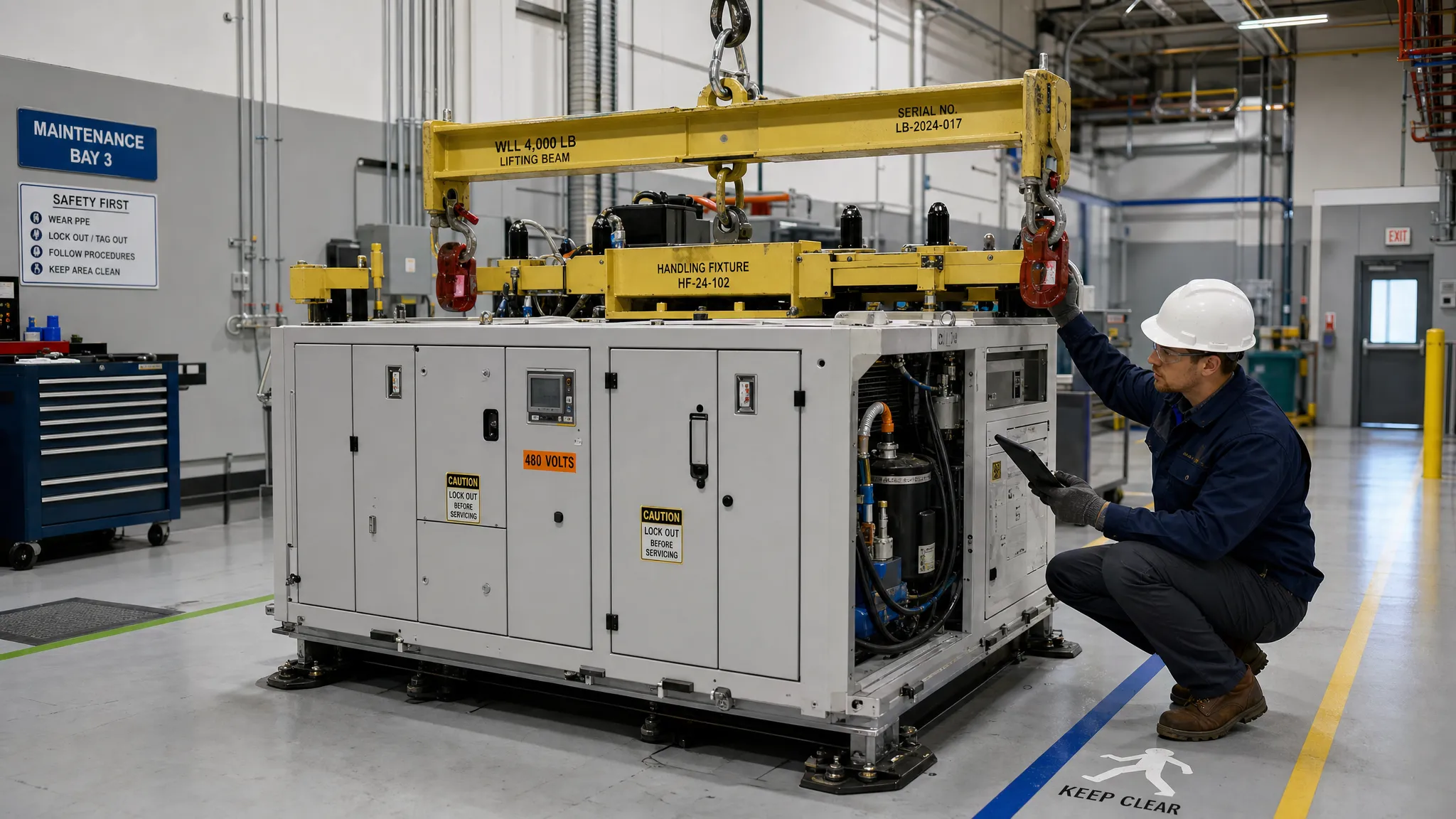
Consider a lifting aid used for a precision module in a high-tech assembly area. The tool may need to handle a high-value load, avoid sensitive surfaces, fit through a narrow access path and be operated by employees wearing gloves or cleanroom clothing. A standard lifting accessory may meet its rated load requirement, but still fail the practical use case because it blocks visibility, requires awkward body positions or leaves too little clearance around the machine.
This is why factory reality must be part of the selection process from the start. A tool that fits real use supports safer handling, clearer procedures, shorter changeovers and fewer workarounds. A tool that does not fit real use often leads to informal adjustments, extra coordination between operators or delayed maintenance work.
Start with the task before choosing the tool
The most reliable selection process begins with the actual operation, not with a product catalogue. Before deciding whether a standard tool, adapted tool or custom engineered solution is needed, define what the tool must do in the real factory environment.
Key questions include:
- What asset will be lifted, supported, transported, positioned, installed or maintained?
- What are the mass, geometry, center of gravity and sensitive contact areas?
- Which employees will use the tool, and how often will they use it?
- What cranes, hoists, forklifts, work platforms, machine interfaces or floor conditions are involved?
- What are the access limits, visibility constraints and surrounding equipment hazards?
- What inspection, maintenance, documentation and storage requirements apply after delivery?
These questions help distinguish between a simple purchase decision and an engineering decision. A low-risk, repetitive handling task may be suitable for a proven standard tool. A safety-critical lift involving expensive equipment, limited access or unusual load behavior may require a more detailed engineering approach.
Convert factory conditions into engineering requirements
Real factory use should become measurable design and selection criteria. This prevents important details from remaining informal knowledge in the maintenance team or production department.
| Factory reality | Requirement to define | Risk if ignored |
|---|---|---|
| Restricted access around machinery | Tool envelope, insertion path, working clearance and removal route | Operators may force the tool into position or work from unsafe postures |
| High-value or sensitive equipment | Defined contact points, protective surfaces and controlled load transfer | Damage to critical surfaces, misalignment or uncontrolled load movement |
| Multiple product variants | Adjustable, modular or keyed interfaces with clear identification | Incorrect connection, unstable lifting or wrong tool selection |
| Cleanroom, ESD or contamination-sensitive areas | Suitable materials, finishes, cleaning approach and handling method | Process contamination or incompatibility with production rules |
| Repeated shift use | Durable wear points, simple locking features and visible status indicators | Gradual degradation, misuse or inconsistent operation between shifts |
| Maintenance or inspection needs | Accessible inspection points, serial identification and test documentation | Difficult proof of safe condition after years of use |
This translation step is where engineering quality becomes practical. It connects mechanical strength, mechatronic function, ergonomics, compliance and maintenance into one set of requirements. Without this step, teams may approve a tool that looks acceptable during procurement but becomes problematic during daily operation.
Design the complete interaction, not only the rated capacity
For lifting and handling applications, rated load is only one part of the safety picture. The complete load path matters. That path may include the crane hook, lifting eye, spreader, pins, adapters, bolts, product interface, support structure and floor or machine foundation. Each element must be compatible with the others.
The same principle applies to mechatronic safety tools. Sensors, actuators, cylinders, control logic, emergency stops, interlocks and status indicators must work together in a way that supports predictable operation. If a pneumatic or hydraulic function loses pressure, the tool should behave in a controlled way appropriate to the application. If an operator must confirm a lock, the confirmation must be visible and unambiguous in the working position.
Early design reviews should therefore include more than strength calculations. They should also consider foreseeable misuse, pinch points, trapped energy, loss of power, incorrect positioning, maintenance access and the consequences of component wear. For a broader view of this principle, BKL has also explained why occupational safety in machine and tooling design should be addressed before detailed design choices are frozen.
Usability is a safety requirement
A tool that is difficult to use consistently is a weak point in the process. Operators may compensate with improvised supports, extra force, informal lifting angles or additional hands close to the load. These workarounds are often a sign that the tool does not match the task.
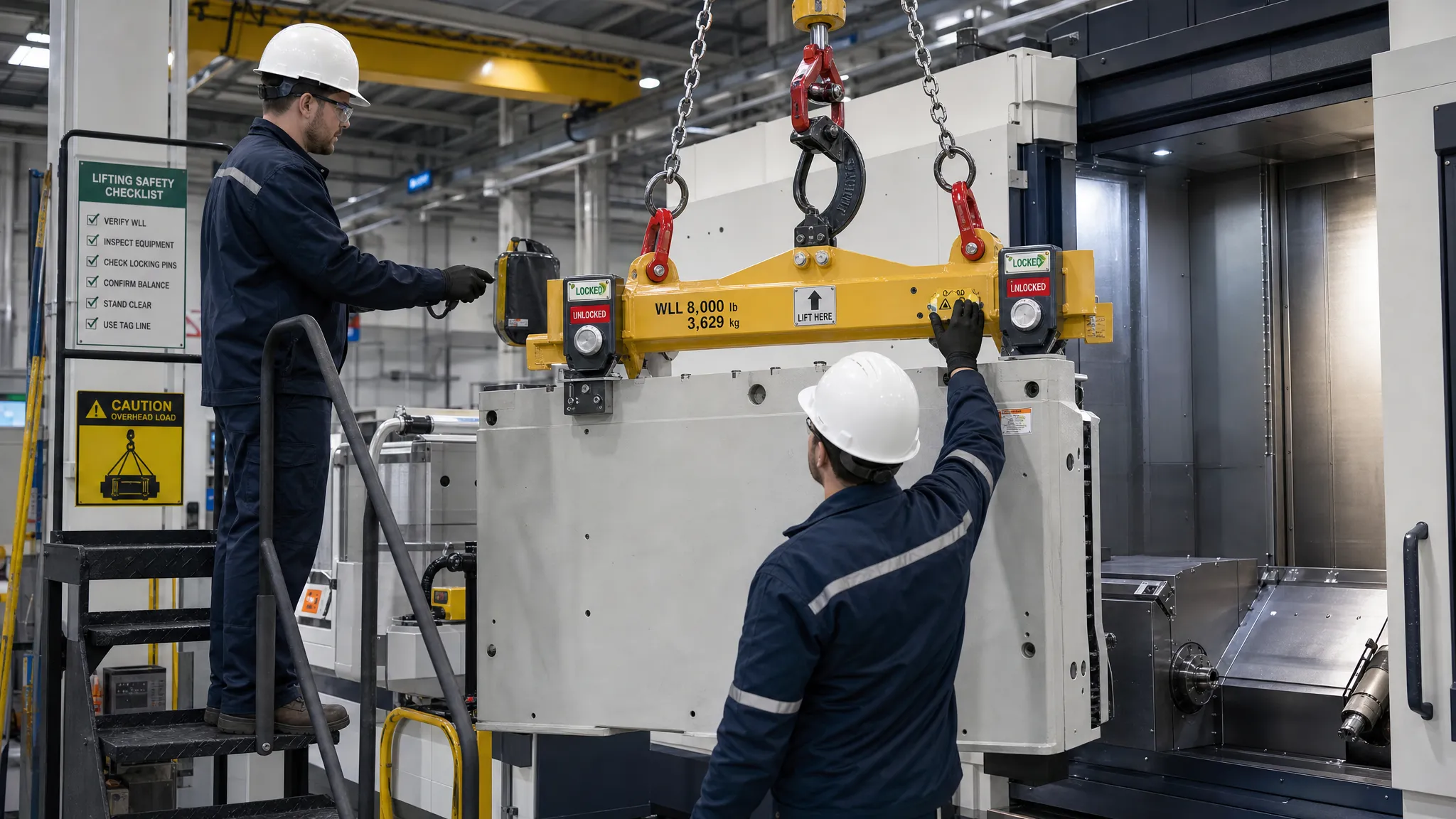
Good usability is not about comfort alone. It affects risk reduction. Handles should be placed where operators naturally stand. Locking features should provide clear feedback. Markings should remain readable after repeated use. Interfaces should make incorrect assembly unlikely. Access should allow employees to work with the PPE, gloves or cleanroom clothing required in that area.
Usability also affects efficiency. A well-designed safety tool reduces hesitation, communication errors and unnecessary repositioning. This is especially important during planned maintenance windows or production changeovers, where time pressure can increase the temptation to take shortcuts.
Compliance and documentation should be planned early
Compliance is not a sticker at the end of the project. Depending on the type and scope of the tool, relevant requirements may include EU machinery legislation, lifting accessory requirements, electrical safety, EMC considerations, workplace safety rules, customer standards and internal operating procedures. As the EU transitions from the Machinery Directive to Regulation (EU) 2023/1230, engineering teams should plan conformity assessment and documentation rather than treating it as an afterthought.
For safety tools, useful documentation often includes design assumptions, risk assessment output, calculations, drawings, material information, welding or manufacturing records where relevant, test reports, user instructions, inspection intervals and residual risk information. This evidence helps engineering, safety, operations and maintenance teams understand what the tool is designed to do and how it should be used.
Documentation also matters when tools include digital or mechatronic functions. If a tool sends service alerts, user authorization emails or inspection reminders, QA teams should validate those flows with controlled test data before they are connected to operational systems. Developer teams can use programmable temporary inboxes for automated email testing to verify email behavior without polluting production accounts.
The goal is not paperwork for its own sake. Clear documentation supports safer operation, easier inspection, better training and faster decision-making when a tool is modified, repaired or moved to another production line.
Inspectability and maintenance determine long-term safety
A tool may be suitable on the day it is delivered, but still become a risk if its condition cannot be verified later. Wear, deformation, corrosion, fatigue, incorrect storage and small cracks can affect safety-critical equipment over time. This is why inspectability should be considered during selection and design.
Inspection points should be reachable and identifiable. Critical welds, pins, bearing surfaces, locking mechanisms and load-bearing interfaces should not be hidden without reason. Serial numbers, load ratings and usage limits should remain legible. If overload testing, visual inspection or periodic examination is required, the tool should be designed so those activities can be performed without unnecessary disruption.
For many factories, lifecycle planning also has a direct link with production continuity. A tool that is unavailable during inspection, repair or recertification can delay maintenance or production work. Practical planning, spare capacity and clear usage advice all support increasing tooling availability without treating safety as separate from operations.
BKL is accredited according to ISO 17020:2012 for inspections and can support visual inspections, overload testing, reports and practical usage advice for relevant lifting and handling equipment. That inspection knowledge is valuable not only after delivery, but also during design, because it helps ensure that tools remain manageable throughout their service life.
Standard, adapted or custom: choose based on risk and context
Not every situation requires a custom-made safety tool. A standard solution may be appropriate when the task is straightforward, the load is stable, the operating environment is conventional and the supplier documentation matches the intended use. The decision should be based on risk, fit and lifecycle impact.
| Option | Best suited for | What to verify before selection |
|---|---|---|
| Standard tool | Repetitive tasks with known loads and conventional access | Rated capacity, supplier documentation, compatibility with the task and inspection requirements |
| Adapted standard tool | Tasks where the basic concept works, but interfaces or ergonomics need adjustment | Whether modifications affect calculations, CE obligations, documentation or inspection scope |
| Custom engineered tool | Complex lifting, restricted access, high-value loads, unusual geometry or strict process constraints | Full task analysis, load path, usability, risk assessment, testing, documentation and lifecycle support |
| Inspection or improvement of existing tool | Equipment that still functions, but lacks current proof of condition or usability | Condition, wear, documentation gaps, usage advice and whether repair or replacement is more appropriate |
This approach helps teams avoid two common mistakes. The first is overengineering a simple task. The second is assuming a standard product is sufficient for a safety-critical process simply because it is available quickly or costs less initially.
A practical decision framework for engineering and operations teams
Choosing safety tools should be a cross-functional decision. Engineering may focus on design assumptions and interfaces. Operations may understand shift use and bottlenecks. Maintenance may know the access constraints. Safety teams may identify hazards and documentation needs. Procurement may evaluate supplier capability and lifecycle cost.
A practical selection process can follow these steps:
- Define the task, asset, users, frequency and working environment.
- Identify hazards, foreseeable misuse and consequences of failure or poor usability.
- Compare standard, adapted and custom solutions against the real task requirements.
- Verify the full load path, interfaces, stability and safe operating positions.
- Review compliance obligations, risk assessment needs and required documentation.
- Plan inspection, overload testing where relevant, maintenance access and storage.
- Evaluate supplier capability for engineering, production, inspection, repair and lifecycle support.
This framework is useful because it makes trade-offs visible. A lower initial purchase cost may not be the best choice if the tool requires extra handling time, creates operator workarounds, lacks inspection evidence or becomes unavailable during critical maintenance periods.
How BKL supports teams that need safety tools
BKL supports clients with mechanical and mechatronic engineering, production, inspections and related services for hoisting and lifting tools, industrial modules and machines. The value is not limited to building a single device. BKL can support individual process steps or complete solutions, from concept development and engineering to manufacturing, inspection and lifecycle service.
For OEMs, semicon equipment manufacturers, high-tech companies and industrial manufacturers, this combination is important. Safety-critical tools often require practical engineering knowledge, controlled production, clear documentation and an understanding of how equipment will be used during operation, installation and maintenance.
BKL also manufactures small-scale and complex series, which is relevant when a tool is too specific for a catalogue supplier but still needs repeatable production quality. By combining engineering, manufacturing and inspection expertise, BKL helps teams make decisions based on the complete use case rather than isolated specifications.
FAQ's about choosing safety tools that fit real factory use:
What makes a safety tool suitable for real factory use? A suitable safety tool matches the actual task, load, operator position, access route, factory environment and lifecycle requirements. It should be strong enough, but also clear to operate, easy to inspect and compatible with daily production or maintenance work.
Is a custom safety tool always necessary? No. Standard tools can be appropriate for straightforward tasks with known loads and conventional working conditions. Custom engineering becomes more relevant when the load is unusual, access is restricted, equipment is high-value, usability is critical or documentation requirements are complex.
How often should safety tools be inspected? Inspection frequency depends on the tool type, usage intensity, operating environment, applicable requirements, manufacturer instructions and internal safety policy. Safety-critical lifting and handling tools should have clear inspection intervals and records that match their real use.
What documentation should be available for lifting and handling tools? Relevant documentation may include drawings, calculations, load ratings, test reports, risk assessment information, user instructions, inspection records, maintenance advice and technical file information where applicable. The exact documentation depends on the tool and regulatory context.
Why is usability important for safety tools? Poor usability can lead to workarounds, awkward postures, unclear locking, incorrect positioning or inconsistent use between shifts. A user-friendly tool supports safer behavior because the intended method is also the easiest and clearest method.
Can BKL support only part of the process? Yes. BKL can support individual steps such as engineering, production, inspection or service, as well as complete end-to-end solutions when a client needs one partner for the full lifecycle.
Need safety tools that work in your production environment?
If your team is evaluating lifting, handling, maintenance or machine-related safety tools, start with the real task and the full lifecycle. A well-chosen tool should support safety, usability, documentation, inspection and availability in one coherent solution.
BKL can help assess the technical challenge, define practical requirements and support the engineering, production, inspection or service steps needed for your application.