
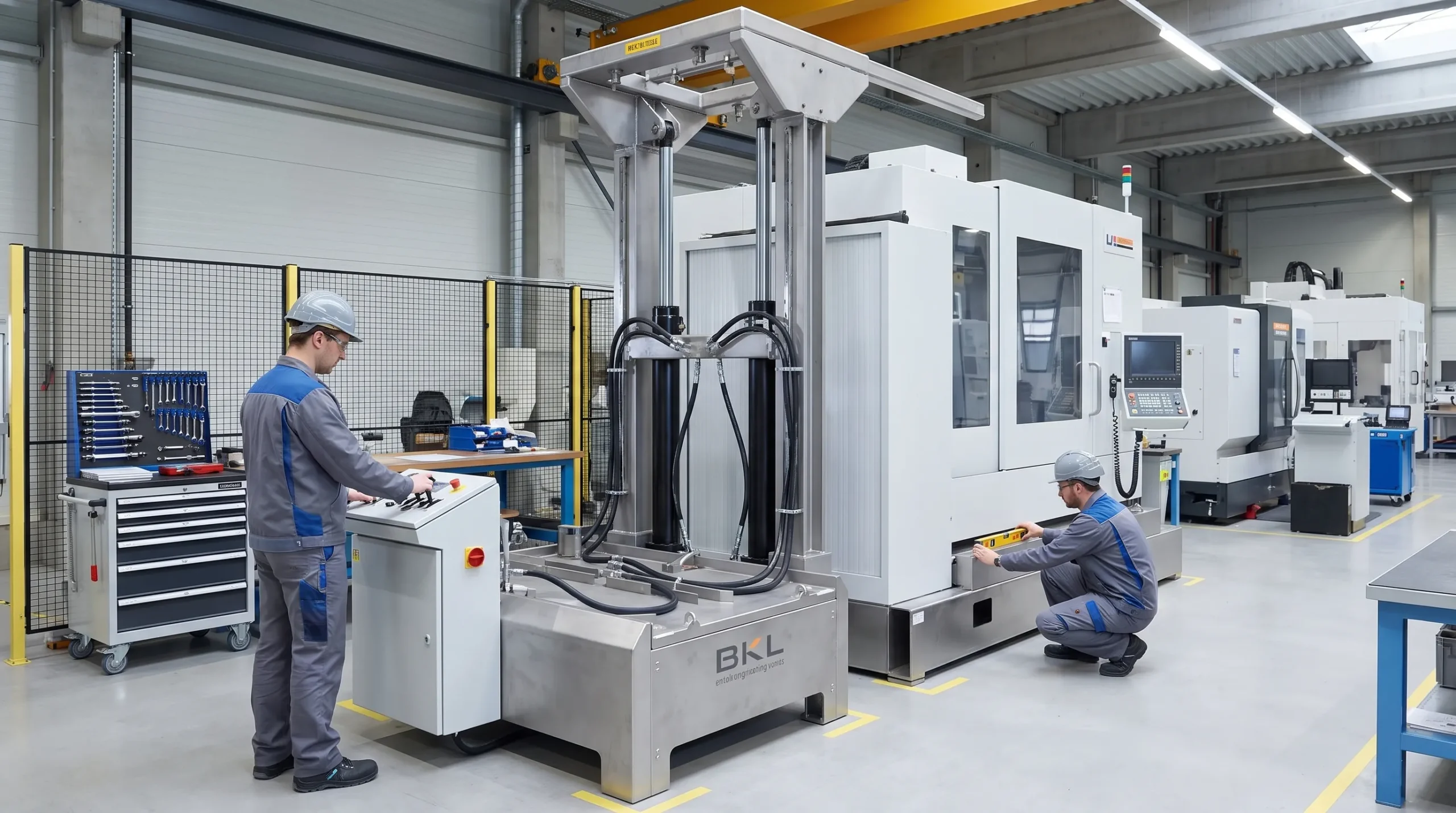
Hydraulic systems can be an excellent fit for lifting tools, but only when their advantages match the real lifting task. In high-tech manufacturing, aerospace, medical technology, defence, energy and analytical equipment, the question is not whether hydraulics are powerful. The question is whether hydraulic actuation improves safety, usability and equipment availability in the specific working environment.
For OEMs and first-tier suppliers, that distinction matters. A lifting tool may need to handle a valuable module in a tight space, support an operator during maintenance or position a heavy assembly without shock loading nearby components. In those situations, the actuator choice influences far more than movement. It affects the load path, operator ergonomics, control concept, maintenance plan, inspection regime and technical documentation.
What a hydraulic system actually adds to a lifting tool
A hydraulic lifting system uses pressurized fluid to transfer force from a pump to an actuator, typically a cylinder or hydraulic motor. Because hydraulic fluid is far less compressible than air, the system can deliver high force in a compact package with controlled movement at low speed.
That force-to-size ratio is the main reason hydraulics remain relevant in custom lifting tools. A hydraulic cylinder can often fit where a large electric actuator, screw jack or mechanical linkage would be difficult to package. This makes hydraulics useful for scissor lift tables, mobile lift devices, lifting adapters, tilting tools, handling equipment and maintenance tools where space is limited but the load is significant.
Hydraulics also make sense when an operator needs controlled vertical motion rather than fast cycling. The movement can be smooth, gradual and easy to regulate when the circuit, valves and controls are properly specified. For sensitive loads, that controlled motion can reduce the risk of sudden movement or impact during lifting, lowering and positioning.
A hydraulic system is not only a cylinder and a pump. In a safe lifting tool, it may include load-holding valves, pressure relief valves, flow controls, pilot-operated check valves, position sensors, hose burst protection, mechanical locks, control interfaces and clear operator instructions. The safety value comes from the complete engineered system, not from hydraulic power alone.
Before choosing actuation, it is worth starting with the lifting task itself. Load geometry, center of gravity, available space, operator position and inspection needs should guide the concept. BKL discusses this broader selection logic in its article on how to select lifting and hoisting equipment wisely.
When hydraulics are usually the right technical fit
Hydraulic systems are strongest when a lifting tool needs high force, compact construction and stable movement without excessive operator effort. They are not automatically the most advanced option, but they are often the most practical one when the physics of the application favor them.
| Application factor | Why hydraulics can fit well | What to verify before choosing hydraulics |
|---|---|---|
| High load in limited space | Cylinders can generate high force in a compact envelope | Structural strength, cylinder mounting points and load path |
| Controlled low-speed lifting | Flow control can support smooth lifting and lowering | Valve selection, lowering speed and operator visibility |
| Mobile lifting tool | A manual or battery-powered hydraulic unit can reduce dependence on fixed infrastructure | Stability, wheel loads, floor conditions and recharge or pumping effort |
| Uneven or complex load geometry | Multiple cylinders can be configured around the load | Synchronization, torsional effects and load distribution |
| Intermittent lifting | Hydraulics can be efficient for occasional high-force movements | Holding concept, leakage risk and maintenance intervals |
| Industrial maintenance work | Hydraulic tools can be robust and practical in demanding environments | Contamination control, hose protection and safe access for service |
In practice, hydraulics are often considered for lifting tools that must support assembly, service or installation tasks rather than continuous production motion. For example, a maintenance team may need to raise a heavy module to a safe working height, hold it securely while technicians work and lower it in a controlled manner after the task is complete. A well-designed hydraulic lifting device can reduce manual handling, improve working posture and give operators more control over the load.
Hydraulics may also be suitable when the lifting tool must remain relatively simple to operate. A user-friendly interface, clear controls and a predictable response are often more valuable than unnecessary automation. For safety-critical tools, complexity should only be added when it reduces risk or improves process control.
When hydraulic systems create avoidable complexity
Hydraulic systems also bring design responsibilities that should not be underestimated. They involve seals, hoses, fittings, fluid cleanliness, pressure containment, leakage control and periodic maintenance. In a cleanroom or optical assembly environment, even a small leak can be unacceptable. In an application with very fine positioning requirements, a servo-electric or mechanical adjustment system may offer better repeatability.
Hydraulics may be the wrong fit when the load is light, the stroke is small, the motion must be highly repeatable or the environment has strict restrictions on fluids. They can also be less attractive when the tool needs continuous high-cycle operation and the maintenance team wants to minimize hydraulic components.
The right decision is application-first, not technology-first. Procurement teams see the same principle in other business-critical systems. A generic tool can be sufficient for simple work, but a specialized platform such as Elia Pay for travel agency payment management becomes relevant when the workflow, compliance burden and risk profile are specific. Lifting tools deserve the same discipline: choose the system that fits the operational reality, not the one that looks best in isolation.
Engineering details that decide whether hydraulics are safe
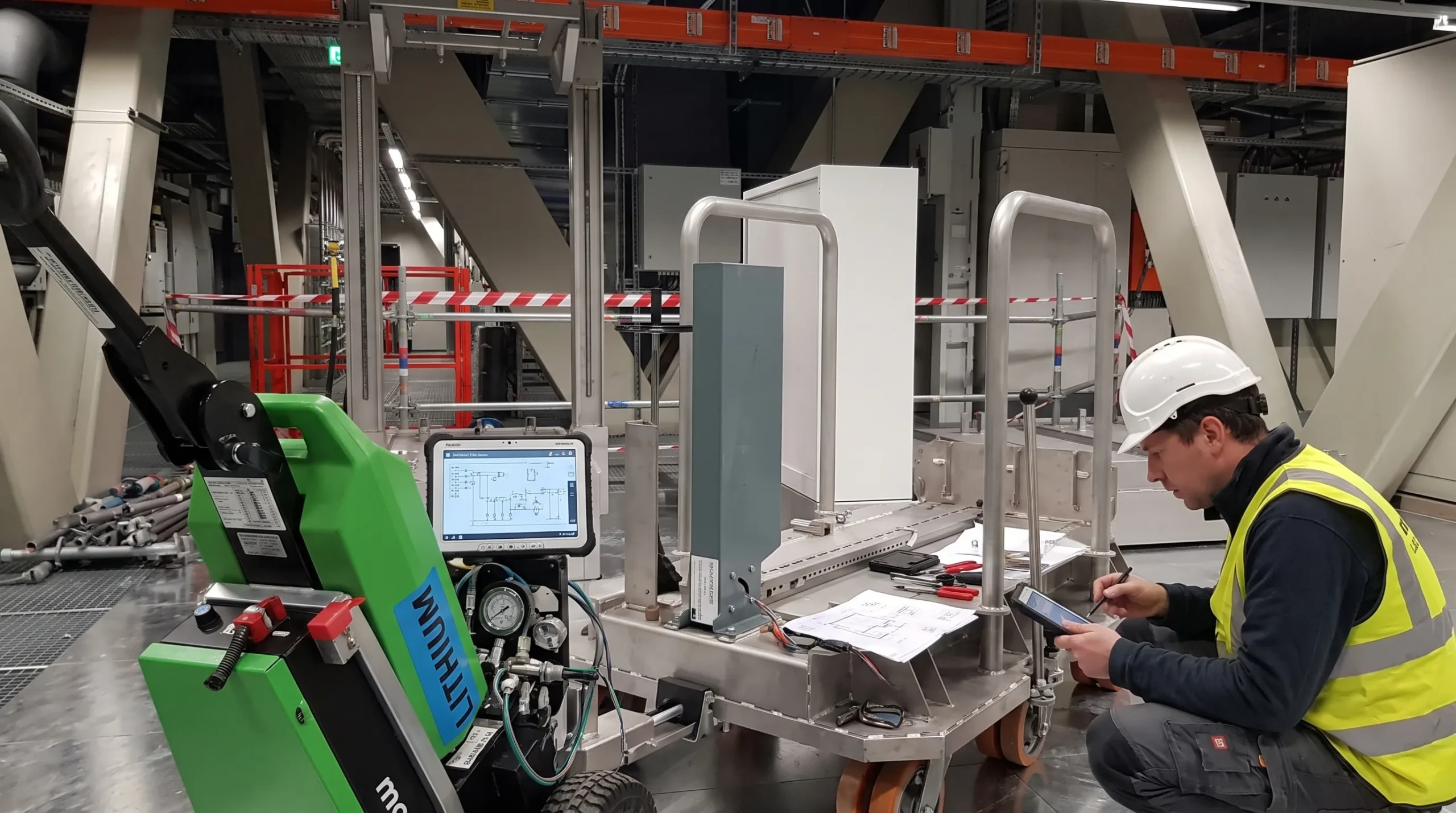
A hydraulic lifting tool is only as safe as the system around it. Pressure capacity is not a substitute for mechanical integrity, clear operating limits or a well-defined inspection plan. The design must address what happens during normal use, foreseeable misuse, component wear and maintenance.
The mechanical structure should be designed around the full load path. That includes the lifted component, lifting interface, cylinder mounts, frame, wheels or feet, floor contact and any connection to a crane, hoist or fixed structure. Rated capacity alone does not prove that the tool is suitable for a specific lift. The load may be offset, the center of gravity may shift or the operator may need to approach the load from a restricted position.
The hydraulic circuit should support controlled movement and predictable load holding. Load-holding valves can help prevent unintended lowering if pressure is lost, but they must be selected and installed correctly. Pressure relief valves can protect the circuit from excessive pressure, but they do not remove the need for structural design calculations. Flow controls can improve lowering behavior, but they must be evaluated under the real load and temperature conditions.
Mechanical safety features remain important. Depending on the application, a hydraulic lift may need mechanical locks, positive stops, support pins, guards, interlocks or a stable parking position. A hydraulic cylinder should not be treated as the only means of supporting a load during maintenance unless the risk assessment and design concept support that use.
Controls and operator interfaces deserve the same attention as the steelwork and hydraulics. The operator needs a clear view of the load or reliable feedback from the tool. Controls should reduce the chance of accidental activation, confusing movement directions or unsafe body positions. In high-value equipment handling, the tool should guide the operator toward the intended method of use instead of relying on experience alone.
| Design area | Key question | Practical implication |
|---|---|---|
| Load path | Where does the force travel from load to floor or hoist? | Design brackets, welds, pins and frames for real force directions |
| Hydraulic circuit | What happens if pressure drops or a hose fails? | Consider load-holding valves, hose routing and safe lowering behavior |
| Operator use | Can the tool be used safely in the real workspace? | Check visibility, reach, posture, control position and access around the load |
| Maintenance | Can critical parts be inspected and serviced? | Provide access to cylinders, hoses, seals, pivots and wear parts |
| Documentation | Can safe use be verified and repeated? | Provide manuals, drawings, test reports and inspection instructions where applicable |
Standard hydraulic equipment or custom engineering?
A standard hydraulic scissor lift table or pallet-based lift can be the right answer when the load is stable, the work area is spacious and the process has no unusual interface requirements. Not every lifting task justifies a custom-engineered solution.
Custom engineering becomes relevant when the lifting tool must interact with a specific product, machine module or production environment. Typical triggers include an offset center of gravity, sensitive surfaces, limited clearance, strict cleanliness requirements, unusual operator posture, integration with a hoist or machine, special load attachment points or the need for detailed technical documentation.
For high-tech OEMs and first-tier suppliers, the most difficult lifting tasks often sit between catalogue equipment and full machine design. A standard device may lift enough weight, but it may not support the load in the right places, fit through the available route, prevent rotation or give operators safe access. BKL covers this decision point in more detail in its article on when an equipment hoist needs a custom engineering approach.
The same applies to hydraulic actuation. A catalogue hydraulic lift may be technically capable of raising the mass, but a custom hydraulic lifting tool may be needed to control the load path, protect the product, support ergonomic use and document the application properly.
Cleanroom and high-tech considerations
Hydraulic lifting tools can be used in demanding environments, but the cleanliness concept must be explicit from the start. In semiconductor, optical, analytical and medical technology applications, leakage risk, particle generation, material selection and cleaning procedures may influence whether hydraulics are acceptable.
This does not always rule out hydraulics. It may lead to protected hose routing, drip trays, compatible fluids, sealed components, preventive replacement intervals or a design that keeps hydraulic elements away from the most sensitive zone. In some cases, the best solution is hybrid: hydraulics provide the main lifting force while mechanical guides, locks or fine-adjustment mechanisms handle final positioning.
A cleanroom lift or cleanroom handling tool should not be evaluated only on its lifting capacity. It should be assessed on how it behaves during transport, setup, lifting, holding, lowering, cleaning, inspection and maintenance. The lifecycle questions are often where a suitable concept becomes clear.
Inspection, maintenance and lifecycle support
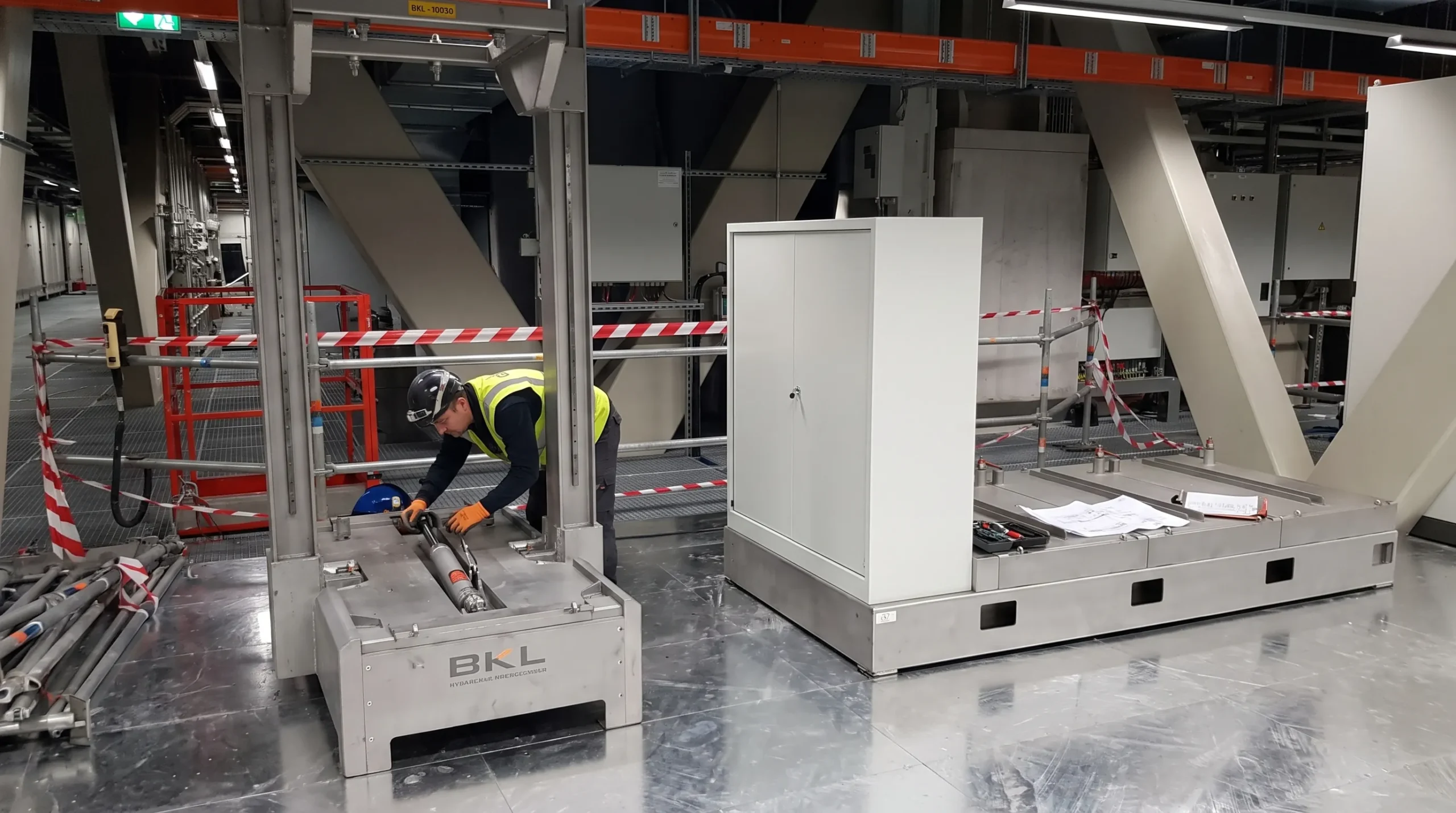
Hydraulic lifting tools need inspection and maintenance because their condition changes over time. Hoses age, seals wear, pivots loosen, fluid can become contaminated and structures can be affected by overloads or unintended impacts. A tool that still moves normally may still require inspection if its use has changed or if visible damage is present.
Inspection should not be treated as a paperwork exercise. It should verify whether the equipment remains safe for its intended use. For hydraulic lifting tools, that can include checking deformation, wear, cracks, leakage, hose condition, cylinder behavior, control function, labels, documentation and test history. Where relevant, overload testing or certification may also be part of the process.
BKL is accredited according to ISO 17020:2012 for inspections and can support visual inspections, overload testing, examinations, reports, certification where applicable and practical usage advice. If you are unsure whether a planned inspection interval is still appropriate, BKL's article on when lifting equipment inspections should not be delayed explains common triggers for earlier assessment.
Lifecycle support is especially important for tools that are used in production, installation or maintenance of high-value equipment. Downtime is not only a maintenance cost. It can interrupt production schedules, delay customer deliveries and force operators to use temporary methods that may not be ideal. Designing for service access, spare parts availability and clear inspection criteria helps keep the tool available and safe to use.
Questions to answer before specifying a hydraulic lifting tool
A strong specification reduces rework and helps engineering, safety, operations, maintenance and procurement teams make the same decision for the same reasons. Before committing to a hydraulic lifting concept, answer these questions as concretely as possible:
- What is the maximum load, including tools, adapters and dynamic effects?
- Where is the center of gravity and can it shift during the lift?
- What lifting height, stroke and positioning accuracy are required?
- How much space is available around, above and below the load?
- Will the tool be used in a cleanroom, workshop, production line or field service environment?
- What happens if hydraulic pressure is lost during use?
- How will the load be held safely during maintenance or waiting time?
- Who operates the tool and what posture, reach and visibility do they have?
- Which inspections, tests, manuals and technical documents are required for the application?
These answers also support QLTCS decision-making: Quality, Logistics, Technology, Cost and Sustainability. A hydraulic solution that is easy to operate, maintain and inspect may provide better lifecycle value than a lower-cost device that creates ergonomic strain, unclear usage limits or frequent maintenance interruptions.
How BKL supports hydraulic lifting applications
BKL develops technical solutions in mechanics and mechatronics for safer, smarter industrial work. For hydraulic lifting tools, that can include concept development, engineering, production, assembly, installation, inspection, maintenance and related lifecycle support. The value is not only in building a tool. It is in connecting the lifting task, safety concept, user interface, documentation and service requirements from the start.
This integrated approach is useful when a hydraulic system must be part of a larger handling solution, industrial module or machine. Engineering decisions can be checked against manufacturing feasibility, inspection needs and operator use. Production and assembly experience can feed back into the design. Maintenance and inspection considerations can be included before access becomes difficult or expensive.
BKL can also support partial processes when a complete project scope is not needed. For example, a customer may already have a concept and need engineering review, production support, inspection, load testing or maintenance advice. In other cases, the most efficient route is a complete solution from concept to lifecycle support.
FAQ's about hydraulic systems for lifting tools:
Are hydraulic systems safer than electric lifting systems? Not automatically. Hydraulics can provide high force and controlled movement, but safety depends on the complete design, including structure, valves, controls, mechanical locking, documentation, inspection and maintenance. Electric systems may be safer or more suitable in applications that require very clean operation or high positioning repeatability.
When should a hydraulic lifting tool be custom-engineered? Custom engineering should be considered when the load has unusual geometry, the center of gravity is difficult, space is limited, operator ergonomics are critical or the tool must interface with a specific product or machine. A standard hydraulic lift may be sufficient for stable loads and straightforward workspaces.
Can hydraulic lifting tools be used in cleanrooms? They can be considered, but leakage risk, particle control, material selection and maintenance access must be assessed carefully. In some cleanroom applications, electric or mechanical actuation may be preferred. In others, a protected hydraulic design or hybrid concept can be practical.
What maintenance do hydraulic lifting tools need? Maintenance typically focuses on hoses, seals, cylinders, valves, pivots, fluid condition, control function and structural condition. The exact plan should match the design, operating environment, frequency of use and inspection requirements.
Does a hydraulic lifting tool need CE marking? CE obligations depend on the type of equipment, its function and how it is placed on the market or put into service. A proper conformity assessment may include risk assessment, technical documentation, instructions and applicable testing, but the exact route should be determined for the specific tool and application.
Discuss your lifting application with BKL
If you are assessing whether a hydraulic system is the right fit for a lifting tool, start with the task rather than the component. Define the load, workspace, operator interaction, safety requirements, documentation needs and expected lifecycle.
For applications where standard equipment is not enough, BKL can help evaluate the concept, engineer a practical solution, produce and assemble the equipment, support installation and provide inspection or maintenance services where relevant. Contact BKL by phone or email to discuss your application, request an appointment or explore a quotation for engineering, production, inspection, certification support, service or maintenance.