
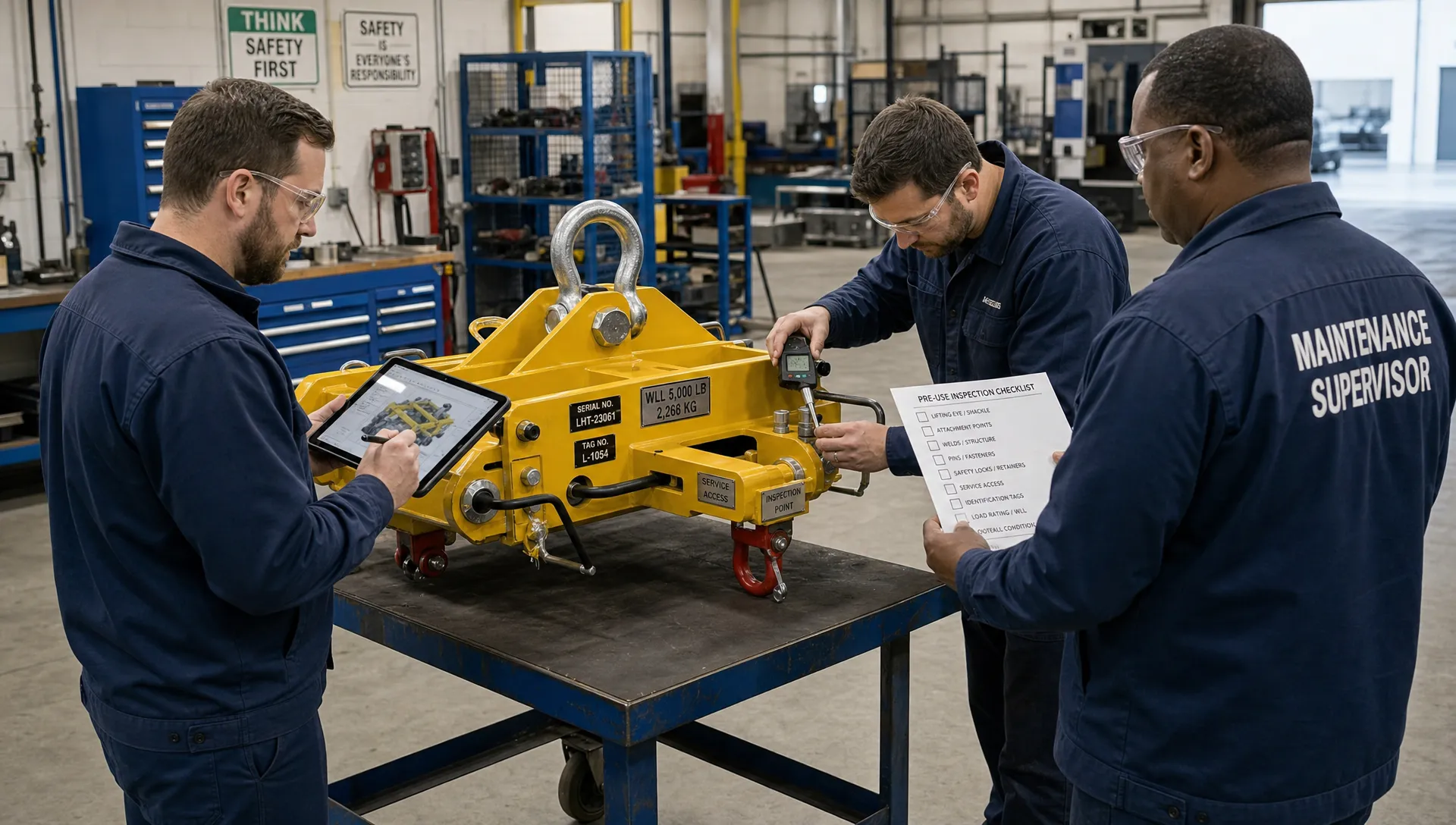
Complex engineering gaps rarely announce themselves as one large problem. More often, they appear as a missing calculation, a tool that works but is difficult to operate safely, an inspection question that no one can answer with confidence, or a production drawing that looks complete but is not yet practical to manufacture.
For OEMs, machine builders, high-tech manufacturers and industrial production teams, these gaps can slow down projects and increase risk. Yet a full outsourcing model is not always necessary. Many organizations already have strong internal engineering, operations and maintenance teams. What they need is targeted support at the exact point where internal capacity, specialist knowledge or certification requirements stop.
That is where partial service becomes valuable. It gives companies access to specific technical expertise without replacing their own team or changing the entire project structure. Used well, it can improve safety, shorten decision cycles, reduce supplier complexity and keep critical tools, modules and machines available for production.
What partial service means in engineering
Partial service is a defined technical work package delivered by a specialist partner. Instead of outsourcing a complete machine, lifting tool or industrial module, the client asks for support in one part of the lifecycle.
That support may involve concept review, mechanical engineering, mechatronic integration, production preparation, manufacturing, inspection, load testing, repair advice or documentation. The important point is that the scope is precise. Responsibilities, interfaces and acceptance criteria are agreed before work starts.
This is different from general consultancy. A useful partial service is not just advice in a report. It should connect engineering knowledge with the real operating context: how the tool is lifted, where an operator stands, how maintenance is performed, which loads occur during use and what documentation is needed to prove safe operation.
For safety-critical equipment, partial service also helps avoid a common mistake: treating safety as a final review. The safest and most efficient outcomes usually come from addressing risks early, then validating them through production quality, inspections, testing and lifecycle support.
Why complex engineering gaps appear
Even capable internal teams run into gaps. That does not indicate poor engineering. It often reflects the fact that industrial projects now combine tight tolerances, short delivery windows, complex interfaces, workplace safety requirements and evolving compliance expectations.
A semiconductor equipment manufacturer, for example, may have deep knowledge of its core process technology but need specialist input for a custom lifting fixture. A machine builder may own the functional design but need help translating drawings into manufacturable parts. A production manager may know that a lifting tool is used daily but lack clear evidence that it remains safe after years of intensive service.
Common engineering gaps include:
| Engineering gap | Typical risk if ignored | How partial service can help |
|---|---|---|
| Missing load case analysis | Underestimated forces during lifting, transport or maintenance | Review lifting scenarios, load paths and safety factors |
| Limited CE or technical documentation capacity | Incomplete files, unclear responsibilities or delayed market release | Support risk assessment, manuals, calculations and test evidence |
| Manufacturing uncertainty | Drawings that are difficult, costly or unreliable to produce | Review tolerances, materials, assembly logic and production feasibility |
| Aging lifting equipment | Wear, deformation or cracks that are not detected in time | Provide inspections, overload testing, reports and usage advice |
| Operator usability issues | Unsafe workarounds, slow handling or increased fatigue | Improve ergonomics, control logic and access for real working conditions |
| Supplier coordination overload | Delays caused by separate engineering, production and inspection parties | Assign a focused technical partner for the missing process step |
These are not always reasons to restart a project. Often, a focused intervention is enough to bring the work back under control.
Where partial service adds the most value
Partial service is most effective when the gap is specific, technically important and connected to safety or uptime. The client keeps ownership of the main project, while the specialist partner strengthens the part that needs additional expertise.
Concept and feasibility support
Early technical input can prevent expensive rework. Before a lifting tool, module or machine is fully engineered, a specialist can assess whether the concept is practical, safe to operate and realistic to manufacture.
This may include reviewing load paths, operator access, maintenance positions, stability, interface points or the expected sequence of use. For high-value equipment, this step is especially important because a handling error can damage assets, interrupt production or create unsafe working conditions.
The goal is not to complicate the design. The goal is to identify practical risks while changes are still relatively easy to make.
Detail engineering for mechanics and mechatronics
Some gaps appear during the transition from concept to detailed design. The basic idea may be sound, but the design still needs calculations, component selection, mechatronic integration, guarding, control interfaces or documentation.
Partial service can support this phase without taking over the full machine design. A technical partner can develop a subassembly, improve a tool, validate a mechanism or help translate a functional requirement into a robust and user-friendly solution.
This is where safety and usability should be considered together. A tool that is theoretically strong enough but awkward to position, difficult to lock or unclear to operate may still create risk in practice.
Manufacturing and built-to-print support
Engineering gaps also appear when a design moves into production. Drawings may be complete, but tolerances, material choices, welding details, assembly steps or inspection points may still require specialist review.
In these cases, partial service can mean manufacturing a defined part, producing a small complex series, or supporting production preparation. For projects where the client already owns the design, a built-to-print approach for complex industrial tooling can work well when technical data is complete and manufacturing responsibilities are clearly defined.
The value is practical: fewer interpretation issues, better manufacturability and a clearer link between design intent and the final tool or module.
Inspection and lifecycle support
A tool does not remain safe simply because it was safe at delivery. Intensive use, overload events, wear, corrosion, deformation or improper storage can change the risk profile over time.
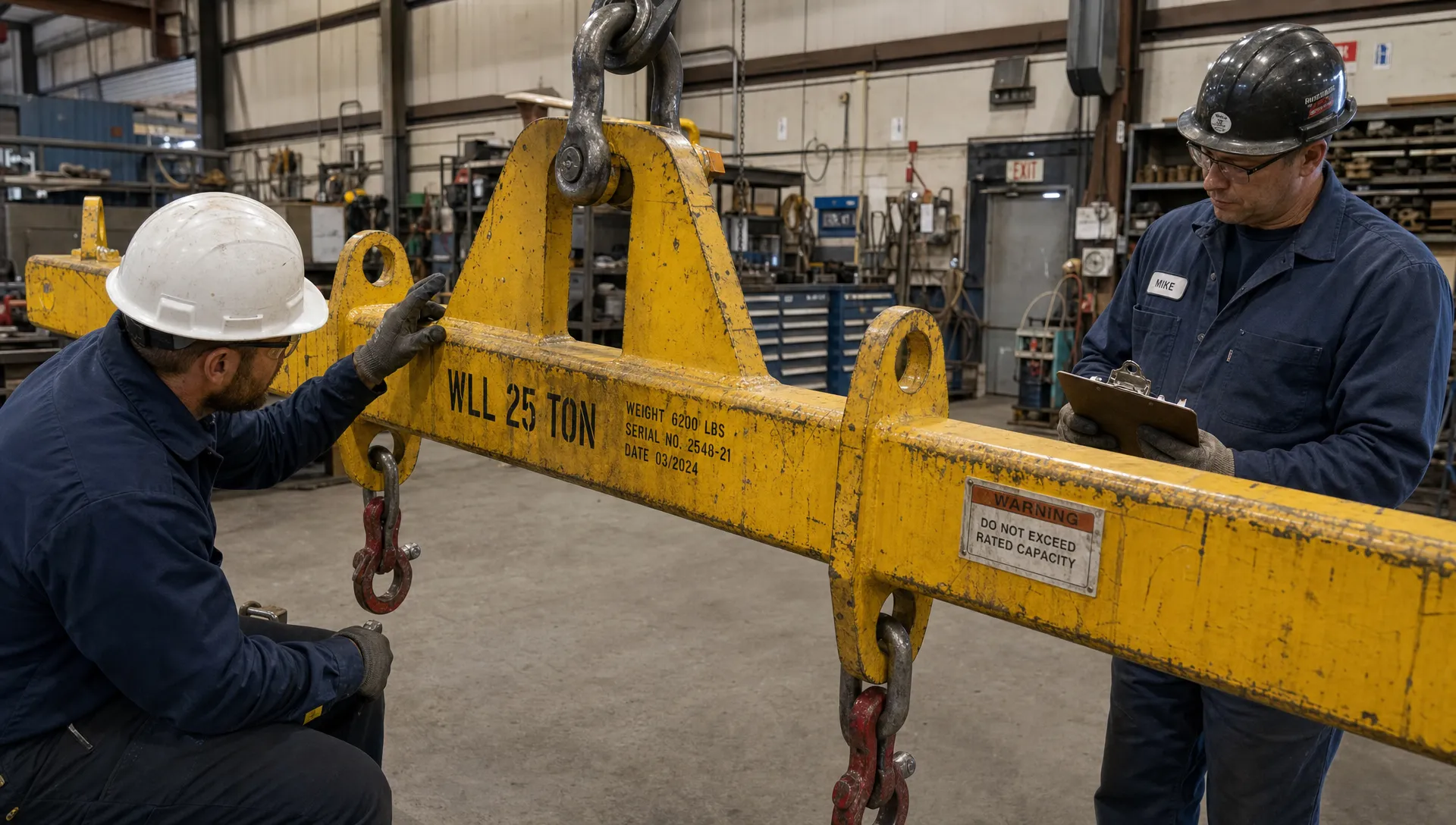
Partial service can focus on periodic inspection, visual examination, overload testing, repair advice or documentation updates. This is particularly useful for lifting and handling tools that support production, installation or maintenance of valuable equipment.
Inspections should not be treated only as an administrative requirement. As explained in BKL's article on how safety inspection services add value beyond compliance, inspection findings can support maintenance planning, uptime decisions and lifecycle risk management.
Partial service as a way to reduce operational risk
A well-defined partial service model reduces risk because it brings the right specialist into the project at the right time. This is common in many safety-sensitive sectors. In the same way a facility manager may call specialized environmental response services for asbestos, mold or water damage instead of asking a general maintenance team to improvise, an industrial engineering team should involve a qualified technical partner when lifting, handling, inspection or compliance questions fall outside its routine expertise.
The advantage is not only technical capability. It is also focus. A specialist partner can look at the specific failure modes, user interactions and documentation requirements that internal teams may not have time to address in detail.
For safety-critical tools and machines, this matters across the lifecycle. Design decisions influence production quality. Production quality influences inspection outcomes. Inspection outcomes influence maintenance planning. Maintenance planning influences availability and safe use. BKL covers this broader perspective in more detail in its article on how safety engineering reduces risk across the lifecycle.
How to define a partial service work package
Partial service works best when the scope is narrow enough to manage but complete enough to solve the problem. A vague request such as “check this tool” or “help with compliance” can lead to uncertainty. A better request defines the equipment, operating context, required output and decision criteria.
Before involving a technical partner, engineering and operations teams should clarify several points.
| Work package question | Why it matters |
|---|---|
| What problem must be solved? | Prevents scope drift and keeps the service focused on the real gap |
| Who owns the main design or equipment? | Clarifies responsibility for decisions, documentation and changes |
| What standards, loads or internal requirements apply? | Ensures engineering and inspection work is based on the right assumptions |
| How is the tool or machine used in practice? | Captures operator behavior, maintenance access and environmental constraints |
| What deliverables are needed? | Defines whether the output is a drawing, calculation, inspection report, test result, manual or repair advice |
| What is the acceptance criterion? | Makes it clear when the partial service is complete and usable |
Good scoping also protects production continuity. If equipment must be inspected or repaired, timing matters. If a design needs review, the review should happen before procurement or manufacturing decisions become difficult to reverse.
Compliance and documentation considerations
Partial service can support compliance, but it does not remove the need for clear responsibility. Depending on the situation, the manufacturer, integrator, owner or user of the equipment may have obligations related to safe use, technical documentation and conformity assessment.
For machinery placed on the EU market, teams must also pay attention to the transition from the Machinery Directive 2006/42/EC to the Machinery Regulation (EU) 2023/1230, which applies from January 2027. This does not mean every existing tool requires redesign, but it does mean organizations should understand which rules apply to new equipment, modifications and documentation.
A partial service partner can help by preparing or reviewing technical content such as risk assessments, calculations, inspection reports, test records, manuals and technical file elements. The practical value is that documentation becomes connected to the real equipment, not separated from it.
For lifting and handling tools, documentation should help users answer concrete questions:
- What load is the tool designed for?
- Which lifting points and attachment methods are allowed?
- What checks should be performed before use?
- Which conditions require the tool to be taken out of service?
- What inspection interval is appropriate for the application and usage intensity?
Clear documentation supports safe operation, maintenance planning and informed decision-making. It also reduces dependence on informal knowledge that may disappear when experienced operators or engineers leave the organization.
When partial service is better than a complete solution
A complete solution is useful when a company wants one partner to manage concept development, engineering, production, inspection and lifecycle support. But that is not always the right starting point.
Partial service is often better when the main project is already under control and only one area needs reinforcement. It can also be useful when internal teams want to keep control of intellectual property, design architecture or customer-specific requirements.
| Situation | Partial service is usually suitable when | A complete solution may be better when |
|---|---|---|
| Existing equipment needs evaluation | The tool is already in use and requires inspection, testing or repair advice | The equipment must be redesigned or replaced entirely |
| Internal design team needs specialist input | The team owns the design but lacks capacity for a specific calculation, review or module | The company does not have the internal capacity to manage the project |
| Production support is needed | Drawings are available and the need is manufacturing or assembly of a defined scope | The concept, design and production route are all still open |
| Compliance documentation is incomplete | Specific files, reports or manuals need to be improved | The full conformity assessment process must be structured from the beginning |
| Custom lifting or handling challenge appears | A focused tool, adapter or improvement is needed | The entire handling process must be engineered as a system |
This distinction helps decision-makers avoid overbuying and underbuying. A standard product may be sufficient for simple tasks. A partial service may be enough for a defined technical gap. A complete solution may be justified when safety, interfaces, documentation and lifecycle support all need to be managed together.
How BKL supports partial service
BKL is a technical service provider in mechanics and mechatronics, with experience in hoisting and lifting tools, industrial modules and machines. That combination is important because many engineering gaps sit between design theory and real use.
BKL can support individual process steps or broader projects, depending on what the client needs. That may include engineering support, manufacturing, production of small-scale and complex series, inspections, overload testing, service or maintenance-related advice.
For safety-critical lifting and handling equipment, BKL's value lies in connecting several disciplines:
- Mechanical and mechatronic engineering for practical, robust solutions
- Safety-focused design that considers operation, maintenance and lifecycle use
- Manufacturing capability for tools, modules and machines
- Inspection services, including work under ISO 17020:2012 accreditation
- Documentation, test reports and usage advice that support informed decisions
This makes partial service especially relevant for OEMs, semiconductor equipment manufacturers, high-tech production environments, aerospace suppliers and industrial companies that need targeted help without handing over the entire project.
Practical signs you need partial service
Not every engineering challenge requires outside support. But there are warning signs that a focused technical partner could prevent delays, rework or unnecessary risk.
You may need partial service when internal discussions keep returning to the same unresolved safety question. You may also need it when a tool is used frequently but no one can clearly explain its inspection history, load rating, repair status or allowed use conditions.
Another sign is supplier fragmentation. If one company designs the tool, another manufactures it, another inspects it and another repairs it, coordination becomes a risk of its own. Partial service can close one weak link, or connect several steps when the project requires more continuity.
The decision should not be based only on initial cost. For lifting tools, handling systems and industrial modules, the better question is: what is the cost of uncertainty? Unclear documentation, difficult operation, delayed inspections or premature wear can affect uptime, employee safety and production planning.
FAQ's about partial service for complex engineering gaps:
What is partial service in engineering? Partial service is targeted support for a specific part of an engineering lifecycle, such as design review, calculations, manufacturing, inspection, testing, documentation or maintenance advice. It helps close a defined gap without outsourcing the complete project.
When should an OEM or manufacturer use partial service? It is useful when internal teams have most of the project under control but need specialist support for a safety-critical tool, machine module, lifting application, production challenge, inspection question or documentation requirement.
Does partial service replace internal engineering teams? No. In most cases, partial service strengthens the internal team by adding capacity or specialist knowledge at a specific point. The client can keep ownership of the main design, equipment strategy and project decisions.
Can partial service support CE documentation? Yes, a specialist partner can support risk assessments, calculations, manuals, inspection reports, test evidence and technical file elements. Responsibility for conformity assessment should always be clearly defined for the specific equipment and project role.
Is partial service only relevant for custom lifting tools? No. It is relevant for custom lifting and handling tools, but also for industrial modules, machines, production tooling, inspections, repairs, lifecycle support and manufacturability questions.
Close the gap before it becomes a bigger risk
Complex engineering gaps do not always require a complete redesign or full outsourcing. Often, the most effective step is targeted, technically competent support for the specific part of the process that needs attention.
For safety-critical tools, modules and machines, that support should connect engineering quality with practical use, documentation, inspection and lifecycle reliability. BKL helps organizations work smarter, more safely and more efficiently by supporting both partial process steps and complete solutions when the situation requires it.
If your team is facing a lifting, handling, inspection, production or documentation gap, a focused partial service approach can help you move forward with more confidence and less unnecessary complexity.