
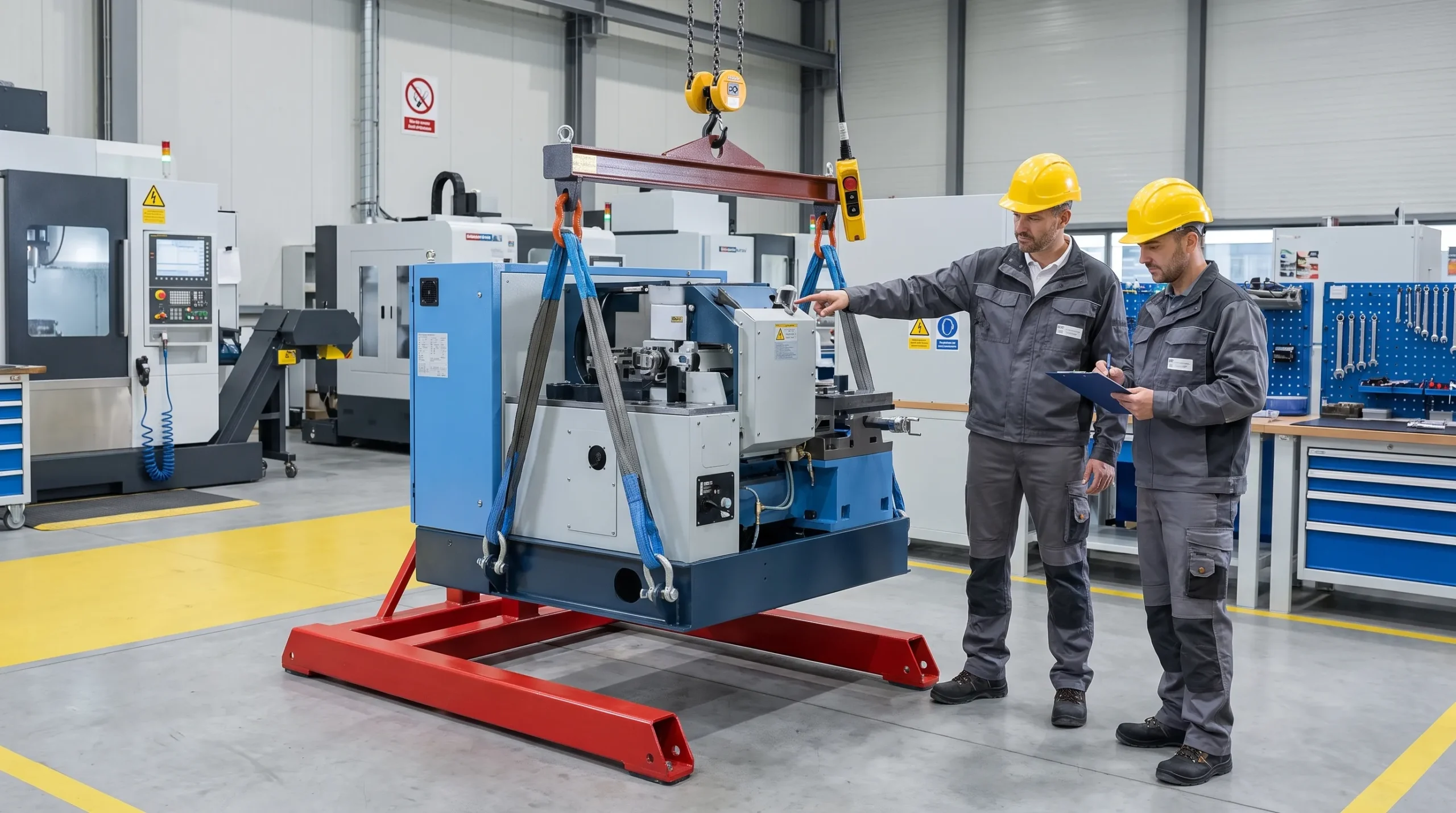
In industrial lifting work, risk rarely comes from one obvious mistake. It usually builds through small uncertainties: an unclear center of gravity, a tool that is technically strong enough but awkward to position, an inspection that was postponed because the equipment still “looked fine,” or a lift plan that does not match the real working environment.
For OEMs, machine builders, high-tech manufacturers and aerospace operations, lifting work safety is not just about protecting people from suspended loads. It is also about protecting valuable equipment, maintaining production continuity and proving that tools remain suitable for use throughout their lifecycle.
The following eight controls help reduce handling risk before, during and after the lift. They are not theoretical safety slogans. They are practical engineering, inspection and operational controls that make lifting work more predictable.
Why lifting work safety has to be engineered
A lifting device with the right rated capacity can still be unsafe in the wrong task. The load may rotate unexpectedly, collide with nearby equipment, overload one attachment point or require the operator to place hands too close to a pinch point. In high-tech and industrial environments, the consequences can include injury, component damage, contamination, downtime and difficult root cause investigations.
Good lifting work safety starts with the full lifting situation: the load, the tool, the machine interface, the route, the operators, the surrounding equipment, the available headroom and the maintenance condition of the lifting equipment. This is why safety cannot be treated as a final inspection only. It has to be part of design, production, use, inspection, documentation and service.
| Control | Main risk it reduces | Practical result |
|---|---|---|
| Define the lifting task | Wrong tool or incomplete lift plan | The lift is engineered around actual use |
| Verify load data | Overload, instability or rotation | Forces and limits are understood before lifting |
| Control the load path | Uncontrolled movement or collision | The load behaves predictably during handling |
| Improve operator interface | Misuse, strain or unsafe hand positions | Operators can work clearly and safely |
| Manage the work area | People, tools or equipment in the danger zone | Temporary risks are controlled before movement |
| Inspect based on risk | Hidden wear, deformation or damage | Unsafe equipment is identified earlier |
| Document and manage change | Loss of traceability or incorrect use | Decisions are supported by evidence |
| Plan lifecycle support | Downtime, degraded tools or unclear ownership | Equipment remains available and fit for use |
1. Define the lifting task before selecting equipment
The first control is also the one most often underestimated. A safe lift starts with a precise definition of the task, not with a catalogue search for a device with enough capacity.
Task definition should include the weight and geometry of the load, the center of gravity, the lifting points, the required orientation, the route through the facility, the installation position, the available headroom and the operator’s access. It should also consider whether the task is repeated daily, performed only during maintenance or required during installation at a customer site.
This step matters because many handling risks only become visible when the complete task is mapped. A component may be easy to lift vertically but difficult to rotate. A module may fit through the route but leave too little room for the operator. A tool may be strong enough but create a side load that was not considered in the original lifting plan.
If the lifting plan is built only around weight, it is incomplete. BKL has written more about why a clearly defined lifting task is essential before selecting or designing equipment.
2. Verify load data, pick-up points and center of gravity
The second control is technical verification. Before lifting, teams should know what forces the lifting device, interfaces and pick-up points will actually experience. This includes more than the total mass of the load.
The center of gravity determines how the load will hang, whether one side will drop, how much force each connection point receives and whether the operator can maintain control. In complex assemblies, the center of gravity may shift depending on installed subcomponents, fluids, tooling or transport frames. For high-value modules, that uncertainty can create unacceptable handling risk.
Pick-up points also need attention. Are they designed for the intended load case? Are they accessible without forcing poor body posture? Are they clearly marked? Has their condition changed through wear, repair, corrosion, deformation or repeated use?
Practical controls include verified load data, engineering calculations, markings on tools and lifting points, and clear limits in the instructions for use. Where uncertainty remains, the lift should not rely on operator experience alone. It should be assessed by competent technical personnel before the load is moved.
3. Control the full load path with the right lifting tool
The load path is the route that forces take from the load through the lifting tool, slings, hooks, beams, adapters, hoists, support structure and floor. A weak or poorly understood load path can lead to instability, unexpected movement or localized overload, even when every individual component appears suitable.
The right lifting tool controls that load path. In some cases, standard equipment is sufficient. In other cases, especially with offset centers of gravity, sensitive surfaces, limited headroom or strict installation tolerances, a bespoke tool or engineered adaptation may be justified.
A good lifting tool should support predictable movement. It should engage positively with the load, minimize unintended rotation, avoid damaging sensitive interfaces and make it clear when the load is correctly connected. For complex applications, custom lifting beams, frames, adapters or guided tools can improve both safety and repeatability.
The important point is not that every lift needs a custom solution. The point is that the equipment should match the real task. If the operator has to compensate for poor balance, unclear positioning or difficult access, the risk has not been engineered out. It has been transferred to the person performing the work. For more detail, see BKL’s guidance on working safely with custom lifting equipment.
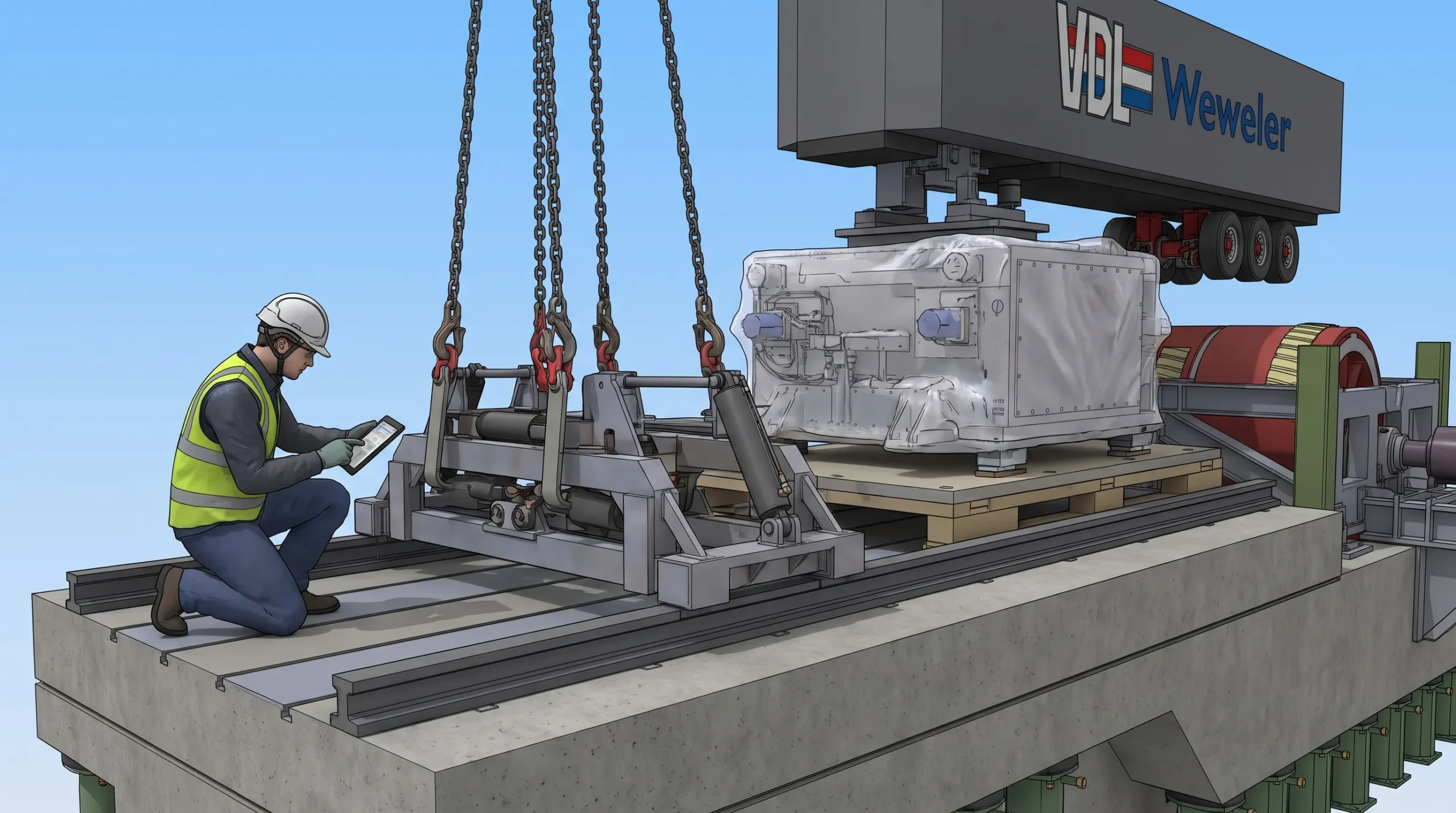
4. Make the operator interface clear and physically safe
Lifting work safety depends heavily on how people interact with the tool. A technically correct design can still create risk if the operator cannot see what is happening, cannot reach the control position safely or has to place hands near moving parts during alignment.
Operator-focused engineering considers visibility, labeling, grip positions, control logic, connection feedback and physical access. It also considers the difference between planned use and real use. In production, operators often work under time pressure, in gloves, near other equipment, with limited space or during shift handovers. The tool should remain understandable in those conditions.
Clear interfaces reduce hesitation and improvisation. For example, mechanical stops can help prevent incorrect positioning. Visual indicators can show whether a locking mechanism is fully engaged. Handles can keep hands away from pinch points. A defined parking position can reduce the risk of damage or incorrect storage between lifts.
Usability is not a comfort feature. In safety-critical lifting work, usability is a risk control. When a tool is easy to position, easy to inspect and difficult to misuse, it supports both safe operation and production efficiency.
5. Control the work area, communication and temporary risks
Even a well-engineered lifting tool can be undermined by an uncontrolled work area. Temporary risks often appear during maintenance, installation, commissioning or non-routine production work. These include open floor panels, nearby equipment, restricted walkways, poor lighting, other teams working in the same zone or changes in the route that were not included in the lift plan.
A practical pre-lift check should confirm that the route is clear, the floor can support the load, people are outside the danger zone, communication is agreed and the operator has a safe escape path if movement becomes unexpected. In tight spaces, a dry run without the load can reveal clearance issues before the real lift begins.
Communication should be simple and unambiguous. Teams should know who gives instructions, who operates the hoist, who observes clearances and who has authority to stop the lift. This is especially important when different departments or suppliers are involved.
Work area control also includes controlling suspended load exposure. Nobody should stand under a suspended load, and the handling method should minimize the time a load remains suspended. Where possible, engineered supports, stands or temporary fixtures should be used to stabilize the load between process steps.
6. Inspect lifting equipment based on use, condition and consequence
Inspection is a core control because lifting equipment changes over time. Wear, deformation, damaged locking features, missing labels, corrosion, overloading and improper storage can all reduce safety margins. The more critical the load and the more intensive the use, the more important inspection discipline becomes.
Pre-use checks help operators detect obvious issues before work starts. Periodic inspections provide a more structured assessment of condition and suitability. Additional inspection may be needed after overload, impact, repair, modification, change of use, long storage periods or unexplained behavior during lifting.
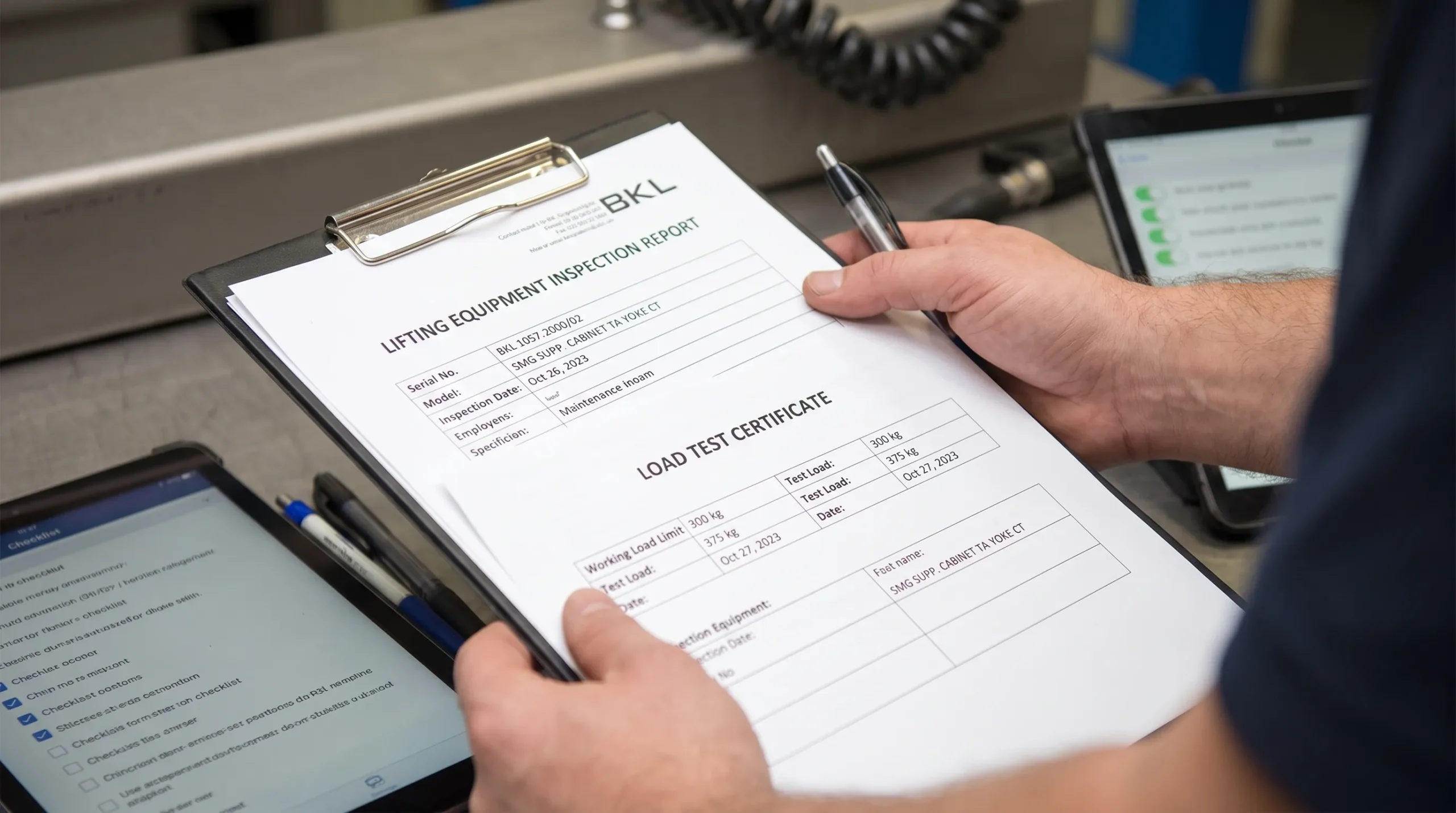
A useful inspection process does not only state whether equipment passed or failed. It should also provide practical advice: what was inspected, what defects were found, what limits apply, whether load testing is required and when the next inspection should occur. Clear reports help maintenance, safety and operations teams make decisions without relying on assumptions.
BKL is accredited according to ISO 17020:2012 for inspections and can support visual inspections, overload testing, examinations, reports and usage advice for lifting equipment. When there are signs of damage, changed use or uncertainty, inspections should not simply wait for the next planned interval. BKL explains these triggers in more detail in its article on when lifting equipment inspections should not be delayed.
7. Validate, document and manage change
Documentation is often viewed as administrative work, but in lifting work safety it is part of the control system. Documentation records the assumptions, limits, test results and usage conditions that make a lifting tool safe to use.
Relevant documentation may include drawings, calculations, risk assessments, inspection reports, overload test reports, manuals, declarations, maintenance instructions and technical files. For equipment within the scope of EU machinery and CE requirements, the conformity assessment process must be handled with care. Documentation should support traceability and correct use, without being treated as a substitute for sound engineering.
Change management is equally important. A lifting tool designed for one version of a product may not remain suitable after the load geometry changes. A repair may affect strength or alignment. A new adapter may introduce a different load case. A process change may place operators in a new position relative to the suspended load.
Structured evidence capture is valuable in many risk-sensitive fields. For example, automated evidence preservation for IP use shows how capturing proof at the moment an event is detected can support later decisions in a different commercial context. In lifting work, the equivalent discipline is retaining signed inspection reports, overload test results, deviation records and photos before equipment is returned to service.
The objective is simple: when a tool is used, inspected, repaired or modified, the organization should be able to prove what was done and why. That traceability reduces uncertainty and helps teams avoid repeating unsafe assumptions.
8. Build lifecycle support into the control system
The final control is lifecycle support. Lifting tools, industrial modules and handling equipment need ownership after delivery. Without lifecycle support, even a well-designed solution can become less reliable through wear, missing parts, unclear storage, undocumented repairs or loss of operator knowledge.
Lifecycle support includes maintenance planning, spare part strategy, repair procedures, inspection intervals, storage instructions and feedback from operators. It also includes knowing when equipment should be repaired, adapted, revalidated or retired.
For production environments, lifecycle support is directly connected to uptime. If a critical lifting tool is unavailable, operations may be delayed or teams may be tempted to use an alternative method that was not designed for the task. A controlled service and inspection approach helps keep the right equipment available in a safe condition.
Not every issue requires a new tool. Sometimes the correct response is a repair, a revised instruction, an added marking, an updated inspection interval or a small design improvement. The value lies in having technical knowledge of the tool, the load and the working environment so that decisions are practical and proportionate.
How to prioritize the eight controls
Not every lifting situation carries the same level of risk. A light, stable, frequently repeated lift in an open area has a different risk profile than a one-off lift of a sensitive module in a tight assembly space. Prioritization should consider consequence, frequency, uncertainty and operator exposure.
| Decision factor | Key question | Higher-risk indicator |
|---|---|---|
| Load value and sensitivity | What happens if the load is damaged? | High-value equipment, fragile interfaces or contamination risk |
| Load behavior | Can the load rotate, tilt or shift? | Offset center of gravity or changing configuration |
| Operator exposure | How close are people to the load? | Manual guiding, limited visibility or pinch points |
| Environment | Is the route predictable and clear? | Tight spaces, low headroom or nearby assets |
| Equipment condition | Is the tool proven fit for use? | Missing reports, visible damage or uncertain history |
| Documentation | Are limits and instructions clear? | Unclear markings, outdated drawings or undocumented modifications |
For C-level decision makers and managers, this approach supports better investment decisions. The lowest initial cost is not always the lowest operational risk. A lifting tool that reduces setup time, improves repeatability, supports inspection and is easier for operators to use can create value across safety, uptime and lifecycle cost.
For engineering and safety teams, the same approach creates a shared language. Instead of debating whether a tool is “good enough,” teams can evaluate the actual controls around the task.
Where BKL supports lifting work safety
BKL supports industrial organizations with mechanics and mechatronics expertise across engineering, production, inspections and lifecycle services. The team develops hoisting and lifting tools, industrial modules and machines with safety, efficiency and user-friendly operation in mind.
This broader role matters because lifting work safety is not owned by one discipline. Engineering defines the load path. Production builds the tool. Operators use it in real conditions. Inspection verifies condition. Maintenance keeps it available. Documentation supports traceability. When these steps are disconnected, risk can fall between departments or suppliers.
BKL can support a specific process step, such as inspection or engineering review, or provide a more complete solution from concept development through manufacturing, testing, documentation and service. For OEMs, high-tech manufacturers, semiconductor equipment manufacturers, aerospace companies and industrial production teams, that integrated knowledge is especially valuable when tools are safety-critical, customized or used around high-value equipment.
FAQ's about lifting work safety:
What is lifting work safety? Lifting work safety is the combination of engineering, procedures, inspections, operator controls and documentation used to reduce risk when lifting, handling, transporting, installing or maintaining loads. It focuses on people, equipment, the load path and the working environment.
Is rated capacity enough to determine whether lifting equipment is safe? No. Rated capacity is essential, but it is only one factor. Teams also need to consider center of gravity, load geometry, connection points, route, headroom, operator access, tool condition and the way the lift is performed.
When should lifting equipment be inspected? Lifting equipment should be checked before use and inspected periodically based on use, environment, criticality and applicable requirements. Additional inspection may be needed after overload, damage, repair, modification, changed use or long storage.
Does every complex lift require a custom lifting tool? Not always. Some tasks can be handled safely with standard equipment if the load, route and conditions are suitable. A custom or adapted solution becomes relevant when standard equipment does not provide enough control, usability or fit for the actual task.
How does documentation reduce handling risk? Documentation records the assumptions, limits, calculations, test results, inspection findings and instructions that support safe use. It helps operators, maintenance teams and managers understand what equipment may be used for and when it needs review.
Who should be involved in improving lifting work safety? Engineering, operations, safety, maintenance, production and procurement all have a role. The best decisions combine technical verification with practical knowledge of how the lifting task is performed in the real working environment.
Reduce handling risk with a controlled lifting process
Improving lifting work safety is not about adding paperwork after the fact. It is about creating a controlled process in which the lifting task is understood, the tool fits the real application, operators can work safely, inspections are meaningful and lifecycle support keeps equipment available.
If your organization handles valuable equipment, works in tight spaces or relies on safety-critical lifting tools, BKL can help assess the task and define the right next step. Discuss your lifting, handling, inspection or lifecycle support challenge with BKL.