
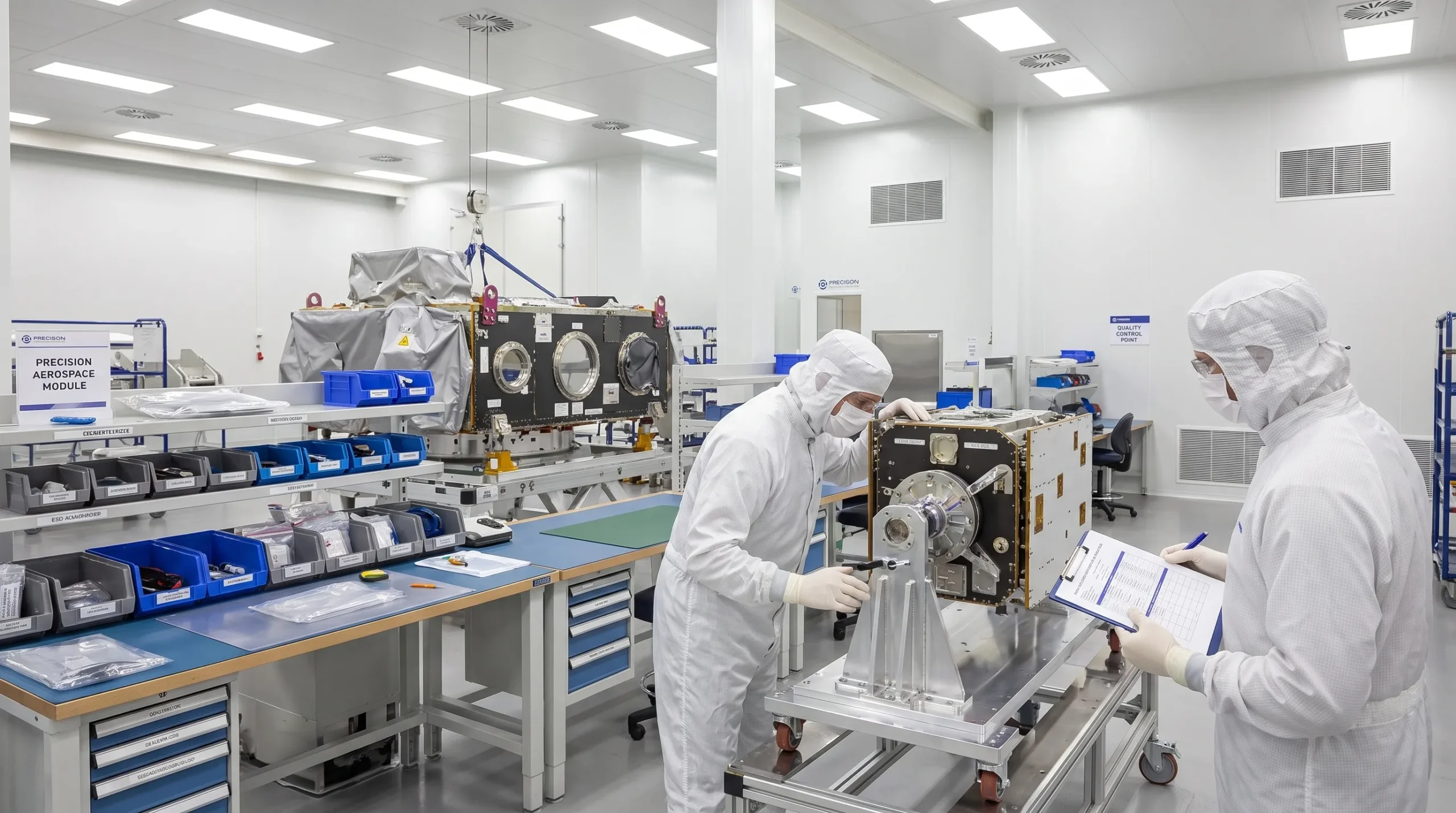
In aerospace assembly, a clean room is not simply a cleaner room with better filters. It is a controlled process environment where air quality, people, materials, tooling, documentation and handling methods work together to reduce technical and operational risk.
That matters because aerospace components often combine tight tolerances, high value, complex interfaces and strict traceability requirements. A small particle, an undocumented handling event, a minor tooling mark or an uncontrolled electrostatic discharge can create rework, delay acceptance testing or compromise confidence in the assembly.
A well-designed aerospace clean room process reduces assembly risk by making work more predictable. It does not remove every risk, and it does not replace engineering judgment, but it gives teams a stronger framework for preventing contamination, detecting deviations earlier and protecting valuable equipment throughout the assembly lifecycle.
Why aerospace clean room processes need to control more than particles
Clean room classification is important, but it is only one part of the risk picture. ISO 14644-1 defines cleanroom classes based on airborne particle concentration, yet aerospace assembly risk is also influenced by FOD control, operator access, ergonomics, ESD protection, lifting methods, calibrated tools, cleanliness of incoming parts and the quality of records.
For example, a satellite subsystem, avionics module, optical assembly or precision mechanical interface may be sensitive to different failure modes. One product may be vulnerable to microscopic particulate contamination. Another may be more exposed to torque variation, seal damage, connector handling errors or deformation during positioning. The clean room process should reflect the real risks of the assembly, not just the room classification.
This is where cleanroom work becomes an engineering discipline. As discussed in BKL's article on how cleanroom assembly improves quality in precision builds, a controlled environment is most valuable when it is combined with repeatable handling, suitable tooling and clear process discipline. In aerospace, that combination helps teams reduce variation before it becomes expensive rework.
Common assembly risks reduced by clean room discipline
Aerospace clean room processes reduce risk by making risk sources visible and controllable. The table below shows how typical assembly risks can be addressed through process design.
| Risk source | Possible impact on aerospace assembly | Clean room process control |
|---|---|---|
| Particle contamination | Optical defects, seal issues, reduced performance or failed inspection | Controlled airflow, cleaning procedures, gowning, covered transfer and clean tools |
| FOD, foreign object debris | Mechanical blockage, surface damage, electrical faults or later reliability concerns | Tool accountability, visual checks, clean benches, part protection and documented housekeeping |
| ESD exposure | Immediate or latent damage to electronics and sensitive sensors | ESD-safe workstations, grounding, ionization where required and trained operators |
| Handling and lifting damage | Scratches, deformation, misalignment or hidden stress in precision parts | Dedicated fixtures, controlled lifting points, load-rated tools and ergonomic handling methods |
| Process variation | Inconsistent assembly quality, troubleshooting delays or repeat defects | Standard work instructions, calibrated equipment, training and in-process verification |
| Documentation gaps | Delayed acceptance, uncertainty after deviations or weaker traceability | Inspection records, torque logs, cleaning records, nonconformance reports and technical files |
The main benefit is not that every step becomes slower or more complex. The goal is to make the critical steps deliberate. Operators know what to do, which tools to use, how parts should move and when a deviation must be escalated.
Controlled flow prevents avoidable contamination and handling errors
One of the most effective ways to reduce assembly risk is to design clear flows for people, parts, tools and waste. In an aerospace clean room, uncontrolled movement often creates hidden risk. A component that is placed on the wrong trolley, exposed during waiting time or moved through an unsuitable route may still look acceptable, but its risk profile has changed.
Controlled flow starts before the part enters the clean room. Incoming materials need appropriate packaging, cleaning status, identification and staging. Operators need a defined gowning sequence and a logical route to the workstation. Tools need to be cleaned, available and separated from items that do not belong in the controlled area.
Good layout also supports safety. If operators must reach over a component, lift from an awkward position or move around obstacles, the chance of both contamination and mechanical damage increases. For aerospace assemblies, especially those involving fragile structures or high-value modules, cleanroom process design should make the safe action the easy action.
Kitting is often useful here. By preparing the correct parts, fasteners, consumables and tools in advance, teams reduce unnecessary movement and limit the time an assembly remains open. Kitting also supports traceability, because batch numbers, serial numbers and inspection status can be checked before work begins.
Cleanroom-compatible tooling reduces hidden mechanical risk
Many aerospace clean room failures are not caused by air quality. They are caused by the interaction between the operator, the component and the tool. A lifting aid that is difficult to position, a fixture that allows too much movement or a trolley that is hard to steer can introduce risk even in a clean environment.
Cleanroom-compatible tooling should therefore be engineered for both cleanliness and safe use. Materials, coatings, surface finishes, lubrication choices and wear behavior all matter. Tools should be easy to clean, resistant to particle generation and suitable for the required loads and working positions. Just as important, they should guide the operator toward correct use.
For lifting and handling tools, this means considering the complete use case. How is the aerospace component picked up? Where are the approved lifting points? What happens if the center of gravity is offset? Can the operator see the interface during engagement? Is there a risk of collision with nearby equipment? Can the tool be inspected, maintained and load tested without disrupting production more than necessary?
A clean room process reduces risk when the tooling removes ambiguity. The operator should not have to improvise how to support, rotate or align a critical assembly. The tool, work instruction and verification step should work together.
Inspection and traceability make deviations manageable
In aerospace assembly, prevention is essential, but detection is equally important. Clean room processes should include planned checks that confirm whether the assembly condition remains within the expected process window.
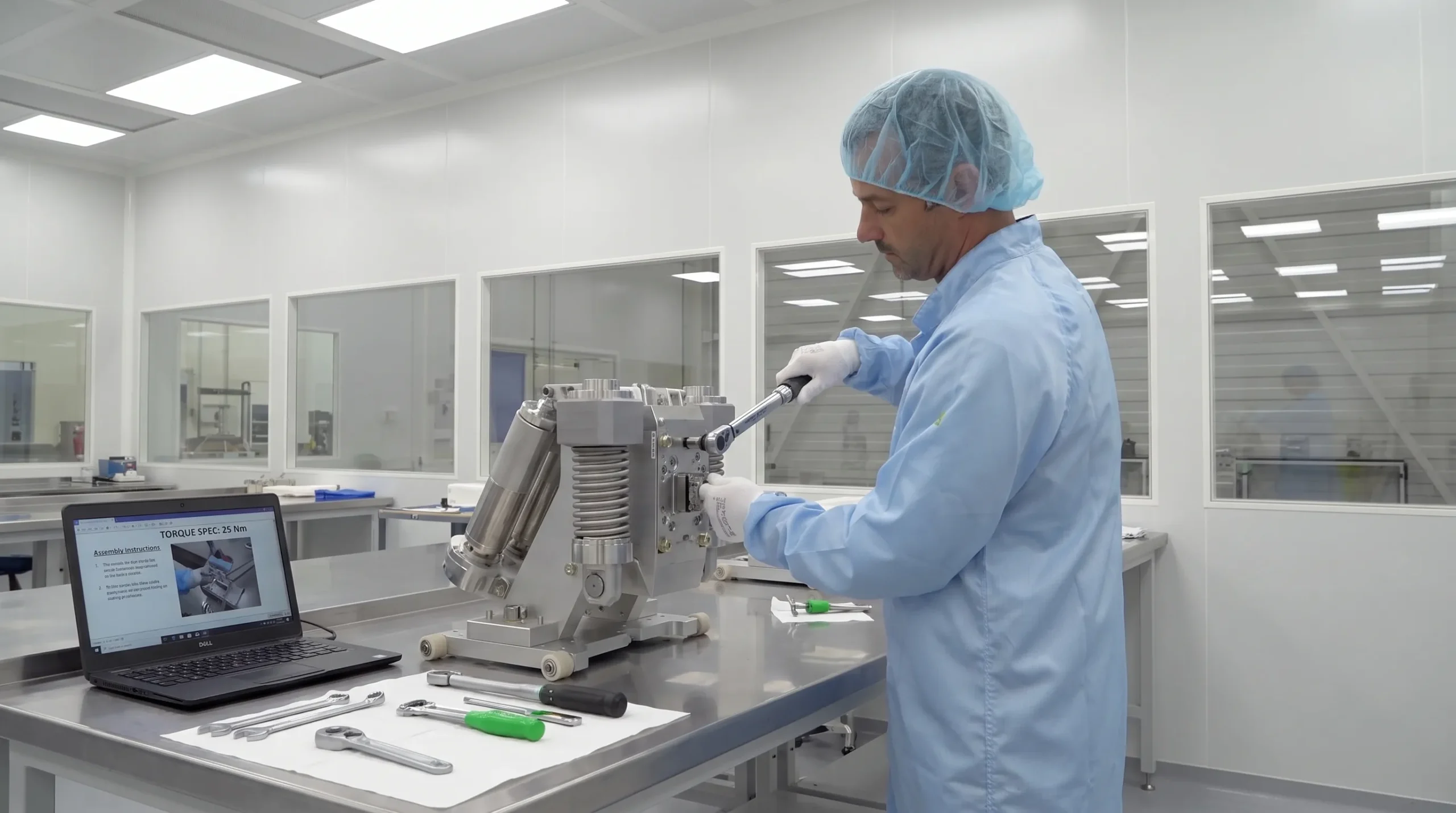
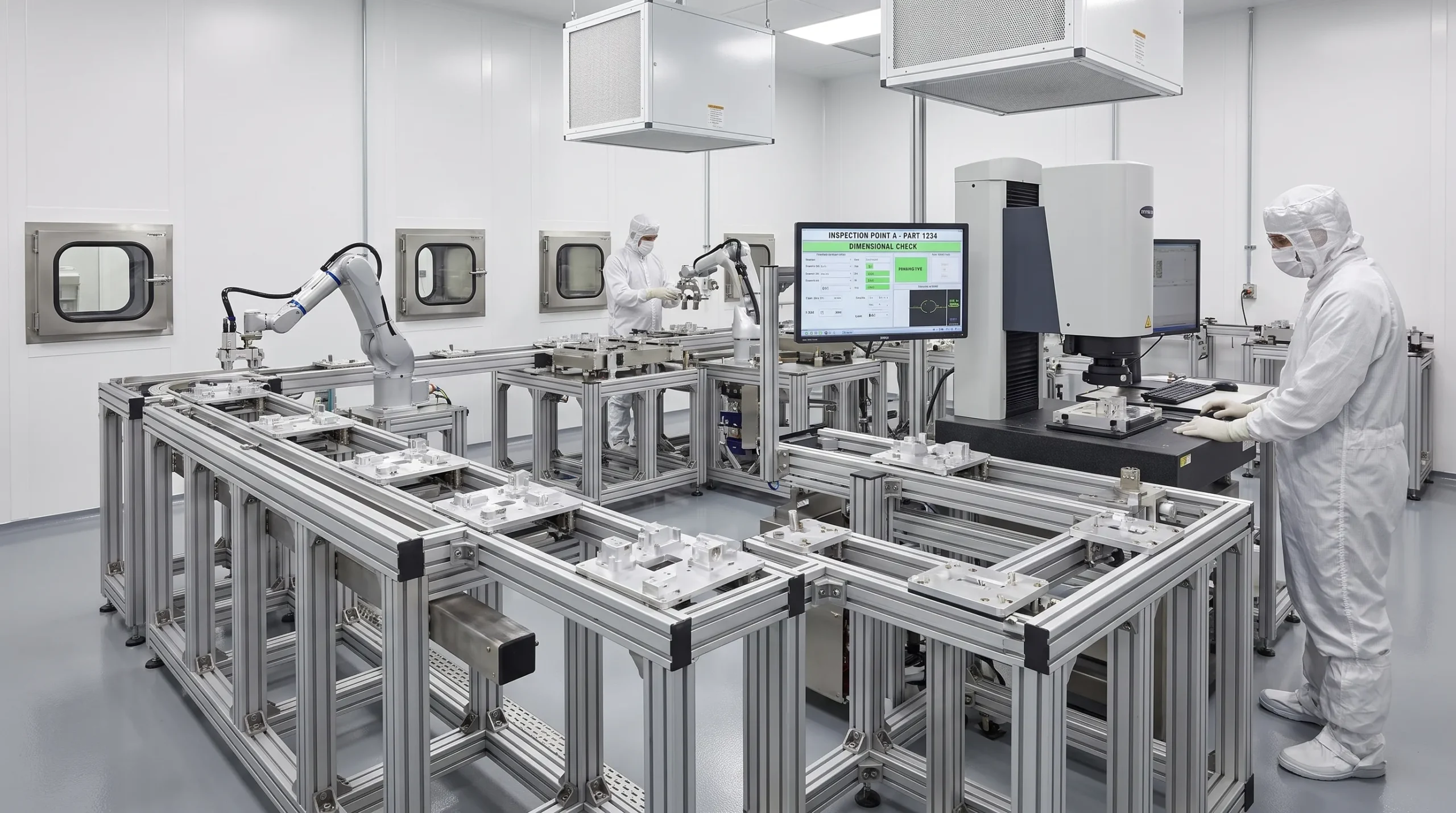
Inspection may include visual checks, cleanliness verification, torque confirmation, dimensional checks, connector inspection, functional testing or review of environmental records. The exact method depends on the product and applicable quality requirements. Aerospace organizations often align their quality systems with AS9100 principles, where traceability, process control and nonconformance management are central.
Traceability is not paperwork for its own sake. It helps teams answer practical questions when something unexpected happens. Which operator performed the step? Which tool was used? Was it calibrated? Which batch of consumables was applied? Was the part exposed outside its defined condition? Was a lifting tool within its inspection interval?
When those records are complete, engineering and quality teams can make faster, better decisions. They can isolate risk, avoid unnecessary scrapping and identify whether an issue is a one-off deviation or a recurring process weakness.
Risk reduction continues after the assembly leaves the clean room
Aerospace clean room control should not stop at the workbench. Once an assembly is cleaned, inspected and packaged, it still needs to be protected during internal movement, storage, transport, installation and maintenance. Each transition creates risk if responsibilities and handling conditions are unclear.
Packaging should match the sensitivity of the assembly. Some parts need sealed clean packaging. Others need shock protection, humidity control, ESD-safe materials or orientation control. Labels should be clear enough that logistics, production and maintenance teams understand how the item may be stored, moved and opened.
For assemblies that move between sites, the same logic applies to downstream storage and transport. Documented handling, traceable batches and reliable dispatch become part of risk control, which is why some manufacturers evaluate specialist 3PL logistics services and warehousing when external distribution is part of the route.
The same lifecycle thinking applies when tools return for inspection, repair or modification. A lifting frame, fixture or handling module used in cleanroom work should not be treated as a one-time project. It remains part of the risk control system as long as it is in use.
Practical checklist for aerospace clean room process design
A strong clean room process starts with a clear understanding of the assembly, the risks and the working environment. The checklist below can help engineering, safety, production and quality teams evaluate whether the process is robust enough for aerospace work.
| Decision area | Questions to ask | Risk reduced |
|---|---|---|
| Cleanliness objective | Which contamination types are critical, and how will they be controlled? | Particle, film and residue-related defects |
| Workstation design | Can operators access the assembly without overreaching or crossing clean zones unnecessarily? | Handling errors and ergonomic strain |
| Tooling and fixtures | Are tools cleanroom-compatible, load-rated, stable and easy to inspect? | Mechanical damage and unsafe use |
| Material flow | Are incoming parts, kits, packaging and waste routes clearly separated? | Cross-contamination and mix-ups |
| Verification points | Which checks are required before, during and after assembly? | Late defect detection and rework |
| Documentation | Are cleaning, calibration, inspection and handling records complete and accessible? | Traceability gaps and delayed decision-making |
| Lifecycle support | How will tools and modules be serviced, inspected and returned to use? | Reduced availability and uncontrolled wear |
This checklist should be adapted to the product and risk level. A small bracket assembly may not need the same controls as a sensitive optical payload. The important point is that controls should be justified by the process risk, not copied from another environment without review.
How BKL supports safer aerospace clean room assembly
BKL supports companies that need safe, reliable and user-friendly technical solutions for demanding industrial environments. For aerospace and aviation companies, that can include engineering support for cleanroom-compatible lifting and handling tools, industrial modules, fixtures and machine solutions that help operators work more safely and consistently.
Because BKL combines mechanics, mechatronics, production, inspections and service support, the team can look beyond the first design drawing. A lifting tool must be engineered for load cases and operator use, manufactured correctly, documented clearly, inspected at the right moments and maintained during its lifecycle. This is especially relevant when the tool is used around high-value aerospace assemblies where damage, uncertainty or downtime can be costly.
BKL's controlled environment cleanroom can support clean assembly, testing and prototyping activities where controlled conditions are required. For customers, this can be valuable when internal cleanroom capacity is limited, when a prototype must be built under cleaner conditions or when tooling and assembly methods need to be validated before wider use.
Safety is also a design subject, not only an inspection subject. BKL's approach aligns with the principles described in its article on occupational safety in machine and tooling design, where risk assessment, usability, documentation and compliance are considered from the earliest engineering stages. Where machinery safety and CE requirements apply, BKL can support the conformity assessment process and the technical documentation needed for responsible use.
For lifting and hoisting tools, BKL can also support inspections, visual examinations, overload testing, reports and usage advice through its ISO 17020:2012 accredited inspection capability. That lifecycle support helps companies keep tools available and in a safe condition, rather than treating inspection as a separate concern after years of use.
FAQ's about aerospace clean room processes:
What is the main purpose of an aerospace clean room process? The main purpose is to control assembly risks that could affect product quality, safety, traceability or reliability. This includes contamination, FOD, ESD, handling damage, process variation and documentation gaps.
Is clean room classification enough for aerospace assembly? No. Classification helps define airborne particle control, but aerospace assembly also requires controlled tooling, operator training, material flow, inspections, traceability and safe handling methods.
How do cleanroom-compatible lifting tools reduce risk? They help operators move, position and support sensitive parts without improvisation. When properly engineered, documented and inspected, these tools reduce the chance of deformation, collision, unstable lifting or incorrect engagement.
When should clean room process risks be reviewed? Risks should be reviewed during concept development, before production release, after process changes, after incidents or deviations, and during periodic lifecycle reviews of tools and equipment.
Can an external partner support only part of the aerospace clean room process? Yes. Depending on the need, a partner may support engineering, manufacturing, inspection, testing, clean assembly, documentation or lifecycle service. A complete solution is not always necessary if a targeted improvement solves the risk.
Discuss a safer clean assembly process
If your aerospace assembly involves sensitive parts, complex handling, cleanroom constraints or safety-critical tooling, the process should be reviewed as a complete system. Cleanliness, usability, lifting safety, documentation and lifecycle support all influence the final risk level.
BKL can help assess where engineering support, clean assembly, custom tooling, inspection or service can reduce risk in a practical way. Contact BKL to discuss your assembly challenge and determine which level of support fits your process, product and operational requirements.