
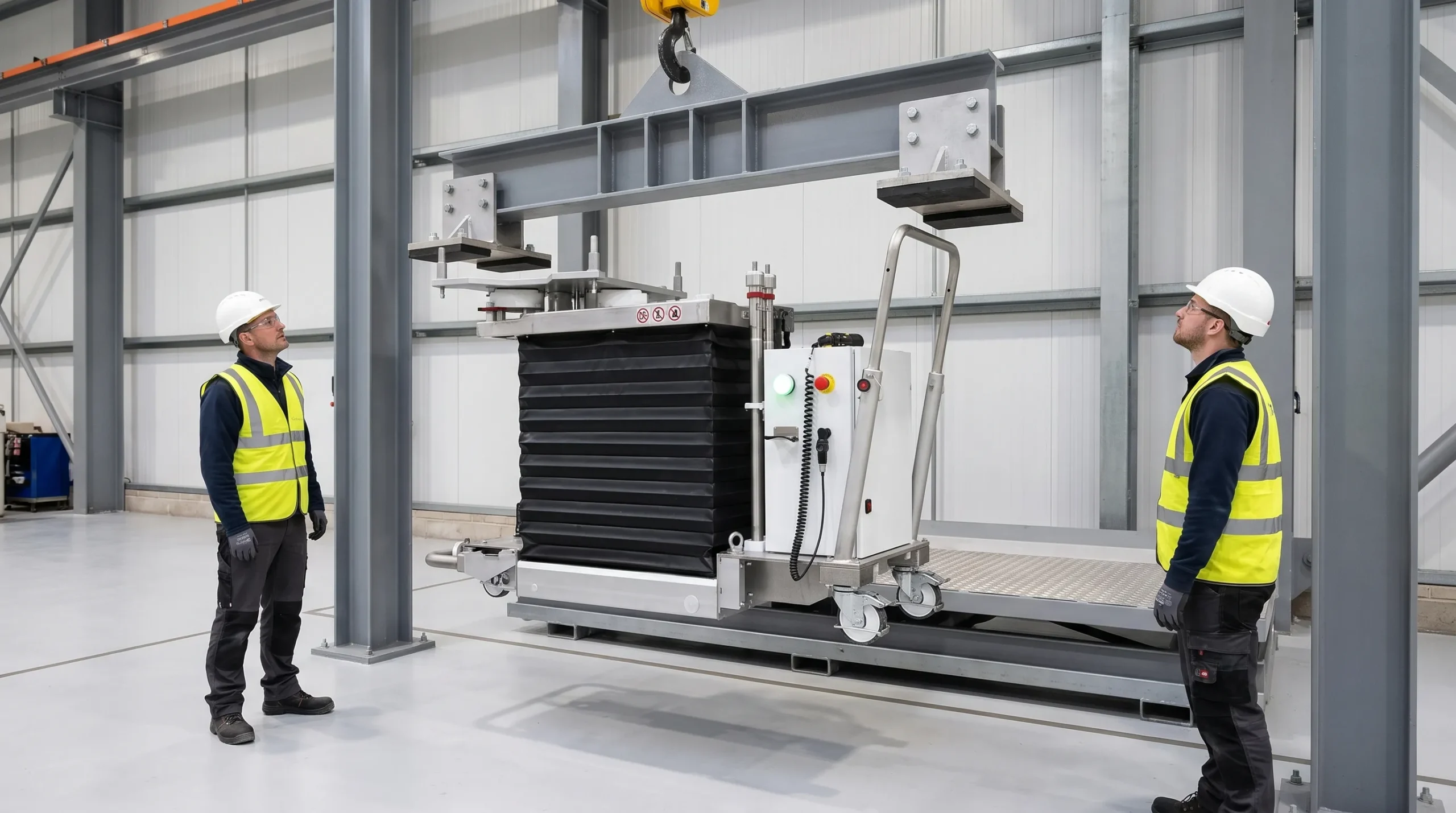
At critical interfaces, the most expensive damage often starts with a small mismatch between the load, the lifting tool and the real handling sequence. A lifting adapter is designed to bridge that gap in a controlled way, so forces enter the equipment where they are allowed, contact surfaces remain protected and operators can perform the lift without improvisation.
For OEMs, first-tier suppliers and high-tech manufacturers, this matters because the interface is often more sensitive than the weight of the component suggests. A module may be strong in service but vulnerable during installation. A precision frame may tolerate operational loads but not point loading from a hook, chain or poorly aligned shackle. A cleanroom component may have surfaces that cannot be scratched, contaminated or distorted.
In those situations, the question is not only whether the lifting equipment has enough capacity. The more important question is whether the load path, geometry, contact pressure and operator access are right for this specific application.
Why critical interfaces are the real risk
A critical interface is the point where force, alignment or contact quality has a direct effect on safety, product integrity or future performance. In lifting and handling, these interfaces include bolt holes, flanges, lifting eyes, machined reference surfaces, thin sheet metal covers, bearing housings, welded frames, threaded inserts and temporary transport provisions.
Damage at these points is not always visible immediately. A scratched reference face may affect later alignment. A deformed bracket may shift the center of gravity. A small crack near a bolted interface may only become obvious after repeated use. This is why interface protection should be engineered into the lifting method, not added as a last-minute padding exercise.
A suitable adapter also helps prevent unsafe operator behavior. If the lifting point is hard to reach, if slings interfere with the product or if the tool requires excessive manual positioning, people tend to compensate in the field. Good engineering reduces that need.
How a lifting adapter protects load paths and contact surfaces
The main function of an adapter is to connect the lifting system to the product without introducing loads that the product was never designed to accept. That includes vertical forces, horizontal forces, bending moments, torsion, prying action and local contact pressure.
A well-designed tool distributes force over defined structural areas instead of relying on convenient but weak features. It also keeps the load in a predictable orientation, which is especially important when the component must be moved through a limited access path, rotated during assembly or installed with tight tolerances.
The engineering starts with the real lift, not with the catalog capacity of a hoist. That means checking where the load can safely be supported, how it will move, which clearances are available, where operators can stand and how the tool will be inspected over time.
Geometry must match the product, not the other way around
A common cause of interface damage is forcing standard lifting gear onto a product with non-standard geometry. Slings may pull at an angle, hooks may load an edge or a shackle may bear against a machined face. Even when the working load limit seems sufficient, the local stress can be wrong.
The lifting adapter solves this by matching the actual geometry of the equipment. It may use dedicated pins, shaped contact pads, a bolt pattern, a frame interface or a combination of mechanical supports. In high-tech applications, the goal is often to make the correct connection obvious and the incorrect connection physically difficult.
This is closely related to flange and bolted interface design. If bolts are loaded in unintended directions or if contact faces do not sit flat, risk increases quickly. BKL has covered this in more detail in its article on flange design mistakes that create risk in lifting tools.
Load introduction must be controlled
When lifting forces enter a product through a temporary interface, the adapter becomes part of the structural system. Its stiffness, tolerances and contact points influence how forces flow into the load. If one side touches first, the load can concentrate in a small area. If a pin has too much clearance, impact loading can occur when the load settles.
For sensitive equipment, the adapter should therefore be assessed as a load-introduction device, not merely as an accessory. Engineering checks typically include the center of gravity, sling angles, stability, bearing stress, fastener loading, contact pressure and possible dynamic effects during movement.
Damage mechanisms that adapters help avoid
The same lift can damage different interfaces in different ways. A heavy welded frame may mainly need protection against bending and prying loads. A precision module may need protection against distortion, scratching and contamination. A cleanroom assembly may require controlled contact materials, easy cleaning and minimal particle generation.
| Damage mechanism | Typical cause | Engineering response |
|---|---|---|
| Scratches or dents | Direct contact from hooks, chains or hard edges | Use shaped contact surfaces, protective pads or dedicated pick-up points |
| Local deformation | Load applied to thin or unsupported areas | Transfer force into stronger structural zones |
| Bolt or thread damage | Misalignment, side loading or repeated assembly errors | Use guided positioning, correct bolt patterns and controlled fastening methods |
| Prying action | Eccentric load introduction at flanges or brackets | Reduce lever arms and align forces with the intended load path |
| Product instability | Center of gravity not controlled during the lift | Use fixed geometry, balancing provisions or defined attachment points |
| Contamination | Contact materials or handling methods unsuitable for the environment | Select suitable materials, finishes and cleaning concepts |
The right lifting adapter does more than prevent visible marks. It reduces the chance that the lift will change the product in a way that affects assembly accuracy, service life or safe operation.
When standard lifting gear is sufficient and when it is not
Not every application requires custom engineering. If the product has certified lifting points, enough clearance, a stable center of gravity and no sensitive contact zones, standard lifting equipment may be the most efficient option. A standard lifting beam, sling set or hoist accessory can be appropriate when the load case is straightforward and the working environment is predictable.
Custom engineering becomes more relevant when the load is high-value, fragile, hard to access, unstable, cleanroom-sensitive or difficult to align. It is also worth considering when operators repeatedly struggle with the same lift, when there is a history of minor damage or when the tool must support production, transport, installation and maintenance throughout the lifecycle.
A lifting adapter may be the practical middle ground between a fully bespoke lifting system and a standard catalog solution. It can interface with existing hoists, cranes or lifting beams while solving the specific connection problem at the product side.
BKL’s article on what custom lifting solutions solve better than standard gear explains this decision in more detail for complex industrial applications.
Engineering considerations for high-tech environments
In semiconductor, medical technology, aerospace, defence, optical, energy and analytical equipment manufacturing, lifting tools often operate close to valuable products, critical surfaces and controlled processes. The mechanical design is only one part of the challenge.
Material choice, surface treatment, cleanliness, documentation and maintenance access can be just as important. For example, an adapter used in a cleanroom-related process may need surfaces that are easy to clean and resistant to wear. A tool used near optical or analytical equipment may need to avoid contact with reference surfaces. A tool for aerospace maintenance may need clear inspection points and robust documentation for repeated use.
For high-tech applications, a lifting adapter should also be designed around the operator. If the tool is too heavy to position, if fasteners are difficult to reach or if the correct orientation is unclear, the risk moves from the drawing board to the workplace. User-friendly operation is not a cosmetic feature. It supports repeatability, safety and production efficiency.
This becomes even more important in tight spaces, where limited clearance can force awkward sling angles or poor visibility. BKL discusses this broader handling challenge in its article on safe lifting for high-value equipment and tight spaces.
Ergonomics and usability affect interface protection
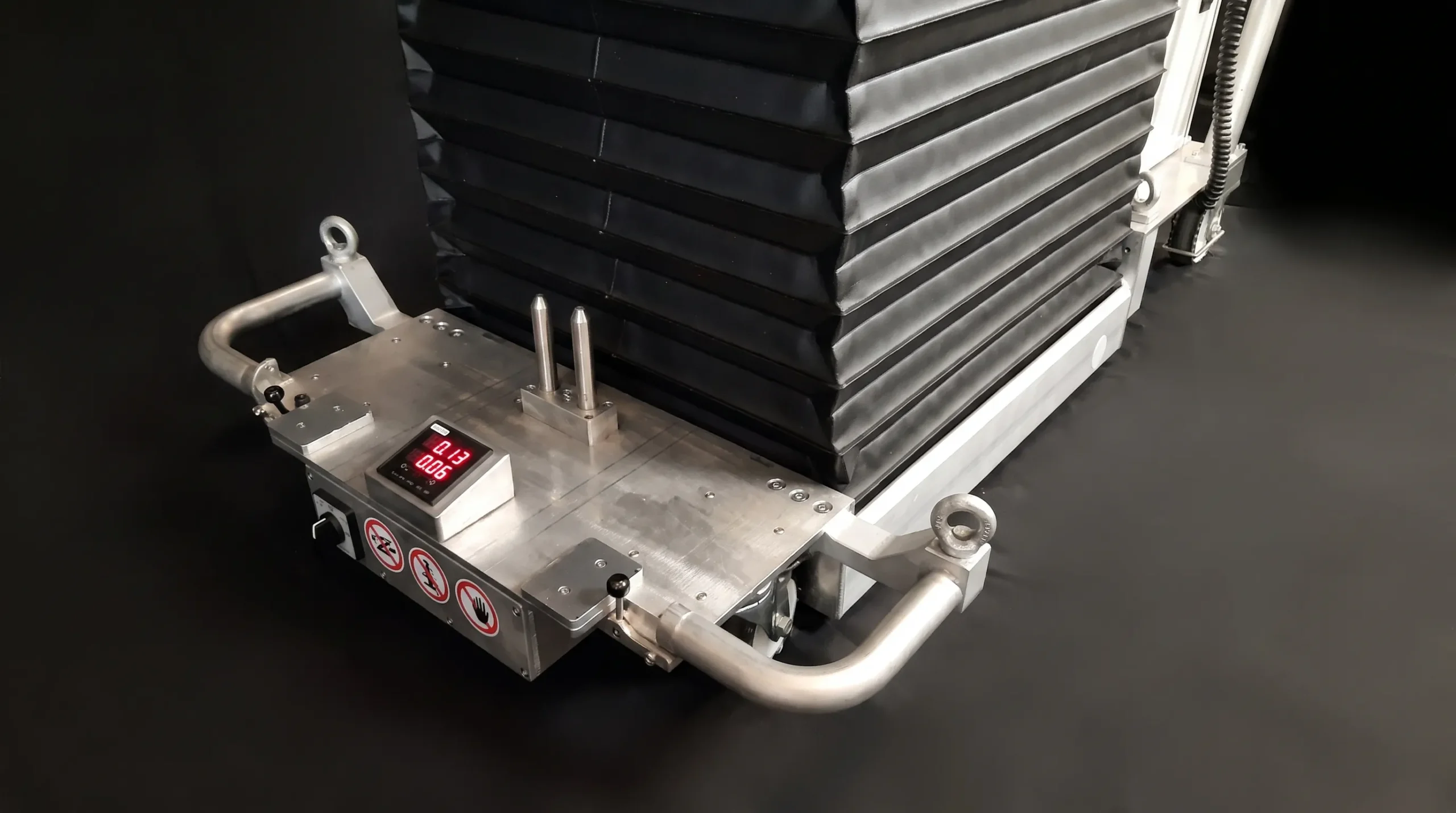
Operators protect interfaces best when the correct process is simple to follow. Clear positioning features, manageable tool weight, visible alignment marks and logical fastening steps all reduce the chance of contact damage or incorrect loading.
This is also where mechatronics can sometimes add value. Depending on the application, sensors, interlocks, guided motion or controlled actuation may support safer use. These choices should be justified by the task, the risk assessment and the working environment, not added as unnecessary complexity.
Inspection, documentation and lifecycle support
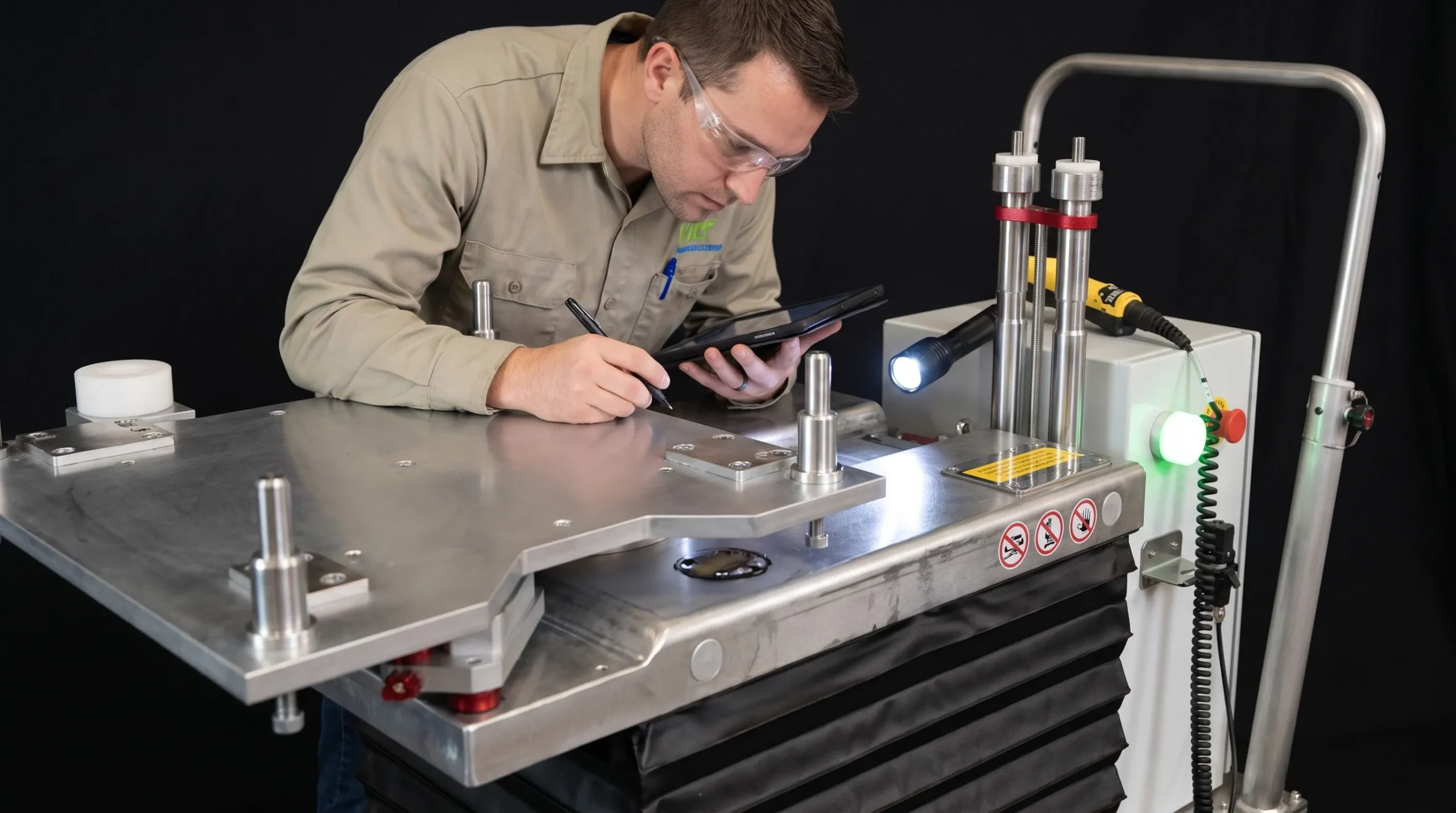
Interface protection does not end when the tool is delivered. Lifting equipment can wear, deform or become unsuitable if the application changes. Bolted connections can show wear. Pads can degrade. Pins can develop play. Labels can become unreadable. A tool that was safe for the original lift may no longer be appropriate after product changes or years of use.
After commissioning, a lifting adapter should be included in the inspection and maintenance strategy for the wider lifting setup. The exact scope depends on the tool, its use, the environment and applicable requirements, but visual inspections, functional checks, load testing where applicable, clear reports and practical usage advice all support safer operation.
BKL designs, engineers, manufactures, installs, maintains, inspects and services custom lifting and handling solutions. For inspection activities, BKL is accredited according to ISO 17020:2012. This is relevant for companies that need structured inspection processes, clear documentation and reliable lifecycle support for safety-critical tools.
What to specify before designing an adapter
Good specifications reduce redesign, ambiguity and risk. Before engineering starts, the project team should define the lift as completely as possible, including the product, the environment and the people who will use the tool.
Before specifying a lifting adapter, collect the information that affects both safety and usability:
- Product mass, center of gravity and allowed lifting points
- Interface drawings, tolerances, materials and surface sensitivity
- Required lift path, rotation, installation angle and clearance envelope
- Hoist, crane, lifting beam or handling equipment already available
- Operator access, ergonomic limits and expected handling frequency
- Cleanliness, corrosion, temperature or other environmental constraints
- Inspection needs, documentation requirements and lifecycle expectations
This information helps engineering, operations, safety and procurement teams evaluate the total solution instead of comparing only the initial purchase price. In many projects, the biggest value comes from avoiding product damage, reducing operator strain, improving repeatability and keeping critical tooling available.
How BKL approaches adapter projects
BKL works with mechanics and mechatronics to develop lifting, hoisting, handling and working-at-height solutions for demanding industrial environments. Depending on the customer need, the team can support a single process step or manage the chain from concept and engineering to production, assembly, installation, inspection, maintenance and service.
The engineering approach starts with the task and the risk, then moves toward a practical tool that fits the product and the workplace. That includes attention to load paths, interface geometry, operator use, documentation and the balance between Quality, Logistics, Technology, Cost and Sustainability.
If your application requires a lifting adapter because standard gear creates unacceptable risk at the interface, involving a specialist early can help clarify the options. In some cases, the best answer may be a simple adapter plate or guided bracket. In others, the safer solution may involve a lifting beam, movable lift, cleanroom handling tool or a broader custom lifting system.
FAQ's about lifting adapters:
What is a lifting adapter used for? A lifting adapter connects lifting equipment to a product or module through a defined interface. Its purpose is to introduce loads safely, protect sensitive contact areas and make the lifting process repeatable for operators.
When is an adapter better than using slings directly? An adapter is usually better when slings would contact sensitive surfaces, pull at unsafe angles, create local deformation or make the load unstable. It can also improve usability when operators need a guided and repeatable connection method.
Does every high-value product need a custom adapter? No. If the product has suitable lifting points and the lift can be performed safely with standard equipment, a custom tool may not be necessary. Custom engineering becomes more relevant when geometry, access, cleanliness, stability or interface protection creates additional risk.
What documentation should accompany a custom lifting tool? Depending on the application, useful documentation may include drawings, calculations, risk assessment input, test reports, inspection records, user instructions and certificates where applicable. The required scope should be defined for the specific tool and regulatory context.
How often should lifting adapters be inspected? Inspection frequency depends on use, environment, tool design, company procedures and applicable requirements. Inspections should also be brought forward after visible damage, overload, modification, abnormal use or a change in the lifting application.
Discuss your critical interface before the next lift
If a lifting task depends on a sensitive flange, machined surface, bolt pattern or temporary handling point, it is worth reviewing the interface before the next production or installation step. A short technical discussion can clarify whether standard equipment is sufficient, whether an adapter is needed or whether the wider lifting method should be improved.
To explore a practical solution for your application, contact BKL to discuss engineering, production, installation, inspection, maintenance or lifecycle support for custom lifting and handling equipment.